

As a crypto API provider, part of our job is to understand what other providers build. We review public documentation, pricing, product flows, and evidence we can verify. This review explains what we confirmed about CoinPayments, where it may fit, and its important limits.
This review covers public information only. We did not use an account to test CoinPayments response times, settlement speed, support, uptime, or production behaviour.
CoinPayments API Review at a Glance
| Decision Point | CoinPayments |
|---|---|
| Best for | Businesses that need global crypto invoices and merchant tools |
| Current public payment assets | 40+ cryptocurrencies |
| Transaction fee | 0.5% for coins; 1% for tokens; possible high-risk adjustment |
| Main integration paths | Hosted invoices or API wallets and addresses |
| Address types | Permanent or temporary, subject to blockchain rules |
| Merchant tools | Plugins, payment buttons, invoice builder, API, and webhooks |
| Official SDKs | Python, JavaScript/Node.js/TypeScript, and PHP |
| Fiat settlement | Available where supported through partners; New platform guide says TBD |
| NGN/GHS bank settlement | Not confirmed in current public sources |
| Sandbox | Yes |
How Breet Compares
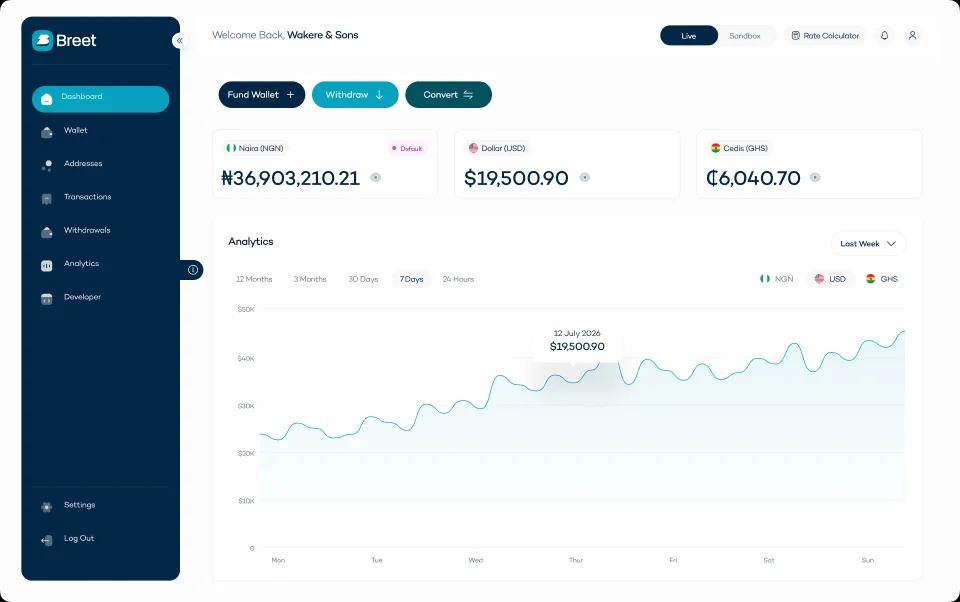
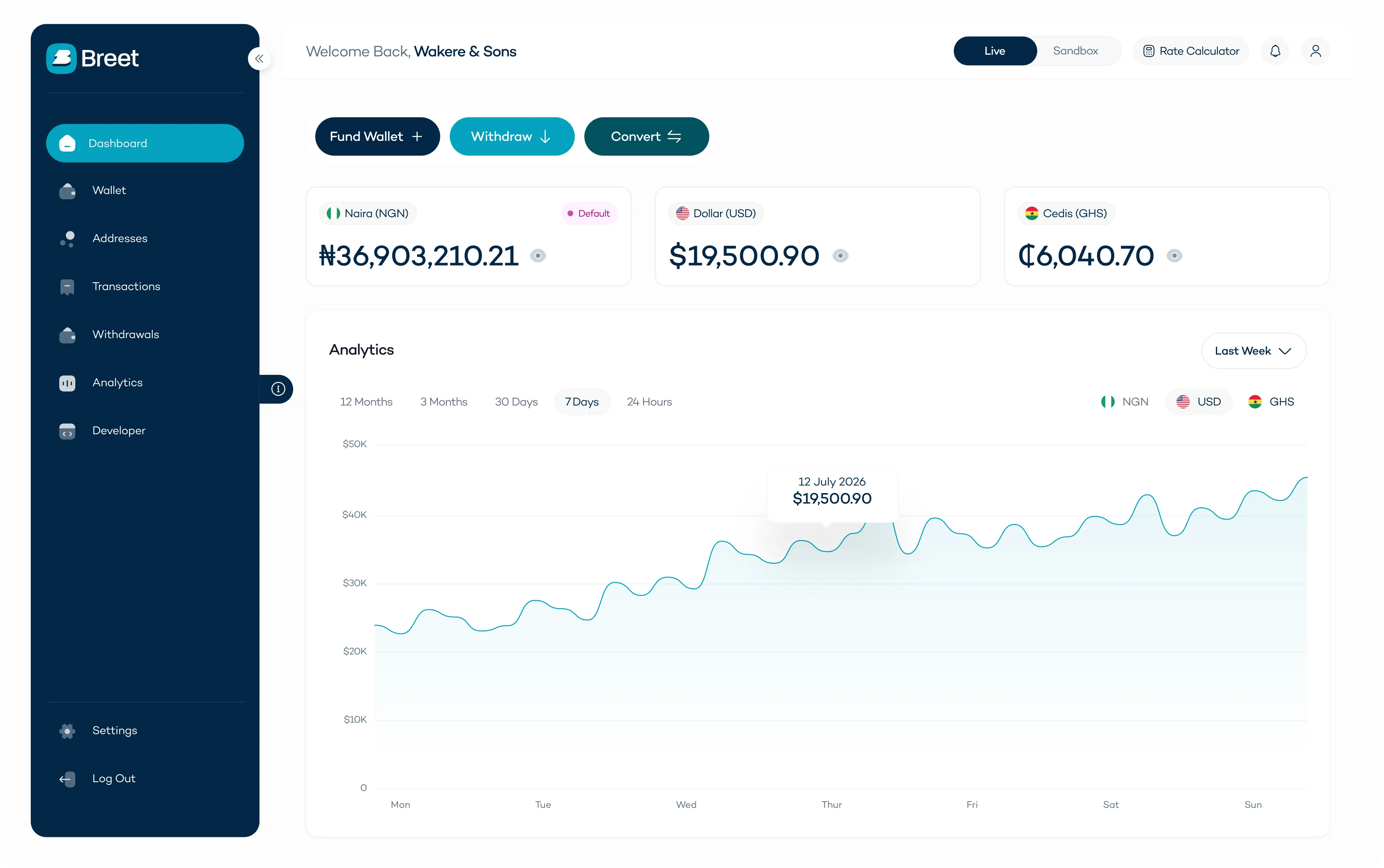
CoinPayments provides crypto invoices, merchant tools, plugins, and wallet infrastructure. Breet manages the path from a customer's crypto deposit to stablecoin, USD, NGN, or GHS settlement.
- Accept 12+ supported crypto assets using permanent or single-use wallet addresses.
- Convert deposits automatically after blockchain confirmation.
- Keep funds in stablecoins or USD, or settle directly to an NGN or GHS bank account.
- Withdraw through the API or Breet business dashboard at any time.
- Avoid liquidity management and wallet sweeping.
- Pay one volume-based transaction fee with no separate setup, monthly, or wallet-sweeping fees and no gas fee for receiving crypto.
- Test integrations in a public sandbox with webhooks, live asset discovery, and clear API documentation.
- Get direct integration support through dedicated Slack channel support.
What Does the CoinPayments API Do?
The CoinPayments New API is a REST API for payment invoices, wallets, addresses, currencies, rates, transactions, fees, and webhooks.
The integration options guide presents two main paths:
- Hosted invoices. The merchant creates a bill, and CoinPayments hosts the payment experience. It manages payment status, confirmations, and invoice events.
- Wallets and addresses. The merchant creates a wallet for a currency and generates permanent or temporary addresses for customers. The merchant controls the user interface and reacts to deposit webhooks.
The two paths can be combined. This gives product teams a useful choice between a managed checkout and a custom deposit experience.
What CoinPayments Does Well
- Flexible design. Use hosted invoices or build with wallets and addresses.
- Customer attribution. Permanent or temporary addresses can identify customers or payment windows.
- Current SDKs. Official packages cover Python, JavaScript, Node.js, TypeScript, and PHP.
- Signed events. Requests and webhooks use HMAC SHA-256.
- Merchant tools. Plugins, buttons, and an invoice builder add launch options.
- Recovery. Eligible same-chain merchant deposits can use automatic or manual recovery.
New and Legacy Material Can Differ
CoinPayments links to New and Legacy platforms. Use the current homepage, New documentation, and merchant-currencies endpoint. Confirm the account platform before development.
Token Payments Cost More
The public fee is 0.5% for coins and 1% for tokens. Many stablecoins are tokens. High-risk adjustments may apply, so get each required asset's classification in writing.
Local Fiat Settlement Is Not Clear
The homepage says bank payout is available where supported through partner-dependent services. The New guide lists “Fiat Settlement (TBD).” We found no current public confirmation of direct NGN or GHS bank settlement. Get the route and partner in writing.
CoinPayments Fees Explained
The CoinPayments fee page publishes this service-fee structure:
| Payment Asset Type | Published Transaction Fee |
|---|---|
| Coin with its own blockchain | 0.5% |
| Token built on an existing blockchain | 1% |
For a simple $1,000 illustration:
This is not a full quote. It only applies the public transaction percentage to $1,000. It does not compare exchange rates, account-specific terms, high-risk adjustments, or third-party fiat-provider costs.
Assets and Wallet Addresses
CoinPayments accepts 40+ payment cryptocurrencies. Its live endpoint returns the assets enabled for an account, status, confirmations, and payout settings. Wallets can issue permanent or temporary addresses, subject to blockchain rules.
Recovery, Webhooks, and Operations
CoinPayments offers automatic or manual recovery for eligible same-chain assets sent to merchant addresses. Its signed webhooks can report each confirmation, so handlers must be idempotent.
Who should choose the CoinPayments API?
CoinPayments is relevant when you need:
- A hosted crypto invoice flow;
- Custom wallets and customer addresses;
- 40+ payment assets;
- Plugins, buttons, or an invoice builder;
- Official SDKs in a supported language;
- Global crypto commerce tools;
- Eligible same-chain asset recovery.
Final Verdict on the CoinPayments API
CoinPayments supports businesses that want broad global crypto-commerce coverage, wallet addresses, invoices, recovery tools, and mature integrations. Buyers that require local bank settlement should confirm the exact destination currencies and complete corridor cost before integration.
However, if you want to receive supported crypto and settle in stablecoins, NGN, or GHS without managing wallet sweeping, gas fees, or a separate local payout route, try Breet API.
Comparing CoinPayments with Breet?
For a direct side-by-side decision, compare Breet and CoinPayments by product scope, fees, settlement, strengths, and the business cases each provider suits.