- 1. Settle directly to naira or cedis, not just global rails
- 2. Hedge local currency depreciation without an offshore account
- 3. Skip correspondent banking on cross-border payments
- 4. Get near-instant settlement and 24/7 cash flow
- 5. Cut transaction costs, and keep them predictable
- 6. Automate reconciliation with programmable payments
- 7. Pass your CFO's compliance and audit checks
- How to capture these advantages with Breet Business
- Turn the infrastructure into a corporate edge
- Frequently asked questions
Sending money into or out of Africa costs you. A wire abroad eats 6% to 8% in fees and FX spread, then takes days to land.
Sit on cash in Naira or Cedis instead, and it loses value every month; the Naira has dropped 69% against the dollar since the 2023 FX reforms.
If you’ve looked into stablecoins to fix either problem, you’ve probably read ten articles explaining how USDC moves from a wallet in Singapore to one in New York in three seconds, and not one that explains what happens when that money needs to become naira in your business account by Friday.
That’s the actual question. Nigeria pulled in an estimated $59 billion in stablecoin inflows last year, about 60% of everything moving into sub-Saharan Africa.
Businesses here aren’t adopting stablecoins because crypto is trendy. They’re doing it to stop the FX bleed, protect cash from a falling naira, and get paid without waiting days at a bank.
This guide breaks down seven real advantages of stablecoins for an African business, what to watch out for, and how to actually capture the benefits without spending a quarter building the infrastructure yourself.
1. Settle directly to naira or cedis, not just global rails
For an African enterprise, a digital asset is only useful if it interfaces with local commerce.
The single biggest flaw in generic stablecoin guides is that they assume your business operates entirely in USD or EUR, praising “borderless payments” while leaving the funds stranded on international rails like SEPA or ACH.
A localized stablecoin strategy routes global payments straight into local banking. Instead of holding crypto balances or navigating off-ramps manually, specialized payment infrastructure handles fiat settlement automatically.
When an international client pays in stablecoins like USDT and USDC, the transaction can convert to fiat within minutes. The funds land in your Nigerian bank account, your Ghanaian mobile money wallet, or a designated stablecoin address, whichever you specify.
That closes the operational loop that global gateways leave open, so your liquidity lands exactly where the business needs it.
2. Hedge local currency depreciation without an offshore account
The naira has lost 69% of its value against the dollar since the 2023 FX reforms. Holding unhedged local currency reserves means corporate purchasing power erodes month over month.
The traditional defense, a domiciliary or offshore bank account, is strictly regulated, slow to open, and expensive to maintain.
Stablecoins work as an accessible treasury hedge instead. By keeping a portion of reserves in dollar-pegged digital assets, African enterprises can hold value in dollars without the banking friction.
BusinessDay and TechCabal have both reported Nigerian and South African firms increasingly using stablecoins as an FX hedge for exactly this reason.
This protects margins and keeps corporate balance sheets stable, converting back to local currency only when operational liquidity is actually needed, which is the same logic behind protecting against naira inflation with USDT.
3. Skip correspondent banking on cross-border payments
Cross-border payments originating in Africa are usually routed offshore through correspondent banks in Europe or the US before reaching their destination. That legacy setup adds three specific costs:
- High fees: legacy corridors cost 6% to 8% per transaction, split across multiple intermediary cuts.
- Double FX exposure: every wire gets converted twice, once into the intermediary’s currency and once back out.
- Multi-day delays: payments often take several business days to clear, exposing the business to currency swings while the money is in transit.
Stablecoins bypass the intermediary banks entirely when a payment crosses a border, settling in roughly 60 seconds at a fraction of the cost. That lets African businesses keep the margin correspondent banking would otherwise eat.
4. Get near-instant settlement and 24/7 cash flow
Traditional banking runs on banking hours, public holidays, and weekend closures. Clear an international wire on a Friday afternoon, and it won’t be usable until the following week. That makes the cash conversion cycle unpredictable by design.
Stablecoin networks don’t close. They settle as soon as a block confirms on the blockchain, usually seconds to a few minutes, every day of the year. For a finance team managing dozens of international contractors or suppliers, that means batch-executing fifty payments that settle simultaneously instead of fifty separate wires trickling in over five days.
5. Cut transaction costs, and keep them predictable
On-chain protocol fees are decoupled from transaction size. Moving $10,000 often costs the same as moving $100. Networks built for efficiency push this further, like the low network fees on TRC20, which drop baseline transfer costs to fractions of a cent.
There’s a nuance most guides skip: total transaction cost includes the final payout, not just the on-chain hop.
The on-chain transfer costs pennies, but a manual FX conversion from stablecoin to fiat can eat those savings right back.
Real cost efficiency comes from a single workflow that handles the on-chain transfer, the FX conversion, and the local bank or mobile money payout together.
6. Automate reconciliation with programmable payments
When a business accepts crypto payments manually, reconciliation turns into a slog: finance teams matching anonymous blockchain transactions against invoices by hand, with no audit trail.
Stablecoins are programmable money, so APIs and webhooks can automate the whole accounting process instead:
- Instant webhooks: the engineering system gets notified the moment a transaction confirms on-chain.
- Automated matching: unique deposit addresses or transaction IDs tie back to specific invoices without manual lookup.
- Direct ledger syncing: every transaction logs cleanly into existing ERP or inventory systems, no manual data entry required.
7. Pass your CFO’s compliance and audit checks
There’s an outdated idea that digital assets operate in a regulatory blind spot.
In practice, stablecoin workflows managed through a compliant infrastructure provider offer more transparency and auditability than legacy cash or offshore banking webs, because every transaction leaves a permanent, time-stamped trail.
Regulation across Africa is catching up to this reality. The Central Bank of Nigeria’s updated payments vision explicitly names stablecoins and digital assets as part of the modern financial ecosystem.
Working with a partner that builds compliance into the payment flow itself gives a compliance team three concrete things to check:
- Transaction monitoring: every payment runs through automated KYC and AML screening before it touches your ledger.
- Data protection: full alignment with the Nigeria Data Protection Act (NDPA).
- Immutable proof: every payment leaves a time-stamped settlement record on the blockchain, which simplifies year-end audits.
How to capture these advantages with Breet Business
The advantages are clear. The harder question is how to capture them without spending quarters building blockchain infrastructure, exposing the balance sheet to volatility, or guessing at regulatory compliance.
That’s what Breet Business is built for: crypto and stablecoin payment infrastructure for the African operating reality, with KYC and AML compliance built into the flow.
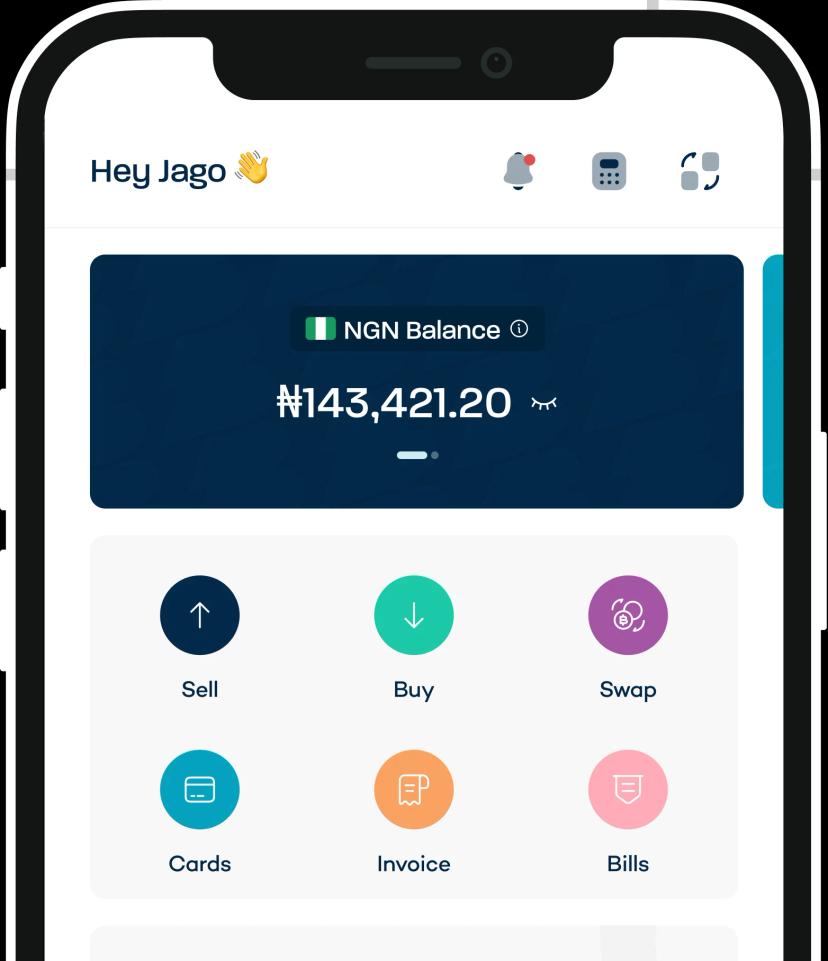
It lets a business accept global crypto payments and receive automated, volatility-free settlement in NGN, GHS, or USD directly to a local bank or mobile money account.
Over 100 verified African businesses use Breet, including platforms like Cardtonic. Breet has settled more than 3 million transactions at a 99.9% uptime SLA, and a new business can go from sign-up to its first live, compliant transaction in under 24 hours.
Depending on the business type, Breet offers three implementation paths:
For developers: integrate the payment API
Engineers can deploy Breet’s crypto and stablecoin payment API to automate backend workflows: dynamic wallet generation, real-time on-chain confirmation monitoring, automated asset conversion, and instant webhook notifications.
That makes a business programmable, automated money without building wallet architecture from scratch.
Explore the technical implementation in the official API documentation.
For finance teams: issue crypto invoices
Finance and accounts receivable teams can use Breet’s crypto invoicing portal to generate a localized, professional invoice and send it to an international client.
The client pays on-chain in their preferred stablecoin, and the business receives local fiat directly in its bank account, with existing accounting and AR processes untouched.
For enterprise and treasury: access the OTC desk
High-volume businesses, importers, and treasury leads managing large corporate currency hedges can onboard directly to the Breet OTC desk.
The desk converts large positions into naira or cedis at institutional rates, with rate locks guaranteed before execution, so treasury can move significant volume in under an hour with zero slippage.
Turn the infrastructure into a corporate edge
What actually moves the needle for an African enterprise isn’t the generic advantages repeated in Western whitepapers.
It’s reliable local settlement, accessible dollar-denominated treasury hedging, and skipping the broken web of correspondent banking entirely.
As regional regulation matures and cross-border commerce accelerates, setting up a compliant digital asset gateway stops being a project for next quarter and starts being table stakes.
Ready to stop the FX bleeding and modernize your international cash flow? Book a walkthrough with the Breet Business team.
Frequently asked questions
What exactly is a stablecoin?
A stablecoin is a cryptocurrency pegged to another stable asset, most commonly the US dollar (USDT or USDC are the two most common). That peg lets a business use the speed and low fees of blockchain rails without the price volatility of assets like Bitcoin.
Why are African businesses adopting stablecoins so rapidly?
They’re solving structural banking problems: bypassing slow, expensive correspondent banking for cross-border payments, hedging corporate cash reserves against local currency depreciation, and receiving payments from international clients who prefer to settle on-chain.
Can my business accept stablecoins but get paid in naira or cedis?
Yes. Infrastructure providers like Breet automate the exchange. When a client pays an invoice in a stablecoin, the system converts it and routes the funds as local fiat (NGN or GHS) directly into the business bank account or mobile money wallet.
Are stablecoins safe and legal for African enterprises to use?
Stablecoins are secure when managed through a compliant infrastructure provider. Regulatory postures were uncertain a few years ago; modern frameworks, including the CBN’s 2026 payments vision, now explicitly recognize digital assets. A partner that builds in KYC/AML screening, PCI DSS security, and local data protection compliance keeps operations defensible and auditable.