The usual USDC vs USDT comparison gives you two familiar answers. USDC offers stronger reserve transparency and closer alignment with US and European regulation. USDT has a larger market, deeper liquidity, and wider use across emerging markets.
USDT vs USDC for business comes down to what you actually need the stablecoin to do. A business receiving USDT from customers and converting it to naira within a few hours has a very different need from a company holding stablecoins on its balance sheet for months while dealing with banks, investors, and auditors in the US or Europe.
That’s the comparison that matters. Here’s how to choose based on the job your business needs done.
USDC and USDT, compared honestly: issuer, liquidity, and regulation
USDC and USDT are both dollar-pegged stablecoins that maintain a value of $1. The key differences for a business come down to three things: how they disclose reserves, how much liquidity surrounds each token, and the regulatory environments they operate in.
Who backs USDC and USDT, and how visible are the reserves?
USDC is issued by Circle. Circle publishes reserve information and provides monthly third-party assurance from a Big Four accounting firm. Its reserves are primarily held in cash and highly liquid US government assets, with Circle stating that USDC is backed 1:1 by reserves.
On the other hand, USDT is issued by Tether. Tether publishes reserve reports and has its figures independently attested by BDO.
The difference is largely one of reporting structure and frequency.
The comparison is more nuanced than “one is backed and the other isn’t.” Both publish information about their reserves.
How much liquidity does each stablecoin have?
As of September 2026, USDT’s market capitalization is around $183 billion, compared with roughly $74 billion for USDC. That puts USDT at about 2.5 times the size of USDC by market cap.
That gap matters to a business because liquidity affects how easily an asset can be bought, sold, or converted without moving the market.
That difference shows up in how the two stablecoins are used. USDT is widely traded on exchanges, used in P2P transactions and has a large presence on Tron, where transaction costs can run at a fraction of Ethereum’s. USDC is used across payment, DeFi and on-chain financial applications, with support on networks including Ethereum and Solana.
Which regulatory environment does each one fit?
USDC has an advantage when the business needs to operate within certain US or European institutional frameworks.
Circle has built a substantial regulatory footprint around USDC, including its MiCA-compliant European structure. For companies dealing with European crypto-asset service providers, banks, investors, or other regulated counterparties, USDC’s MiCA compliance gives those counterparties a defined regulatory framework to assess.
With around $183 billion in circulation as of September 2026, USDT has a larger pool of tokens already in use across global markets, which supports its use in cross-border payments, P2P markets and businesses operating outside traditional US and European financial systems.
Stablecoins are already being used across Sub-Saharan Africa for cross-border payments and trade, with Nigeria standing out as one of the region’s largest crypto markets. Chainalysis has also reported that USDT purchases represent a larger share of activity in Nigeria.
The regulatory picture and the liquidity picture point in different directions, which is why a generic “which is better?” comparison doesn’t go very far.
The catch: what “audited and regulated” doesn’t actually guarantee
USDC’s transparency and regulatory positioning are advantages, but they don’t automatically mean the stablecoin is risk-free.
Two details are worth understanding before treating the USDC story as a simple safety argument.
The yield you give up by choosing the “safe” one
Keeping your business cash in USDC means the business does not receive the yield generated by its reserves.
Circle holds USDC reserves in assets such as short-dated US Treasuries, cash, and overnight Treasury repo. Those assets generate income, but that income belongs to Circle and its distribution partners, not to the business holding USDC.
Take a business with $1 billion moving through its treasury each month. If $1 billion sits in USDC for three days before being used for payroll, supplier payments or other obligations, a 4% annual yield would put the foregone return at roughly $329,000 for those three days. If the same balance stayed idle for 30 days, the foregone return would be about $3.29 million. The 4% figure is a simple benchmark based on US Treasury yields around 4% in September 2026, not a guaranteed return.
That does not make USDC a bad choice. It simply puts a dollar value on one of its trade-offs. You get a stablecoin designed around reserve transparency and liquidity, while the yield generated by those reserves stays with the issuer rather than the business holding the tokens.
The one time the “safe” coin actually wobbled
In March 2023, Silicon Valley Bank collapsed. Circle disclosed that $3.3 billion of USDC reserves, around 8% of its total reserves at the time, were held at the bank.
USDC subsequently traded well below its $1 target. The Federal Reserve later reported that it fell as low as $0.87 before recovering after authorities announced measures to protect SVB depositors.
The lesson for a business is that regulation, reserve disclosure, and independent assurance can reduce risks, but they do not remove every banking, custody, or liquidity risk surrounding a stablecoin.
Neither point overturns the USDC vs USDT comparison. The real question is what those trade-offs mean for your business, your cash flow, and the way you actually use stablecoins.
Which stablecoin should your business use?
Stop asking which stablecoin is better in the abstract. For a business, the useful question is what job the stablecoin needs to do.
There are two common ones: settlement and custody.
If you are accepting payments and settling to cash quickly
Imagine an African fintech, marketplace, or exporter receiving stablecoins from customers or business partners. The company wants to receive payment, convert the stablecoin into NGN, GHS, or USD, and get on with the business.
For that job, USDT is a good choice.
USDT has a larger market than USDC, with roughly $183 billion in circulation compared with USDC’s $74 billion as of September 2026. It has deeper global liquidity and stronger usage across emerging-market and P2P corridors, which makes it a better option when the goal is moving money through markets where USDT is held.
This does not mean USDT is inherently the better stablecoin. It means its liquidity and market presence make it the more practical choice for a business whose priority is receiving and converting stablecoin payments, rather than holding it.
USDT is available on networks including Tron, Ethereum, Solana, and BNB Smart Chain. For businesses settling frequent payments, Tron is relevant because transaction costs can run at a fraction of Ethereum’s, reducing the network fee attached to each USDT transfer.
If you are holding reserves or dealing with US and EU institutions
Now change the scenario. Your business is holding a stablecoin balance for weeks or months. Your investors, banking partners or auditors are in the US or Europe. Suddenly, the question is less about moving the money quickly and more about being able to explain exactly what sits behind it.
USDC’s reserve transparency and regulatory positioning become relevant if your business is holding stablecoins for weeks or months. Circle’s monthly third-party reserve assurance provides a more frequent reporting cadence, while its European structure gives USDC a clear position under MiCA.
The trade-off is that you are prioritizing transparency and regulatory alignment over the broader liquidity footprint that USDT offers.
Most businesses reading this are closer to the first scenario than the second. That is why “it depends” feels like an incomplete answer. There are two different jobs, and once you define yours, the USDC vs USDT decision becomes much clearer.
Accept USDT and USDC without picking a side
Choosing USDT for settlement or USDC for treasury does not mean your payment infrastructure has to choose one forever.
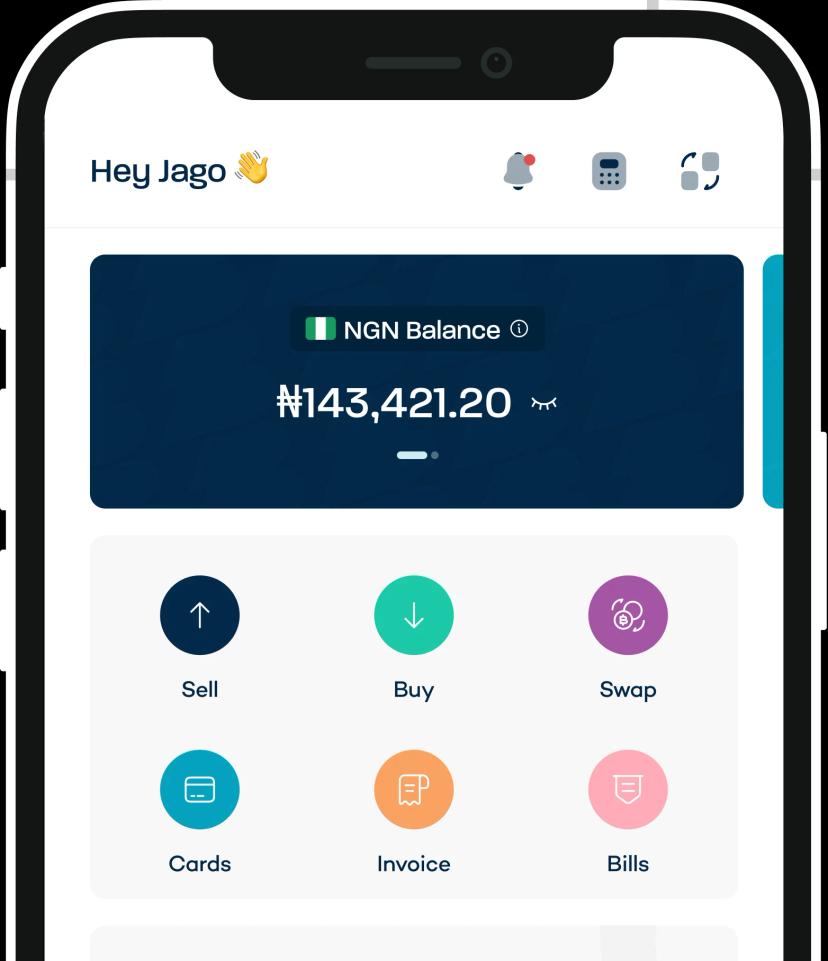
A business should be able to accept the stablecoin its customers actually hold and decide what happens to it afterward. Breet’s Crypto & Stablecoin Payment API accepts both USDT and USDC across TRC20, ERC20, Solana, BNB Smart Chain, Polygon, Arbitrum, and Base. Either can be automatically converted to NGN, GHS, or USD when it arrives, so accepting one does not mean shutting the other out.
The same flexibility applies to supplier payments. Import and export businesses can convert NGN, GHS, or USD to USDT or USDC for international payments, then convert back when needed. That gives businesses another route around dollar scarcity and the parallel market when paying suppliers or moving funds across borders, without building separate treasury infrastructure around each stablecoin.
For larger transactions, liquidity is only useful if the business can actually execute at a predictable rate. Breet’s OTC Desk gives businesses access to institutional rates with the rate locked before execution, so large USDT or USDC trades can settle without order-book slippage. That means the business can choose the stablecoin that fits the transaction without having to accept an unpredictable final conversion rate simply because the trade is large.
Compliance can sit across both flows too. Breet applies KYC and AML screening to transactions regardless of the stablecoin being used, with business KYB completed in under 24 hours. That gives businesses a consistent compliance process while still allowing them to choose the coin that fits each transaction.
See how Breet settles both, automatically, or talk to the team about the API if your business needs a stablecoin payment and settlement setup.