Bitcoin for treasury, stablecoins for payments. That is a useful starting point, and it is true enough for most transactions a business makes. However, it leaves out two things.
First, Bitcoin’s volatility runs in both directions. A business, for instance, that receives payment in BTC could lose 3-5% of its value within a day due to the fluctuations in the market.
That same business could also gain an extra 2 to 5% of its investments too, due to the same volatile nature of the Bitcoin market.”
Second, the advice to hold stablecoins because they protect you from currency depreciation assumes your local currency is always the one losing value against the dollar. It is not always the case.
The Naira appreciated against the dollar through most of 2026. A business that moved its treasury into dollar-pegged stablecoins expecting the usual hedge sat out a real gain instead.
Bitcoin vs Stablecoins: 4 Differences and why they matter to a business
The comparison between both comes down to four dimensions: stability, accountability, settlement, and risk. The question is which risk fits the job.
Price stability, and what “stable” actually costs
Bitcoin’s value is set by open-market supply and demand, so large moves are normal. In 2026, Bitcoin fell below $60,000 in June after reaching more than $126,000 in October 2025.
A fiat-backed stablecoin such as USDT or USDC is designed to track a reference currency, usually the US dollar, at roughly 1:1. USDC’s reserves consist of highly liquid cash and cash-equivalent assets, including short-duration US Treasuries, with independent attestations.
Stablecoins are not risk-free. USDC briefly lost its dollar peg during the 2023 Silicon Valley Bank failure before the reserve concern was resolved within days and 1:1 redemption was restored. Stable means lower volatility and not zero risk.
Who’s accountable: no one, or a named company
Bitcoin has no issuer. Its rules are enforced by a decentralised network of nodes and miners using proof of work. This is the actual mechanism behind the phrase “Bitcoin is trusted. But for stablecoins, that trust is placed on the people who introduced it.’”
A stablecoin works differently. Its soundness depends on the issuer, reserves, reporting, and redemption terms.
There is also a control risk Bitcoin does not have in the same form: an issuer can block or blacklist addresses. In April 2026, Tether froze $344 million in USDT across two wallets after the US Treasury’s OFAC sanctioned them for links to Iran’s central bank.
Under the GENIUS Act, a stablecoin issuer must publish a monthly reserve attestation, examined by an accounting firm and certified by its CEO and CFO.
It also means the business now depends on a company’s compliance program, not just the blockchain, a different dependency than Bitcoin’s, not a lesser one.
With a stablecoin, the business is trusting both the blockchain and the company operating the stablecoin system. With Bitcoin, the trust model is distributed across the network.
Settlement speed and what it does to reconciliation
Bitcoin transactions can appear almost instantly, but confirmation happens when the transaction is included in a block.
New Bitcoin blocks arrive about every 10 minutes on average, and businesses may wait for multiple confirmations for higher-value payments.
Lightning can make Bitcoin payments faster, but it is not the default rail for every business or counterparty.
Stablecoins can settle in minutes across multiple supported networks, and they do this around the clock, including weekends and bank holidays.
USDC alone is natively supported on 38 blockchains, including Ethereum and Solana, as of September 2026. That reach is what lets stablecoins fit into a payment and settlement flow the way Bitcoin, tied to a single chain, cannot.
In Nigeria, the Nigeria Tax Administration Act 2025 treats profit from disposing of a digital asset, including Bitcoin, as a chargeable gain subject to income tax of up to 25% from 2026.
A dollar-pegged stablecoin’s gain or loss on the same transaction is usually close to zero, which removes most of that reconciliation burden.
Risk profile: market risk vs counterparty risk, not “risky vs safe”
Bitcoin’s main risk here is market risk. You receive BTC, and its market value can rise or fall before you sell it. The same movement can create a loss or gain.
A stablecoin shifts the risk rather than removing it. The main concerns become counterparty and reserve risk: whether the issuer actually holds what it claims, how transparent those reserves are, how fast holders can redeem, and whether the issuer can freeze or restrict an address.
Stablecoins are often useful for payroll and contractor payments, but payroll involves legal, tax, and operational questions that go beyond this comparison.
When your own currency is the one gaining
A stablecoin protects a business from local-currency depreciation only while the local currency is actually depreciating against the stablecoin’s reference currency.
Nigeria gives this rule a useful stress test. The Naira appreciated 11.25% against the dollar from July 2025 to July 2026, per the WFP’s own currency tracker.
By September 2026, USD/NGN was around ₦1,326 per dollar per Trading Economics, and four investment firms surveyed by Legit.ng expected further strengthening toward about ₦1,290 before year-end.
This does not mean businesses should abandon dollar exposure. A company that converts ₦13.26 million into $10,000 of USDT at ₦1,326/$ and later converts at ₦1,290/$ gets about ₦360,000 less, before fees, because the Naira strengthened.
This is different from using stablecoins as a payment rail. If a customer pays USDT and the business converts it to Naira immediately, there is little reason to care whether the Naira is strengthening or weakening tomorrow.
The issue is specifically about holding stablecoins as a standing treasury position.
Which one, for which job?
“Bitcoin or stablecoin?” is not one decision, but four different jobs.
- Paying a supplier abroad: Stablecoin, in most cases. If the supplier invoices in dollars, a dollar-pegged stablecoin skips the currency conversion step, so there is no exchange-rate slippage between the invoice and the payment, and settlement happens outside traditional banking hours.
- Holding treasury float: Depends on the currency direction and the purpose of the reserve. Do not treat stablecoins as a universal hedge. If the local currency is depreciating, dollar exposure preserves purchasing power. If it is strengthening, holding dollars has an opportunity cost instead.
- Accepting a customer’s payment: Either bitcoin or stablecoin can work. The more important decision is what happens when the payment lands. If the business converts immediately, the payment asset need not become treasury. For the mechanics of accepting either asset at checkout, see Crypto Payment Integration: 8 Best Practices for African Businesses.
- Wanting genuine long-term appreciation exposure: Bitcoin, deliberately, accepting the volatility as the actual price of that upside. That price can mean a multi-month drawdown that lands right when the business needs the cash, so this only fits money the business can afford to leave untouched, not funds earmarked for near-term use.
You don’t have to pick a side to settle the transaction
None of the four jobs above require holding either asset, as long as the money converts to fiat the moment it lands.
For many businesses, the actual requirement is simple. A customer wants to pay in Bitcoin or a stablecoin. The business wants the value in its bank account. There is no reason the business has to turn that payment into a long-term crypto position.
Settle automatically, in fiat, the moment either asset lands
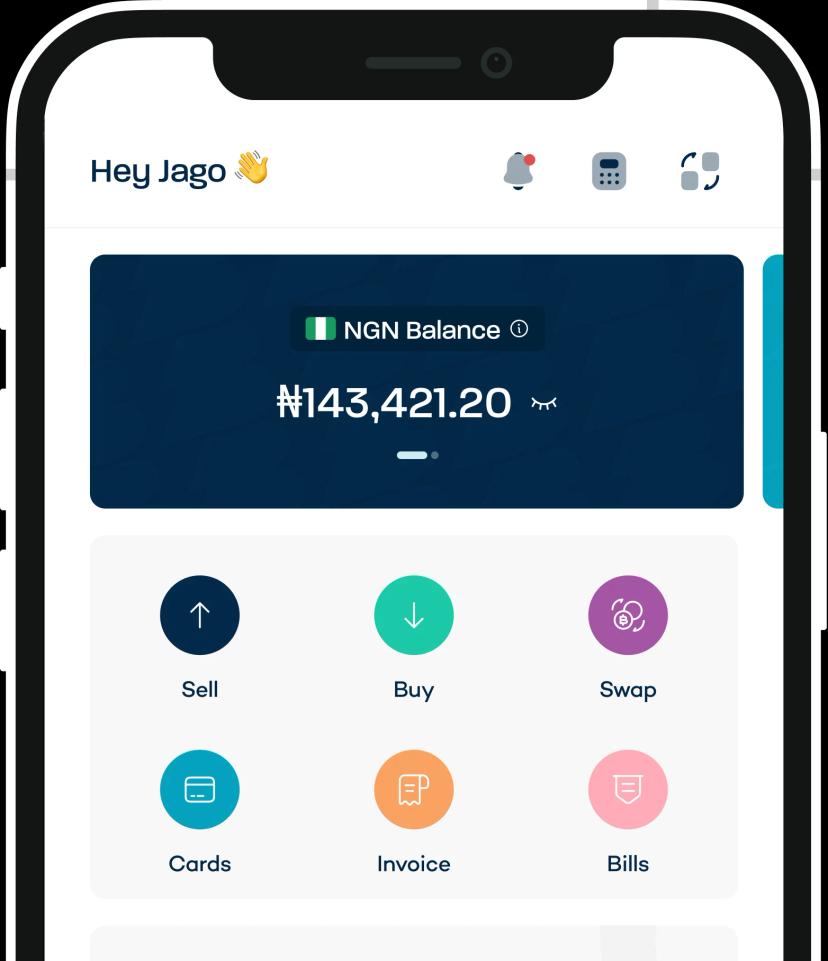
Breet’s Crypto & Stablecoin Payment API is built for this flow. A business can accept supported crypto assets, including Bitcoin and stablecoins, while the payment converts and settles to NGN, GHS, or USD.
The API also sends a webhook the moment a payment is confirmed, so the business can trigger order fulfillment or update its own records automatically instead of checking a dashboard manually
Access dollars through stablecoins without carrying a treasury position
A business that needs dollar value for a supplier does not need to hold USDT or USDC indefinitely. It can convert when the payment is needed and use it for settlement.
Breet’s OTC desk is built for supplier-payment-sized trades, not routine top-ups. It locks the quoted rate before execution and offers same-hour settlement in NGN, GHS, USD, USDT, or USDC.
This lets the treasury choose its settlement currency without leaving a large trade exposed to execution-day price movement.
If your business needs this route, talk to the team about the OTC desk.
Reconcile the same way no matter which asset shows up
The final question is reconciliation. If one customer pays BTC and another pays USDT, finance should not need two completely different processes. The business gets a single settlement flow regardless of what the customer chose to send.
Every wallet address Breet generates is created per customer or per transaction, with bank details and a label attached the moment it’s set up.
That means a deposit auto-settles to the right account, whether the customer paid in Bitcoin, USDT, or USDC. There is no manual matching, no guessing which invoice a payment belongs to, and no separate process depending on which asset landed.
Bitcoin is not simply “risky,” and stablecoins are not simply “safe.” Bitcoin gives you market exposure. Stablecoins give you price stability against a reference currency, with issuer and reserve risk.
For many businesses, the best answer is neither: accept the asset your customer wants, convert it immediately, and keep your treasury in the currency you actually need right now.
See how Breet settles either asset automatically.