Paychant began as a Bitcoin payment gateway targeting African merchants. However, its current offering is narrower: a hosted fiat on-ramp and off-ramp widget for wallets, remittance, savings, and investment applications. This product focuses on four stablecoins: USDT, USDC, CUSD, and CEUR, covering five countries.
This is suitable for businesses that only require a stablecoin on-ramp. However, it may fall for your business if:
- Your customers hold Bitcoin or Ethereum. Since neither of these cryptocurrencies is included in Paychant’s current asset list, customers wishing to pay with them will either be turned away or redirected to a different provider.
- You need payments to be deposited directly into your bank account instead of a hosted widget. The widget merely converts and displays a balance; it does not guarantee where that balance will go next.
- Your fee structure needs to be more competitive than 1%-2.5%. Paychant lists buy fees between 1% and 2% and sell fees that range from 1% to 2.5%, depending on the payment method.
- You require easily accessible documentation that your developer can use and integrate without much back and forth.
Here are six alternatives to Paychant worth comparing, starting with the one that directly addresses the settlement issue.
Top 6 Paychant alternatives in 2026
1. Breet: settle crypto payments straight to your NGN or GHS bank account
If your main reason for leaving Paychant is to enable crypto payments to be directly deposited into a bank account without requiring your customers to go through an additional off-ramp step, Breet is the best alternative on this list.
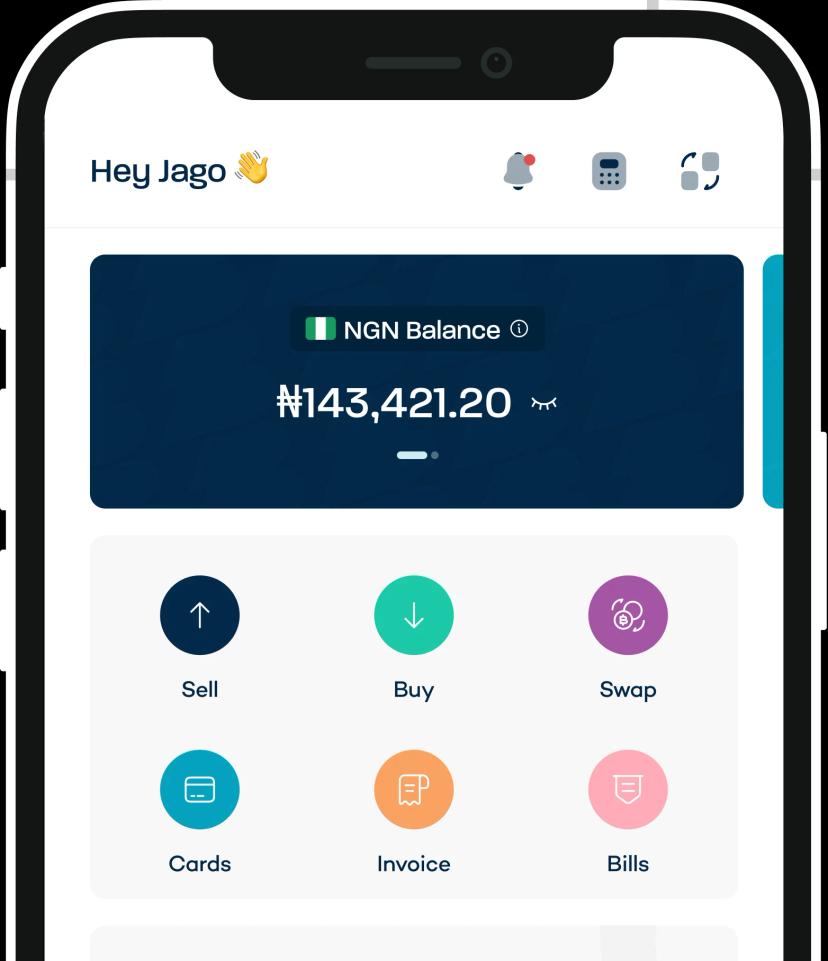
Breet is designed for direct crypto-to-fiat settlement. It generates a wallet address for customers, detects incoming deposits, converts the cryptocurrency, and automatically settles the resulting NGN or GHS into the business’s bank account.
If you’re looking to accept crypto payments without adding another conversion step to your operations, Breet is specifically designed for that workflow.
Accept 12+ crypto assets, including Bitcoin, with a wallet address generated automatically for each customer
Breet allows for over 12 deposit assets across various networks, including Bitcoin and other major cryptocurrencies, more than what Paychant supported. This flexibility enables businesses to accept a wider range of assets that their customers already own.
A unique wallet address is generated automatically for each customer, ensuring that the payment flow remains linked to individual transactions. This setup eliminates the need for businesses to manually create and manage receiving addresses.
Pay one volume-based transaction fee, with no setup, monthly, gas, or wallet-sweeping charges
Breet does not offer a flat transaction rate for all businesses. Instead, its fees, which are shared during the onboarding process, are based on transaction volume.
Additionally, businesses do not incur separate setup, monthly, gas, or wallet-sweeping fees.
For a business handling significant transaction volumes, a volume-based quote provides a relevant figure to evaluate against its actual transaction profile, rather than relying on the assumption that every transaction will be subject to the same published percentage.
Go live in under a day, with 99.9% uptime and 3M+ transactions already settled programmatically
Breet reports more than 100 verified businesses across Africa, has settled over 3 million transactions programmatically, maintains a 99.9% uptime, and offers a sign-up-to-first-live-transaction timeline of under one day.
For example, Cardtonic’s case study highlights that the company transitioned from sandbox to production in just two days. Similarly, PIL’s case study describes the integration process as one that “fit in cleanly,” allowing their team to remain focused on their core product.
Ready to make the switch? Book a demo to see how Breet could fit into your payment flow.
2. Yellow Card
Best for: businesses that need to reach more African markets than Paychant currently supports.
Yellow Card is a better option if your business requires coverage in African countries beyond the five markets offered by Paychant. Its Payment API operates in 20 African countries, providing bank transfers and mobile money services across various markets, along with wallet infrastructure that spans over 30 blockchains.
This makes it particularly relevant for businesses looking to expand into countries such as Kenya, Uganda, and Zambia, in addition to Nigeria and Ghana.
However, payment methods and availability can differ from one country to another. It’s important to note that Yellow Card’s current fee documentation indicates that channels in Ghana are unavailable, even though an older coverage map shows Ghanaian mobile money services.
Therefore, businesses based in Ghana should verify the current availability of services before proceeding with integration.
Pros
- 20 African markets: Reach customers across more countries through one payment API.
- Bank and mobile-money rails: Support local payment methods across different African markets.
- 30+ blockchains: Offer wallet infrastructure beyond Paychant’s narrower stablecoin asset coverage.
Cons
- Uneven country coverage: Payment methods and supported corridors vary significantly between markets.
- Ghana availability uncertainty: Current documentation says Ghana channels are unavailable, despite older coverage information.
- Country-specific limits: Transaction limits and fees depend on the payment corridor and method.
3. Ivorypay
Best for: businesses looking for a more traditional merchant crypto-checkout experience.
Ivorypay is a strong alternative to Paychant if you’re looking for a crypto payment gateway designed for merchant checkout.
Its merchant payment infrastructure charges a collection fee of 1% on crypto payments, with a maximum fee of $25, and it supports merchants in 17 countries.
However, its asset coverage is more limited. Ivorypay only supports USDT, USDC, BTC, and ETH, which means merchants can access two major cryptocurrencies and stablecoins.
Additionally, its virtual account and fiat collection products have historically been restricted to businesses in Nigeria, so companies operating across multiple countries should verify their eligibility before integrating.
Pros
- Merchant-focused checkout: Built around accepting crypto payments directly from customers at checkout.
- 17-country coverage: Supports merchants across more African markets than Paychant.
- Predictable collection fee: Charges 1% per crypto collection, capped at $25.
Cons
- Only four listed assets: Supports USDT, USDC, Bitcoin, and Ethereum.
- Nigeria-focused fiat tools: Some virtual-account features have been limited to Nigerian businesses.
- Confirm multi-country eligibility: Fiat features and availability may differ by market.
4. Quidax
Best for: businesses that want trading and custody alongside crypto payment infrastructure.
Quidax is a more suitable choice for businesses with a crypto strategy that goes beyond just accepting payments. It is a digital asset exchange in Nigeria that is licensed by the SEC.
Quidax offers a B2B infrastructure featuring wallets, payouts, and Basqet, its dedicated crypto payment solution. Unlike a provider that focuses solely on payments, Quidax can address a wider range of crypto services, including trading and custody.
However, there is a trade-off in how payments are settled. Quidax does not disclose a standard transaction fee, and businesses that receive volatile cryptocurrencies must manually convert them into stablecoins.
This leaves them vulnerable to price fluctuations until the conversion takes place.
Therefore, Quidax’s broader currency and country coverage may be more appealing to businesses that are developing a comprehensive digital asset portfolio rather than those that are simply seeking direct local currency settlements.
Pros
- Trading and custody: Add broader digital-asset services alongside payment acceptance.
- Dedicated payment product: Basqet provides a purpose-built option for accepting crypto payments.
- B2B infrastructure: Covers wallets and payouts alongside its exchange services.
Cons
- No published transaction fee: Businesses must get pricing directly rather than compare a standard rate.
- Manual stablecoin conversion: Volatile crypto remains exposed to price movement before conversion.
- Broader than payments: May be unnecessary for a business needing only checkout infrastructure.
5. BitPay
Best for: businesses that want an established global crypto-commerce provider beyond Africa.
BitPay is the most globally oriented option on this list, supporting over 100 cryptocurrencies across six networks and compatible with more than 100 wallets.
It offers tools for e-commerce, email invoicing, in-store payments, and donations. This makes it particularly suitable for businesses seeking a well-established crypto-commerce brand instead of a payment provider focused solely on Africa.
However, a significant limitation for businesses in Nigeria and Ghana is the settlement options. BitPay’s listed fiat settlement currencies do not include NGN or GHS or any African currencies.
The starting fee for using BitPay is 2% plus $0.25 per transaction, but this rate decreases to 1% for businesses processing more than $1 million in monthly volume.
Pros
- 100+ supported coins: Give customers substantially more asset choice than Paychant’s stablecoin-focused coverage.
- Global commerce tools: Support e-commerce, invoicing, in-store payments, and donations through one provider.
- Established infrastructure: Offers more than a decade of experience in crypto payments.
Cons
- No NGN or GHS settlement: Nigerian and Ghanaian businesses cannot settle directly into those local currencies.
- 2% starting fee: Smaller-volume merchants pay more than the 1% rate available at higher volumes.
- Extra conversion step: Local businesses may need another route to move settlement into naira or cedis.
6. CoinGate
Best for: businesses that need EU-licensed crypto payment infrastructure.
CoinGate is an ideal choice for businesses that prioritize formal European compliance. It obtained both a MiCA license and an EU Payment Institution license in 2025.
The platform charges a flat transaction fee of 1%, with no monthly or setup costs involved. Since its launch in 2014, CoinGate claims to have processed over 7 million cryptocurrency payments.
Additionally, CoinGate supports Bitcoin’s Lightning Network, which can benefit merchants seeking fast and low-cost Bitcoin transactions.
However, for businesses in Africa, there is a trade-off regarding settlement currencies: while CoinGate supports EUR, USD, and GBP, it does not directly support NGN (Nigerian Naira) or GHS (Ghanaian Cedi).
Pros
- EU-licensed infrastructure: Adds formal MiCA and Payment Institution licensing to the compliance profile.
- Flat 1% fee: Avoids monthly and setup charges while keeping transaction pricing straightforward.
- Lightning support: Enables fast Bitcoin payments through the Lightning Network.
Cons
- No NGN or GHS settlement: African merchants cannot settle directly into naira or cedis.
- No native Shopify integration: Shopify merchants need a custom API implementation.
- Limited fiat settlement: Supports EUR, USD, and GBP rather than African local currencies.
Breet Business: The Paychant alternative that’s built for African businesses
A crypto payment provider may support many cryptocurrencies, but the key question for businesses is: what actually reaches your bank account? This is crucial after a customer pays and the cryptocurrency is converted.
For African businesses, Breet offers a straightforward solution. It converts supported crypto payments directly to NGN (Nigerian Naira) or GHS (Ghanaian Cedis), eliminating the need for a separate off-ramp.
With a volume-based transaction fee, Breet provides a consistent pricing structure for easier onboarding, transaction volume, and uptime, along with customer case studies demonstrating successful integrations.
If your goal is to convert crypto payments into usable funds, this distinction matters.
Book a demo to see a payout processed into a Nigerian or Ghanaian bank account while you’re on the call.