If you’re researching alternatives to CoinPayments, you’re likely looking for a crypto payment gateway that:
- Converts customer payments in cryptocurrency into an account you can use, rather than a balance only stored in a custodial wallet.
- Charges a transparent fee shown before integration, unlike rates confirmed after you become a customer.
- Lets you withdraw your money on your own schedule, without a support ticket blocking your access.
When it comes to crypto payment gateways, those that hold your funds often aren’t the safest option. The risk lies in custody: if the platform controls the wallet, it also controls how and when you get paid.
For businesses in Nigeria or Ghana, custody issues are compounded by settlement challenges. While platforms like BitPay, Coinbase Payments, and NOWPayments facilitate crypto checkouts, none of them settle payments directly into a Naira or Cedi bank account.
In this guide, we share six alternatives to CoinPayments, evaluated based on where the money ends up and the actual costs involved.
We’ll start with our own platform, Breet, which settles every payment directly to a linked NGN or GHS bank account without any custodial holding step in between.
Running a business in Nigeria or Ghana? Book a demo to see a payout land in your bank account while you’re still on the call.
The top 6 CoinPayments alternatives
1. Breet: settle every crypto payment straight to your NGN or GHS bank account
Breet is a non-custodial cryptocurrency payment platform designed for businesses in Africa. Unlike CoinPayments, it never holds your funds in a wallet; instead, it converts and settles them directly.
For a business, the key question is what appears in the bank account on Monday morning. For businesses in Nigeria and Ghana, Breet is the only option that effectively addresses this need.
Pay one volume-based fee, with no custodial, maintenance, or gas charges added on afterward
Breet charges a volume-based fee, which is the only cost associated with the deposit-to-bank settlement process. We share the exact percentage during onboarding, as it depends on your settlement volume. No additional fees apply for setup, monthly subscriptions, gas, or wallet maintenance.
Breet eliminates $20-$50 gas fees typically charged by CoinPayments. With Breet, deposits are sent to a Breet-generated address, converted, and settled directly to your bank account.
Because you never withdraw funds in the traditional sense, you do not incur any network withdrawal fees. Breet’s fee comprehensively covers the entire process from deposit to bank settlement. The rate you agree to during onboarding is the total fee you will pay.
Skip wallet custody entirely, so a stuck balance is never something only the provider can unlock
CoinPayments operates as a custodial service, which means that users do not have access to their private keys or seed phrases. In contrast, Breet is designed to eliminate custody altogether.
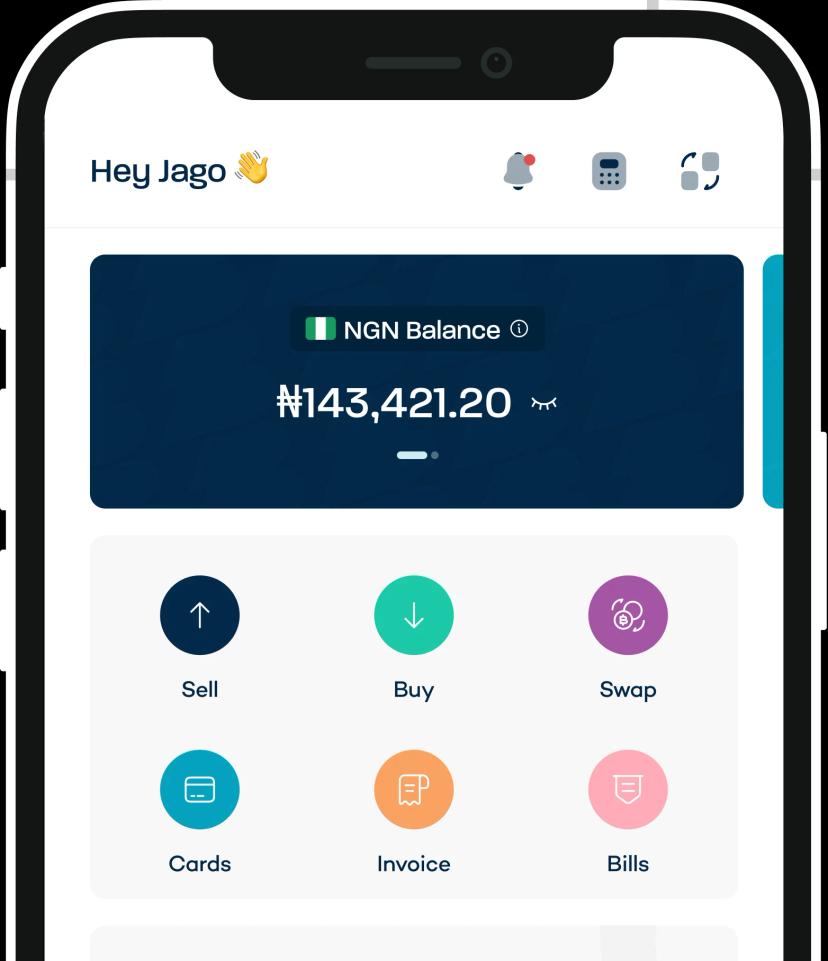
When a customer deposits cryptocurrency, the system automatically detects the transaction, converts the funds, and transfers them directly to the linked bank account.
With the autosettlement feature enabled, Breet stores no funds in a wallet, so users don’t need to initiate a withdrawal.
Recover eligible mismatched deposits automatically through the same webhook flow that reports every payment
One risk of crypto payments is customers sending the wrong asset, especially since the same asset can exist on different blockchain networks. On custodial platforms, this often requires a support ticket and manual recovery, which can take months.
Breet solves this by automatically recovering supported-asset mismatches. If a customer sends an asset Breet supports but not the one requested, the system recovers it without support intervention. Merchants can view recovery events alongside payment confirmations.
Breet Business has processed over 3 million transactions for more than 100 verified businesses in Africa, with a 99.9% uptime SLA. Its crypto API and documentation simplify setup and usage.
For instance, Cardtonic, a gift card platform in Nigeria and Ghana, went from testing to live production in two days, with same-day settlement to their bank.
This track record demonstrates Breet’s commitment to African settlements.
2. BitPay
BitPay is a cryptocurrency payment company that was founded in 2011. It provides a reliable checkout infrastructure for global merchants.
The platform supports over 100 cryptocurrencies across six different networks and is compatible with more than 100 wallets.
BitPay offers various tools for online checkout, email invoicing, in-store QR payments, and donation pages. The company charges tiered fees, starting at 2% plus $0.25, which can decrease to 1% plus $0.25 for high-volume transactions.
Pros
- Over a decade of crypto-payments experience behind a recognized global brand.
- Broad asset support: 100+ coins across six networks and 100+ wallets.
- Published, transparent pricing with no hidden maintenance or gas charges.
Cons
- Settles in 8 currencies (USD, AUD, CAD, GBP, MXN, NZD, CHF, EUR), none of them African.
- A Nigerian or Ghanaian business needs an extra third-party conversion step to reach its bank.
- The starting fee of 2% plus $0.25 drops to 1% at high volume.
3. Coinbase Payments
On March 31, 2026, Coinbase discontinued its Commerce service, transitioning merchants to either Business or Payment Acceptance. The new product is designed for enterprises seeking stablecoin checkout options, complete with authorization and capture controls.
It supports USDC and USDT across five EVM networks: Ethereum, Base, Polygon, Optimism, and Arbitrum. You can access this service through Coinbase accounts or self-custody wallets, with a flat 1% fee.
Pros
- Enterprise-grade authorization and capture controls built for stablecoin checkout.
- USDC and USDT support across five major EVM networks.
- Flat, simple 1% processing fee.
Cons
- Settles only via Fedwire, SWIFT, or USDC, so there’s no confirmed direct NGN or GHS route.
- A SWIFT transfer to a Nigerian or Ghanaian bank adds fees, delays, and FX spread on top of the processing cost.
- Migration from the shuttered Commerce product is currently limited to entities in the US or Singapore.
4. NOWPayments
NOWPayments supports a wide range of cryptocurrencies, offering over 300 crypto assets. They provide plugins for major e-commerce platforms, hosted invoices, payment links, subscription billing, and the ability to execute mass crypto payouts via API or CSV.
The fees are 0.5% for same-coin conversions and 1% for multi-currency or fixed-rate transactions.
Pros
- Widest asset list in this comparison, useful for merchants whose customers pay in long-tail tokens.
- Subscription billing and mass payout tooling built in.
- Low 0.5% headline fee on straightforward, same-coin transactions.
Cons
- No confirmed direct NGN or GHS bank route; get the currency, partner, and rail details in writing before committing volume.
- Fee rises to 1% for multi-currency or fixed-rate transactions.
5. CoinGate
CoinGate is fully authorized under the MiCA CASP regulations and holds a Payment Institution license issued by the Bank of Lithuania as of December 16, 2025.
This regulatory framework ensures that CoinGate operates in compliance with European regulations concerning cryptocurrency and payment services.
The platform allows businesses and individuals to process payments seamlessly from over 180 countries, offering a competitive flat fee of just 1% per transaction with no hidden monthly fees or costs.
Moreover, CoinGate enhances its payment solutions by integrating Bitcoin’s Lightning Network, which facilitates faster and cheaper transactions, making it an ideal choice for both merchants and customers seeking efficiency and reliability in their payment processing.
Pros
- EU-licensed (MiCA and Payment Institution), a strong compliance signal for European counterparties.
- Flat 1% fee with no monthly or setup cost.
- Lightning Network support for fast, low-cost Bitcoin payments.
Cons
- Pays out in EUR, GBP, or USD only. No NGN. No GHS.
- Payouts run weekly by default with a 50 EUR minimum withdrawal.
- Crypto payouts with automatic fiat conversion cost 0.50 EUR plus 1.5%, on top of the base fee.
6. PassimPay
PassimPay stands out for competitive pricing on euro settlements, charging a starting fee of 0.5% plus a 0.2% automatic conversion fee, for an effective fee of 0.7%.
The platform supports over 74 cryptocurrencies and offers instant withdrawals with no holdbacks. PassimPay has processed more than $4 billion in transaction volume across over 530 merchants.
Pros
- Lowest effective fee (0.7%) of any provider on this list.
- Instant withdrawals with no holdback period.
- Broad asset support across 74-plus cryptocurrencies.
Cons
- Settles in EUR only; its own homepage reads “Crypto to EUR exchange,” with no African settlement currency in the product.
- FINTRAC registration as an MSB (NILESPAY FINANCE INC., C100000852) is a regulatory status, not a banking license.
- No route to NGN or Cedis for a Nigerian or Ghanaian business.
Breet Business: The only alternative that answers the settlement question
A business doesn’t care about how many coins a payment gateway supports; it cares about what its bank statement reflects on Monday morning. For businesses in Nigeria and Ghana, five of the six options mentioned above won’t provide that assurance.
Breet offers clear advantages:
- Direct NGN/GHS Bank Settlement: You receive a confirmed route to a Nigerian or Ghanaian bank account, avoiding the uncertainty of third-party partners or SWIFT transfers.
- Single Fee Structure: Enjoy one straightforward fee instead of multiple charges related to deposits, conversions, and settlements. No additional costs apply to gas, maintenance, or withdrawals.
- No Custody Risk: Unlike funds locked in a wallet accessible only to the provider, you maintain control of your resources.
Book a demo to see how Breet directly supports your business in accepting crypto payments.