HoneyCoin is a comprehensive payment gateway offering an API, an OTC desk, multi-currency wallets, stablecoin minting, virtual cards, virtual accounts, and a payment-rails product.
This solution connects mobile money, bank transfers, cards, and stablecoins across 21 markets.
For businesses that want to manage collections, payouts, cards, and an OTC desk from a single provider, this extensive offering is a major advantage.
However, for businesses that simply want to accept cryptocurrency and convert it to local currency, this range of services can add unnecessary complexity.
If HoneyCoin’s broad range of services feels overwhelming, here are seven alternatives to HoneyCoin worth comparing: four are designed for African settlements, while two offer the global reach HoneyCoin claims.
Top 7 HoneyCoin Alternatives
1. Breet Business
Best for: African businesses that want to accept crypto payments and settle in local currency
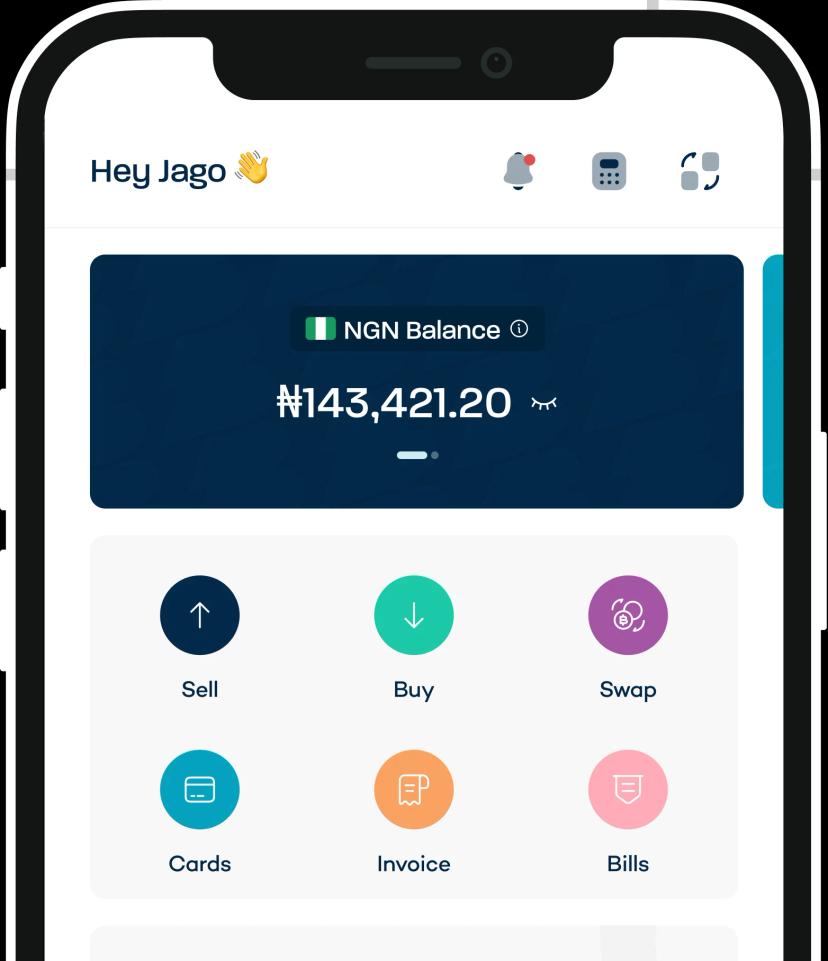
Breet creates a customer wallet address and automatically converts the cryptocurrency once the transaction is confirmed on the blockchain. The converted funds are then sent directly to the business’s bank account in NGN (Nigerian Naira) or GHS (Ghanaian Cedi).
Additionally, Breet’s pricing information is accessible. It provides a written rate before integration, and its wallet addresses don’t have an expiry window, unlike HoneyCoin’s off-ramp addresses, which are valid for only one hour, as stated in their documentation.
Know your fee before you talk to sales, with one volume-based rate and no hidden setup or gas charges
Breet charges a single, volume-based transaction fee shared during onboarding. There are no separate setup fees, monthly fees, gas fees, or additional wallet-sweeping charges.
In contrast, HoneyCoin establishes prices based on individual accounts, meaning that you won’t be able to view the fees until you gain access to the platform.
According to their account fee guide, the final fee can vary based on factors such as transaction type, currency, country, payment method, and negotiated account terms.
Skip the one-hour countdown, with addresses that recover mismatched deposits automatically
Breet provides your business with either permanent or single-use customer wallet addresses that can be used for payments without a one-hour expiration. This means customers have no time limit to complete transactions, and they don’t have to worry about sending the exact amount required.
Additionally, Breet can automatically recover certain asset mismatches if they are sent to the generated addresses.
This feature is important because customers can make mistakes, such as sending USDT on the wrong chain or miscalculating the payment amount.
They may also send a supported asset that doesn’t match the expected currency or make a payment without understanding specific wallet-address requirements.
Get support that actually responds, with a dedicated Slack channel
Breet supports over 12 deposit assets and automatically converts these deposits, settling Nigerian Naira (NGN) and Ghanaian Cedi (GHS) directly into business bank accounts.
Businesses benefit from direct integration support through a dedicated Slack channel, a public uptime service level agreement (SLA) of 99.9%, and access to a public sandbox for testing before going live.
For instance, Cardtonic reported moving from sandbox testing to production in just two days. As PIL, a B2B spend management platform that funds virtual cards using stablecoins, noted, “Breet fit in seamlessly and allowed us to stay focused on our core product.”
Breet has successfully settled over 3 million transactions for more than 100 verified African businesses.
Ready to see how Breet could fit into your payment stack? Book a demo.
2. Yellowcard
Best for: a business that needs mobile money across more African countries than HoneyCoin’s bank-only routes.
Yellow Card operates in 20 African countries, offering bank and mobile-money payouts in most of them. It also provides stablecoin treasury tools and wallet functions across more than 30 blockchains.
In Nigeria, Yellow Card’s pricing structure is tiered: it charges 1% for amounts below NGN 100,000 and 0.5% for amounts above that, with minimum fees applied instead of a single flat rate.
Overall, Yellow Card is a viable option if your customers are distributed across several African countries, rather than concentrated solely in Nigeria and Ghana.
Pros
- Supports payment rails across 20 African countries, including bank transfers and mobile money.
- Built specifically around African fiat on- and off-ramps.
Cons
- NGN pricing is tiered: 1% below NGN 100,000 and 0.5% above, with minimum fees attached
- Coverage information can change, so businesses should confirm the exact route they need before integrating.
3. Ivorypay
Best for: Predictable, capped fee on crypto-native merchant checkout
Ivorypay offers a unique feature: capping the cost of a single transaction, which other options on this list don’t offer. Their published pricing for crypto collection is set at 1% per transaction, with a maximum fee of $25 across 17 countries.
Ivorypay supports four cryptocurrencies: USDT, USDC, BTC, and ETH. In addition to crypto collection, Ivorypay provides fiat collection, crypto payouts, and static wallet addresses, with the first 500 addresses available for free.
However, Ivorypay has one limitation: its limited asset variety. While it allows payments in only four cryptocurrencies, other services like Breet can accept more than 12 different assets.
Therefore, Ivorypay suits merchants that prioritize predictable pricing for stablecoin payments over a wide range of cryptocurrency options.
Pros
- Published 1% crypto collection fee with a $25 cap.
- Supports stablecoins and major cryptocurrencies.
Cons
- Supports only four crypto assets (USDT, USDC, BTC, ETH)
- An older page limits its virtual-account tool to Nigerian businesses only, so confirm eligibility in other markets directly.
4. Bitnob
Best for: A roadmap that already includes cards, payouts, or Bitcoin Lightning alongside payment acceptance
Bitnob is an ideal choice if accepting cryptocurrency is just one aspect of your product roadmap. Its country API supports nearly 100 payout countries, and its broader offerings include cards, bulk transfers, and Bitcoin Lightning.
It also supports GHS mobile-money payouts through providers like MTN and Vodafone Cash.
This makes Bitnob attractive for fintech companies or apps that plan to offer cards, international payouts, or Lightning payments alongside cryptocurrency acceptance.
However, the downside is that Bitnob’s closest crypto-funded payout options are limited to BTC, USDT, and USDC.
Pros
- Offers more than just payment acceptance, including cards, bulk transfers, and Bitcoin Lightning.
- Lets a business pay suppliers or beneficiaries in close to 100 countries from one integration.
Cons
- No single published fee percentage applies to every payout route; businesses receive route-specific quotes.
- Its wider feature set may be unnecessary for a business that only needs a simple crypto payment gateway.
5. Paychant
Best for: Embedding an on/off-ramp widget into an existing app without building the rail
Paychant is a viable alternative to HoneyCoin, especially if you prefer not to develop the entire stablecoin conversion process yourself.
Its hosted stablecoin on/off-ramp widget seamlessly connects bank transfers and mobile money to stablecoin conversion in Nigeria, Ghana, Kenya, Uganda, and Zambia.
Paychant supports several assets, including USDT, USDC, CUSD, and CEUR. With this widget, you save development time, letting your product team integrate the conversion flow into an existing app instead of building the infrastructure from scratch.
However, this approach comes with a trade-off. A hosted widget gives Paychant more control over the interface and verification process compared to a fully API-first setup.
Pros
- Supports stablecoin on- and off-ramps through local payment methods in several African countries.
- Its hosted widget means businesses do not have to build the entire payment interface themselves.
Cons
- Hosted widgets give businesses less control over the checkout experience than a fully API-first setup.
- One reviewer mentioned that rates could be more competitive.
6. BitPay
Best for: A globally recognized commerce brand with mature checkout tools
BitPay supports over 100 cryptocurrencies across six networks and works with more than 100 wallets. It provides various services including ecommerce checkout, hosted invoicing, in-store QR payments, donation processing, and refunds.
The company has developed this functionality over more than a decade and is backed by a public virtual-currency license from the New York Department of Financial Services (NYDFS).
However, businesses in Nigeria and Ghana face settlement challenges. BitPay’s published list of fiat settlement currencies includes USD, AUD, CAD, GBP, MXN, NZD, CHF, and EUR, but it does not include Nigerian Naira (NGN) or Ghanaian Cedi (GHS).
Additionally, BitPay’s pricing structure is higher for lower monthly transaction volumes. Fees start at 2% plus $0.25 for transactions below $500,000 in monthly volume and drop to 1% plus $0.25 only when monthly volume exceeds $1 million.
Pros
- Supports crypto payments, invoices, e-commerce checkout, and other payment options.
- Settles directly to a bank in USD, AUD, CAD, GBP, MXN, NZD, CHF, and EUR, useful for a business with customers or operations in those markets.
Cons
- Its published bank-settlement currencies do not include NGN or GHS.
- A Nigerian or Ghanaian business may need an additional conversion step to move funds into its local currency.
7. NOWPayments
Best for: The broadest crypto asset list if African settlement isn’t the deciding factor
NOWPayments boasts an extensive list of supported assets, significantly more than its competitors. Whether this benefits you depends on your need for local settlement options.
NOWPayments claims to support over 300 cryptocurrency assets. The platform also offers plugins and recurring billing. This extensive asset list makes NOWPayments particularly advantageous for merchants whose customers prefer to pay with a variety of cryptocurrencies.
However, the platform is weaker on local settlement options in Africa. No public source currently confirms a direct bank settlement route for Nigerian Naira (NGN) or Ghanaian Cedi (GHS) that compares to what Breet offers.
Additionally, while NOWPayments has a headline fee starting at 0.5%, multi-currency or fixed-rate payments can cost more, up to 1%.
Pros
- Supports hundreds of cryptocurrencies
- Offers API integrations, plugins, and recurring billing.
Cons
- The fee increases to 1% for multi-currency payments and fixed-rate payments, before network fees.
- The sources reviewed don’t confirm a direct NGN or GHS bank-settlement route.
Breet Business: the best HoneyCoin alternative for businesses
A business’s main focus is not the number of products on a platform, but understanding the fees and planning for potential failures before integration. This article addresses that critical question for the seven providers mentioned.
Breet stands out for three reasons: it offers a volume-based fee structure; it provides permanent addresses with automatic mismatch recovery; and it has a public track record, not just a few outdated reviews. Breet also features a public API, a sandbox environment, a 99.9% uptime SLA, and has processed over 3 million transactions for more than 100 verified African businesses.
If you need to accept cryptocurrency, convert it automatically, and receive Nigerian Naira (NGN) or Ghanaian Cedi (GHS) directly into a bank account, Breet is your best option.
Book a demo and see a payout land in a local bank account while you’re still on the call.