- Sort what you can fix from what you can't
- 1. Unreliable power and connectivity
- 2. Legacy systems that buckle under volume
- 3. A fragmented, patchy backbone
- 4. Fraud, chargebacks, and the trust deficit
- 5. Cross-border friction and dollar scarcity
- 6. Financial inclusion and rural access
- What resilient businesses route around today
- Stop waiting for the backbone
Most businesses treat Nigeria’s payment problems as one broken system to either endure or wait out. That is the expensive mistake. The problems are not equal, and they do not share a fix.
Some are systemic and need infrastructure or regulatory reform that no single company can deliver. A few you can act on right now.
Sort the two, and you stop pouring effort into problems where you have no leverage.
Sort what you can fix from what you can’t
The single most expensive habit in Nigerian payments is lumping every failure into one bucket labeled “the system is broken.” It feels true. In 2024, Nigeria pushed N1.07 quadrillion, roughly $702.6 billion, through the NIBSS Instant Payment system across about 11.2 billion transactions, a 79.6% jump on 2023.
The volume has outgrown the backbone, and the strain is real. But “the system is broken” is a diagnosis you can do nothing with.
So start by sorting. Each problem below is either systemic, meaning it needs reform no single operator can deliver, or partly addressable, meaning you can act on it now.
| Challenge | Systemic or addressable | What is in your control |
| Unreliable power and connectivity | Systemic | Backup power and connectivity at the point of sale |
| Legacy systems buckling under volume | Systemic, partial workaround | Hold an alternative settlement rail for redundancy |
| Fragmented, patchy backbone | Systemic | Choose resilient partners; multi-home |
| Fraud, chargebacks, trust deficit | Largely systemic | Internal controls and monitoring (narrow) |
| Cross-border friction and dollar scarcity | Partly addressable | Alternative rails, dollar-holding options |
| Financial inclusion and rural access | Systemic | Very little at the individual level |
Four of the six are systemic. Two give you room to move. That ratio is the whole point.
1. Unreliable power and connectivity
Payments fail when the electricity and internet beneath them fail, and this is the most systemic problem on the list. Grid collapses barely make the news anymore, and broadband outside Lagos, Abuja, and a handful of cities stays patchy.
A POS terminal and a smartphone both need power and signal. Drop either, and they are paperweights. The problem worsens the further you get from the cities, exactly where agent banking and POS are often the only digital option.
You can add generators, inverters, and secondary internet at your points of sale, and many businesses do. That buys uptime at your own counter. It does not fix the national grid, and pretending otherwise is how you overspend on a problem that was never yours.
2. Legacy systems that buckle under volume
The shared backbone was not built for today’s load, and it shows on the days you can predict. That N1.07 quadrillion moved across a NIP system designed for a fraction of it, so salary weeks and holidays bring congestion you can set your watch by. Transfers hang for hours, and some fail outright.
The failures are not hypothetical. When NIBSS suffered downtime in May 2026, fintechs nationwide reported delayed and failed transactions as the interbank switch faltered.
Then there is the N13.66 billion “dry posting” glitch from 2024, still in court in 2026, where accounts received credits with no matching debit.
This is systemic, but it comes with the first real workaround on the list: hold an alternative settlement rail so you are not fully dependent on one congested backbone.
3. A fragmented, patchy backbone
Modern fintech apps ride shared rails, but the bank cores beneath them are fragmented and inconsistent, and that gap creates pain that looks like your problem when it is not.
Moniepoint, OPay, Kuda, and PalmPay all run on NIBSS and open-API interoperability, so transfers between them usually go through.
The cores settling them underneath vary in age, capability, and reliability, and they do not behave the same way.
That inconsistency shows up three ways: reconciliation errors when a transaction reads “successful” at one end but reverses at the other, reroute failures when one bank’s core is down, and settlement times that swing enough to make cash flow hard to forecast.
You can multi-home across banks and payment service providers, though each new relationship adds reconciliation work.
Choosing partners with a real uptime record helps. The underlying fragmentation is not something one operator gets to fix.
4. Fraud, chargebacks, and the trust deficit
Fraud and reversals drain two things at once: money and the user trust that digital payments depend on.
Chargebacks, unauthorized transactions, and fraudulent reversals recur across every serious analysis of Nigeria’s payment landscape, and the resulting trust deficit quietly suppresses adoption.
A user burned once by a fraudulent transaction often reverts to cash, and that decision is hard to reverse.
Here is the honest case for alternative rails: stablecoin settlement is non-reversible, which means no chargebacks, and that is a real advantage. But it is a narrow one. Fraud goes well beyond chargebacks.
Identity theft, social engineering, and account compromise are separate problems no settlement rail touches.
This is partly addressable through internal controls and monitoring, but the fraud core needs industry-wide solutions, not a product.
5. Cross-border friction and dollar scarcity
This is the single problem most within a business’s power to solve.
Nigerian businesses that trade internationally or earn in foreign currency face the same three costs: payments routed through correspondent banks in USD that take days and carry mid-single-digit percentage fees, FX scarcity that makes even dollars you are owed hard to hold, and naira volatility that adds risk to anyone trying to preserve value in dollar terms.
Stablecoin settlement bypasses most of that. Value moves as USDT or USDC in minutes rather than days, which matters the moment a supplier payment is stuck in a bank’s queue.
A business can access and hold dollars without waiting on a bank’s dollar supply, then convert on its own schedule. This is not a cure for the FX crisis, and selling it as one would be dishonest.
For the specific slice of cross-border and dollar flows, it is a legitimate alternative that works today.
6. Financial inclusion and rural access
A large share of Nigerians remain unbanked or underserved, and no payment product closes that gap.
The unbanked population is still significant, rural areas have few agents or branches, and literacy gaps mean adoption lags even where services exist. Crypto payment rails do not solve this.
Financial inclusion needs infrastructure, regulation, education, and time, a national project measured in years, not a feature any single provider ships. Sorting it into “systemic, not yours” is not defeatism.
It is how you avoid pouring effort into the one problem where you have the least leverage.
What resilient businesses route around today
Strip out the four systemic problems, and you are left with a short, specific list of moves worth making now.
Back up power and connectivity at the point of sale. Generators, inverters, and a secondary line address the power gap directly, because uptime at your counter is the one piece of the grid problem you own.
Multi-home across providers and pick resilient partners. Working with several banks and payment service providers protects against any single provider’s downtime, at the cost of added reconciliation, so weigh that against each partner’s uptime record before you sign.
Add an alternative settlement rail for redundancy and cross-border flows. This move covers two problems at once. A stablecoin-to-fiat settlement API gives you a path that does not depend on one congested backbone, and for cross-border or dollar flows, it closes both the redundancy gap and the FX gap in one integration.
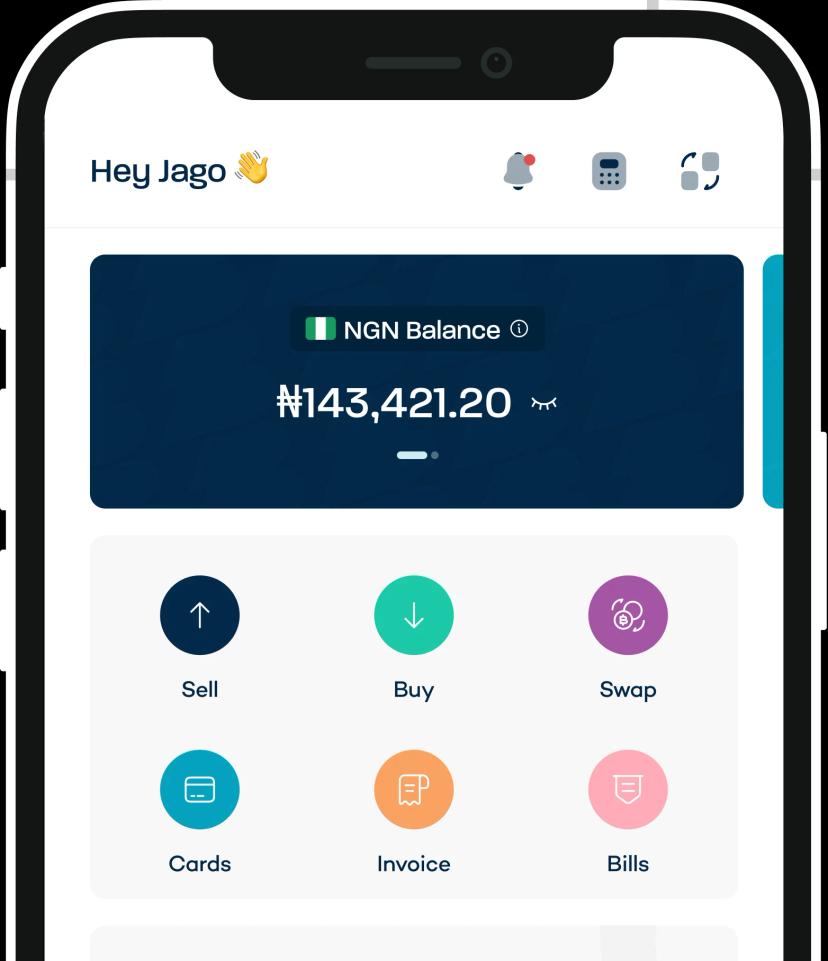
This is where we build. Breet handles wallet generation, on-chain confirmation, automatic conversion to naira or cedis, AML screening, and webhook notifications, so your team adds crypto payments without standing up crypto infrastructure.
High-volume movers can price large positions through the OTC desk at locked rates with same-hour settlement, and finance teams can get paid in crypto through crypto invoicing.
For scale and the compliance a finance team asks about first, we have settled over 3 million transactions programmatically for 100+ verified businesses across Africa, on a 99.9% uptime SLA, with KYC and AML on every transaction and PCI DSS, NDPA/NDPC, and FINTRAC coverage built in.
That is capability in a narrow lane, not a cure for the system, and Cardtonic’s integration shows what the lane looks like in production.
Want to see where a settlement rail fits in your stack? Book a walkthrough, and we will map it against your actual flows.
Stop waiting for the backbone
Nigeria’s payment problems are largely systemic, and systemic problems get solved collectively or not at all. The grid will not fix itself, NIBSS will not modernize overnight, and financial inclusion will not close on its own.
Waiting for any of that is a strategy only in the sense that standing still is a direction.
Resilient businesses have already stopped waiting. They are not trying to fix the backbone.
They are shrinking the cost of any single point of failure, so that when one rail goes dark, the business does not. For cross-border and dollar flows, and for redundancy against outages, an alternative rail is a practical tool you can put to work this quarter.
If cross-border settlement or rail redundancy is on your list, book a walkthrough to see how it works against your own volumes.