- What a crypto payment rail actually is
- The rails your business already runs on, and where each one breaks
- How a crypto payment actually moves
- The stablecoin rail is the one businesses actually adopt
- Why African businesses are moving onto these rails
- The part every rail diagram skips: on- and off-ramps
- How a business plugs into crypto rails without building them
- Is using crypto rails legal in Africa?
- The ramps are the product, not the chain
A cross-border payment on SWIFT, the rail most African businesses still rely on, takes one to three days and can lose $20 to $50 to intermediary banks along the way.
The same value moved on a crypto rail settles in seconds, for a fraction of the cost. Sub-Saharan Africa moved roughly $205 billion in on-chain value in the year to mid-2025, up 52% year over year, and stablecoins made up about 43% of it.
This piece makes one argument: a crypto rail is only as good as its on- and off-ramps, the part every diagram of one leaves out.
Here’s what that means for an African business: what a crypto rail actually is, where the rails you already use break, how the stablecoin rail works, and why the ramp decides everything else.
What a crypto payment rail actually is
A crypto payment rail moves value directly between two parties over a blockchain, with no bank sitting in the middle. That’s the entire definition.
Everything else in this piece is really one question underneath it: does that value ever become money you can spend?
Rails, crypto or otherwise, differ on who runs them, how fast they settle, and how far they reach. What makes the crypto rail different isn’t the ledger or the buzzword attached to it; it’s that no institution owns the network.
A validator confirms the transfer instead of a correspondent bank, which is why it settles in seconds instead of days and costs cents instead of $20 to $50 in intermediary fees.
But a rail, any rail, has two ends that matter more than the middle: how money gets on it, and how it gets off. That’s the whole argument of this piece. Hold that thought. It’s where the crypto rail either earns its keep or doesn’t.
The rails your business already runs on, and where each one breaks
An African business already moves money across four rails, and each one breaks at a predictable point.
Instant bank transfers
(NIP/NIBSS in Nigeria, GIP under GhIPSS in Ghana) move funds between local accounts in seconds, for fees measured in naira or cedis, not dollars. They work because the rail never leaves the domestic banking network. The moment a payment crosses a border, this rail has nothing left to offer.
Mobile money
(M-Pesa, MoMo) gives consumers reach no bank branch network can match. It breaks in two places: cross-border transfers between networks stay patchy, and real B2B transaction sizes outgrow a consumer-first wallet rail.
Card networks
(Visa, Mastercard) offer wider acceptance than anything else here. But African card penetration is thin, interchange and processing fees erode margins, and chargebacks turn acceptance into a liability for higher-value or cross-border sales.
SWIFT and correspondent banking
Remain the cross-border default, and the rail businesses complain about most. A transfer can pass through two or three intermediary banks, each taking a cut, commonly $20 to $50 together, and each adding a day or more. On top of the fee and wait, the business still has to solve FX and often find a way to hold dollars at all.
The pattern holds: domestic rails work fine. It’s the cross-border leg, and the FX inside it, where African businesses bleed cost and time, exactly the gap the crypto rail targets.
| Rail | Who runs it | Settlement speed | Reach | Cross-border? | Typical cost/pain |
| Instant bank transfer (NIP/GIP) | National interbank switches | Seconds | Domestic bank accounts | No | Cheap, but stops at the border |
| Mobile money (M-Pesa, MoMo) | Telecom operators | Seconds to minutes | Consumer wallets | Limited | Weak cross-border links, low B2B ceiling |
| Card networks (Visa/Mastercard) | Global schemes + issuing banks | 1-3 days to merchant settlement | Wherever cards are accepted | Yes | High fees, chargebacks, thin local penetration |
| SWIFT / correspondent banking | Chain of correspondent banks | 1-3 days | Global | Yes | $20-50 in intermediary fees, FX and dollar access |
| Crypto / stablecoin rail | Blockchain network + on/off-ramp provider | Seconds to minutes | Global, wherever it connects to fiat | Yes | Network fee (cents) plus on/off-ramp fee |
How a crypto payment actually moves
The mechanics, stripped of jargon:
- A wallet holds two things: an address, public and functioning like an account number, and a key, private and required to authorize spending.
- The sender broadcasts the transfer to the network instead of routing it through a chain of banks.
- Validators on that network confirm the transaction against the rules of the chain.
- The value settles on-chain and is final, typically in seconds to minutes, not days.
Because there’s no correspondent-bank chain to pass through, the cross-border leg that costs days and dollars on SWIFT collapses into a single settlement event: sender to receiver, directly. That’s what blockchain settlement means in practice.
Two honest caveats keep a raw crypto rail from being a complete answer on its own. A coin’s value can move between the moment it’s sent and the moment it settles, and the rail itself doesn’t speak naira, cedis, or any local fiat.
The stablecoin rail is the one businesses actually adopt
Businesses don’t run treasury on volatile coins. They use the stablecoin rail, where the value moving is pegged 1:1 to the US dollar.
- Understanding what stablecoins are matters first: they’re crypto assets designed to track a reference currency, almost always the dollar, instead of floating with the market.
- That peg means the rail’s speed and cost advantages arrive without the price risk of BTC or ETH, which is why treasury and payments teams default to them.
- Corporate stablecoin transfers grew roughly 25% in 2024, and stablecoins already account for about 43% of Sub-Saharan Africa’s on-chain volume.
The choice between the two largest stablecoins isn’t cosmetic: USDT vs USDC differ in issuer, reserve reporting, and which chains they’re most liquid on.
When people say “crypto payment rails” in a business context, they almost always mean this stablecoin rail: dollar value that moves with the speed and reach of crypto, without the volatility.
Why African businesses are moving onto these rails
African businesses adopt crypto rails out of necessity, not novelty. Three pressures the old rails can’t relieve are driving it.
Cross-border cost and speed. Payments that cost seconds and cents instead of days and $20-50 in intermediary fees, moving without routing through traditional financial centres at all.
FX volatility and dollar scarcity. A stablecoin balance is a dollar-pegged store of value in markets where local currency swings hard, and dollars are sometimes rationed. This is adoption driven by necessity, not curiosity.
The scale of the shift. Roughly $205 billion moved on-chain across Sub-Saharan Africa between July 2024 and June 2025, up 52% year over year, and Nigeria alone accounts for about 40% of the region’s stablecoin inflows. The counterparties a business already trades with are already on this rail.
For an operator, the question stopped being whether this is real. It’s how to get onto the rail cleanly, exactly the part most explainers skip.
The part every rail diagram skips: on- and off-ramps
A crypto payment rail is only as good as its on- and off-ramps: how local money gets onto the rail, and how it comes back off as money a business can actually spend.
The rail itself moves value globally in seconds. Converting between stablecoins and local fiat, naira, cedi, or any other local currency, stays cumbersome in a lot of jurisdictions, gated by liquidity, banking relationships, and compliance a business was never built to handle. Value sitting on-chain isn’t a payment. It’s a balance.
What an African business actually needs at that off-ramp:
- Naira or cedis landing in a bank account or mobile money wallet, not a wallet address.
- Or dollars held as USDT or USDC, when that’s the better outcome for that transaction.
- The choice made automatically, per transaction, with the compliance work already handled.
This is the part the rail diagrams leave out, and the part that decides whether a crypto rail is real money or just a balance on a chain.
How a business plugs into crypto rails without building them
Building a crypto rail (wallets, multi-chain monitoring, FX, liquidity, custody, compliance) is capital-intensive and operationally heavy.
Most businesses integrate the on/off-ramp instead. Breet’s Crypto & Stablecoin API is one version of that layer, and it breaks down into four pieces.
Wallet addresses, without running a wallet system
The API generates deposit addresses on demand. Breet handles wallet generation, transaction monitoring, and key security, so the business never custodies crypto or runs blockchain infrastructure of its own.
A webhook, then automatic conversion
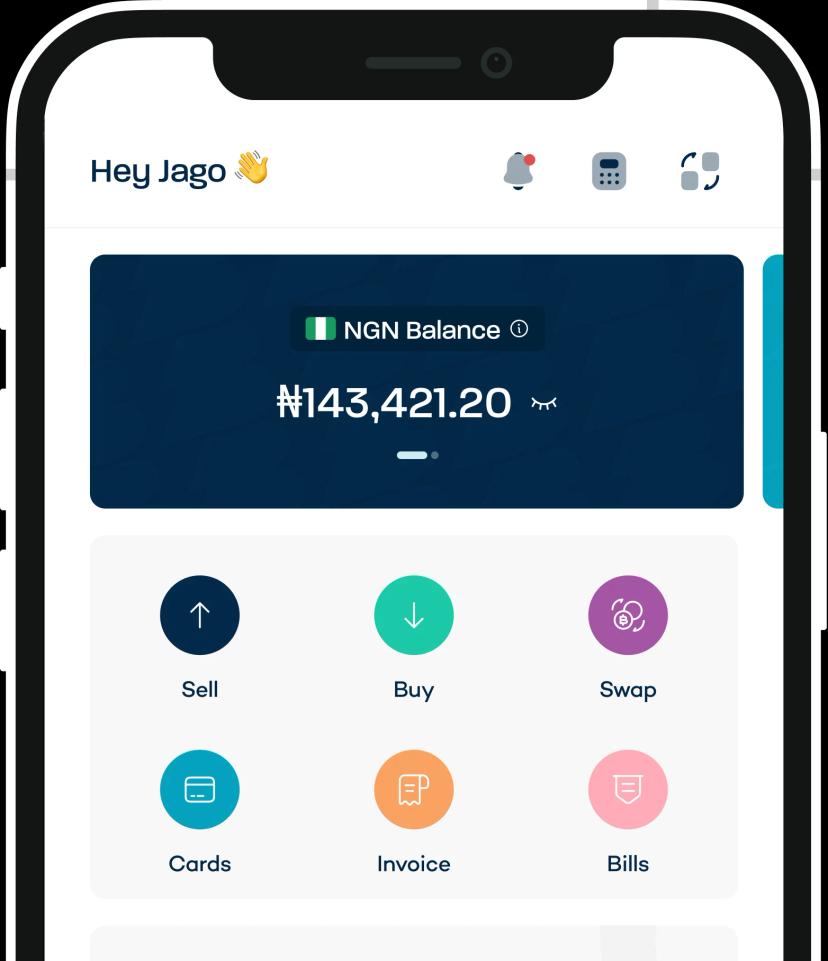
The moment a payment lands, a webhook fires. Funds convert automatically into USDT, USDC, naira, or cedis, and settle to a bank account, mobile money wallet, or stablecoin wallet, either automatically or on a manual trigger. That’s what choosing your settlement currency looks like, instead of taking whatever the rail hands you.
Multi-chain coverage, including low-fee Tron
The API supports BTC, ETH, USDT, USDC, SOL, TRX, XRP, and more, across multiple chains, including Tron, where USDT moves at a fraction of the fee of other networks.
Compliance and pricing, inherited rather than built
Every transaction runs through full KYC/AML checks under PCI DSS-compliant infrastructure, so the business inherits a compliance program instead of building one.
Pricing is a flat fee from 0.5%, no setup or monthly fees, no hidden spread, against the layered, opaque cost of correspondent banking.
One honesty note: Breet’s local-fiat off-ramp today covers Naira and Cedis, plus USD-stablecoin settlement everywhere else.
A business needing a direct ZAR or KES bank payout should treat Breet as the dollar/stablecoin on-ramp and pair it with a local rail for that leg, not as a universal Africa-wide off-ramp.
PIL, a B2B spend-management platform, uses the API to generate wallet addresses, receive webhooks, fund accounts in USDC, and withdraw in USD on schedule. “Breet fits in cleanly and lets us stay focused on our core product.”
For treasury-scale conversion, where a standard order book would move against you mid-trade, the VIP OTC Desk absorbs size without that slippage.
Book a demo, and see how Breet bridges crypto rails to your accounts. Shipping the integration yourself?
Is using crypto rails legal in Africa?
Yes, in the major markets, under frameworks that are actively formalizing. As of June 2026, the operator’s job is to use a compliant provider and keep watching the rules, not to guess at them.
Nigeria regulates digital assets under the SEC’s digital-asset framework, bringing exchanges and service providers under registration.
Kenya’s Virtual Asset Service Providers Act came into force in 2025, with the Central Bank of Kenya and the Capital Markets Authority finalizing regulations through 2026.
South Africa regulates crypto assets as a financial product under the FSCA, with providers required to hold a license.
Ghana’s central bank, the Bank of Ghana, is progressing its own virtual-asset rules, moving from guidance toward formal regulation.
Two things follow from that. Integrating a KYC/AML-compliant provider keeps a business inside the framework as it exists today, without needing an in-house team to interpret it.
And it’s worth confirming the rules in every country your counterparties pay from, not only the one you’re incorporated in.
None of this is legal advice. It’s general information as of June 2026, and the rules are moving quickly, so verify anything material against the primary regulator source before relying on it.
The ramps are the product, not the chain
Crypto payment rails matter to African businesses because they fix the exact place the old rails break: cross-border cost, speed, and FX exposure, not because a blockchain is interesting on its own.
That case holds up with every mention of a specific provider removed.
But a rail only becomes money at the on- and off-ramp. Judge any crypto rail, or any provider sitting on top of one, by its ramps, not by which chain it runs on.
Can local money get on, and can naira, cedis, or dollars come off, automatically and compliantly? That single test decides everything else.
As African regulation settles and volume climbs, the rail itself becomes a commodity, cheap and fast almost everywhere. The on/off-ramp, and the compliance sitting behind it, is where the real advantage sits for years after that.
Book a demo and see where your business’s money actually lands.