- 1. Reach customers whose cards never make it through checkout
- 2. Pay a few percent, not the card-and-wire tax
- 3. Stop refunding sales you already delivered
- 4. Settle across borders in a day, not a banking week
- 5. Get paid in stable value, not a coin that moves overnight
- 6. Settle to naira or cedis: the benefit only Africa truly needs
- The risks worth weighing before you switch on crypto
- How to start accepting crypto in Africa without building a crypto team
- The money is only real when you can spend it
- Frequently asked questions
A customer in London is ready to buy from your Lagos store. Their card fails at checkout, so they ask, “Can I pay with USDT?” If the answer is no, you did not lose a payment method. You lost the sale.
That question happens at more African checkouts every month, and it is the clearest reason to accept crypto: it recovers revenue local rails cannot.
But the benefit only counts if the money lands as something you can spend. This guide covers six real benefits of accepting cryptocurrency in Africa, the trade-offs, and where each breaks without local settlement.
1. Reach customers whose cards never make it through checkout
The first benefit is revenue you are currently turning away.
Businesses lose sales every day, not because customers lack money, but because the payment rail breaks. A diaspora buyer’s card gets geo-blocked. An international client finds bank transfers too slow and expensive.
A crypto holder simply keeps their money in USDT and wants to pay from there. In each case, the intent to buy is real; only the rail fails.
Accepting BTC, ETH, USDT, or USDC closes that gap. A customer in London can pay a Nigerian merchant as directly as a customer in Lagos, and a freelancer in Accra can invoice a client in Canada without routing through correspondent banks.
For exporters, e-commerce stores, SaaS companies, agencies, and marketplaces, crypto is less “another payment button” and more the removal of the barrier between a willing buyer and a completed sale.
2. Pay a few percent, not the card-and-wire tax
Growing revenue matters; keeping it matters just as much. Traditional rails quietly tax every transaction.
Card processing typically costs merchants between 1.5% and 3.5% per transaction, depending on card type and network. Cross-border payments cost far more once foreign-exchange spreads and correspondent-banking charges stack up.
In the first quarter of 2025, sending money to Sub-Saharan Africa averaged 8.78% of the transaction value, against a global average near 6.4%, according to the World Bank’s Remittance Prices Worldwide.
Crypto moves on a single rail from sender to receiver, skipping most of those intermediaries. A stablecoin transfer on Tron often costs cents, and regularly under a dollar, regardless of the amount sent, though network fees vary by chain.
For a business collecting 200 international payments a month at $2,000 each, trimming payment costs by five percentage points keeps roughly $20,000 in the business every month. That is not extra sales. It is money you already earned and stopped leaking.
3. Stop refunding sales you already delivered
Few things sting like shipping an order, then watching the payment reverse weeks later.
That is the everyday reality of card rails. A customer disputes a charge, the processor opens a case, and even when you fulfilled the order, you can lose the revenue, pay a fee, and spend hours gathering evidence.
Card-not-present sales to international buyers carry the highest dispute and fraud rates, which is exactly the segment African online sellers rely on.
Crypto payments settle with finality. Once a transaction clears the required blockchain confirmations, it is complete and cannot be clawed back through a chargeback three months later.
No card numbers change hands, so there is no central store of card data for attackers to steal, which removes one of the most common fraud surfaces.
The trade-off is honest: finality cuts both ways. If a customer deserves a refund, you send it deliberately rather than relying on an automatic reversal.
For most merchants, predictable revenue and fewer fraud losses are worth issuing the occasional manual refund.
4. Settle across borders in a day, not a banking week
For many African businesses, getting paid abroad is nearly as hard as making the sale.
A customer pays today, and the money crawls through multiple banks, clearing systems, and FX conversions before it lands days later. Every hop adds a fee, a delay, and a point of failure.
Crypto settles directly on-chain, any hour of any day, weekends and public holidays included, with no banking-window wait.
The real prize is not speed for its own sake; it is the cash flow that speed frees up. Working capital that used to sit in transit for three to five days becomes available the same day, so you can reorder inventory or pay suppliers without opening a financing gap.
Speed alone is not enough, though. A crypto payment only helps once it becomes money your business can use.
A Lagos business still needs naira; an Accra business still needs cedis. Fast settlement into a coin you cannot spend is just a faster way to be stuck, which is why converting crypto to local currency is the step that actually closes the loop.
5. Get paid in stable value, not a coin that moves overnight
The loudest objection from finance teams is volatility, and it is a fair one. A business that prices in naira or cedis cannot let its revenue swing because a customer chose to pay in Bitcoin.
Here is the part that resolves the objection: accepting crypto does not mean holding crypto. Modern payment infrastructure separates how the customer pays from how you get paid.
The customer sends Bitcoin; you receive the equivalent value in naira, cedis, USDT, or USDC, converted automatically the moment the payment confirms.
You lock in the value of the sale on receipt instead of carrying a volatile asset on the balance sheet.
For African businesses, stablecoins like USDT and USDC carry a second advantage: dollar-denominated value without a foreign bank account.
That matters more here than almost anywhere. The naira lost about 41% of its value against the dollar in 2024 alone.
Holding settlement value in a dollar-pegged stablecoin preserves buying power that naira balances bleed month over month, which is why importers, exporters, and treasury teams across the continent increasingly keep part of their reserves in stablecoins.
6. Settle to naira or cedis: the benefit only Africa truly needs
Every other benefit collapses into one question: can the business actually spend the money?
You cannot pay salaries in Bitcoin. Suppliers do not accept blockchain confirmations. Rent, inventory, and tax still settle in real currency.
Global crypto guides celebrate faster, cheaper, borderless payments, and those are real, but they mean little if the funds stay trapped in a wallet or only reach a foreign account.
For a merchant in Lagos or Accra, the test is plain: when a customer pays in crypto, can that value arrive as naira or cedis without new work?
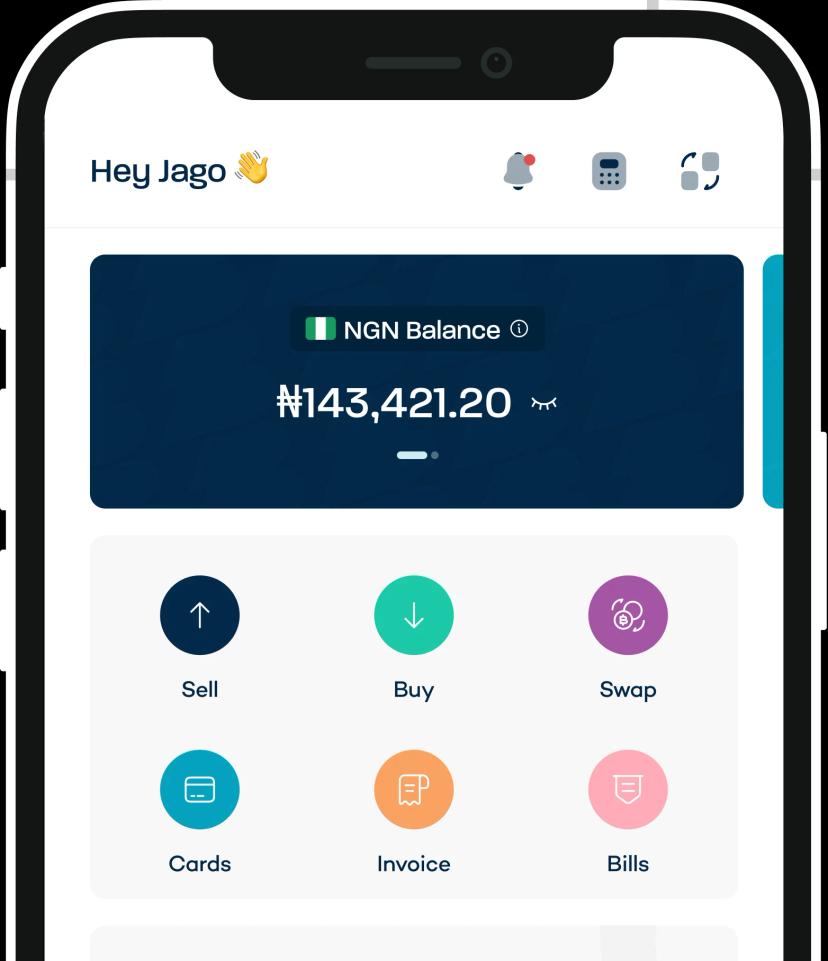
The right infrastructure makes the whole thing invisible. A payment comes in, gets screened for compliance, converts automatically, and settles to a local bank account, mobile-money wallet, or stablecoin address.
From your side, a payment arrives, the value is received, the books update, and the day continues. No wallets to manage, no private keys to secure, no blockchains to watch.
That is the line between crypto as an interesting option and crypto as business infrastructure.
The value is not accepting crypto. It is accepting crypto and receiving spendable money on the other side.
The risks worth weighing before you switch on crypto
No payment method is free of trade-offs, and pretending otherwise helps no one. The good news is that the concerns that once blocked adoption now have practical answers.
Volatility. If you hold crypto after a sale, its value can move. The fix is simple: do not hold what you do not want to hold. Auto-convert on receipt into naira, cedis, or stablecoins, and the volatility window closes.
Regulation. The landscape is tightening, not loosening. In Nigeria, digital assets now sit under the Investments and Securities Act 2025 and the SEC’s licensing regime for Virtual Asset Service Providers (VASPs).
Ghana passed its own VASP framework in late 2025. You do not need to become a regulator; you need to work with a provider operating inside these frameworks.
Compliance and AML. Accepting crypto does not remove Know Your Customer (KYC) and Anti-Money Laundering (AML) duties, especially on cross-border flows.
Most businesses solve this by using a provider that screens and monitors transactions in the background rather than building a compliance stack in-house.
Accounting, refunds, and tax. You need clean records of payments, conversions, and settlements, and a deliberate refund process, since crypto payments are final.
From January 1, 2026, Nigeria also brought digital-asset transactions into its national tax framework, so clean records are now a near-term requirement, not a someday one.
None of these is a deal-breaker. With infrastructure handling conversion, compliance, and settlement, most businesses capture the upside without taking on the operational risk.
How to start accepting crypto in Africa without building a crypto team
Understanding the benefits is the easy part. Implementing them so the money lands as usable currency is the real decision, and for most African businesses it turns out to be an infrastructure question, not a payments one.
The right provider handles wallet generation, monitoring, compliance, conversion, and settlement so your team runs the business instead of a blockchain.
That is the role Breet Business was built to play, and there are three ways to plug in.
Developers: integrate the payment API. Businesses with their own checkout can integrate our crypto and stablecoin API to automate the full lifecycle: wallet generation, on-chain confirmation, AML screening, automatic conversion, settlement, and webhook notifications.
Instead of spending months building wallet infrastructure, you go live from the API documentation in days.
Finance and merchant teams: use crypto invoicing. Not every business needs code. With Breet crypto invoicing, you generate an invoice, send it to a customer anywhere, and receive the value in your chosen settlement currency.
The accounts-receivable process stays familiar while the rail goes global.
High-volume businesses: use the OTC desk. Large trades need deeper liquidity and locked rates. The Breet OTC desk handles high-volume crypto-to-fiat conversion with institutional pricing and same-hour settlement, which protects large conversions from slippage.
More than 100 African businesses already run on Breet’s infrastructure, with over 3 million transactions settled programmatically and 99.9% platform uptime. Most complete onboarding and take their first payment in under a day.
See how crypto payments would settle as naira or cedis on your own volume. Book a walkthrough.
The money is only real when you can spend it
Lower fees, faster settlement, fewer chargebacks, and global reach are all genuine, and they have moved crypto acceptance from a competitive edge to a baseline expectation.
But every one of them is a headline benefit. The deciding benefit for an African business is quieter: local settlement, finality, and compliance, the things that turn a blockchain confirmation into salaries you can pay this week.
The businesses winning with crypto are not treating it as a speculative asset.
They are treating it as a payment rail that reaches more customers and lands as money they can actually use. Pick your provider on that test, and the rest of the benefits come with it.
Frequently asked questions
What cryptocurrencies can I accept through Breet?
Breet supports major assets including Bitcoin (BTC), Ethereum (ETH), and stablecoins like USDT and USDC across several networks, so you can take payment from crypto users and international customers while still settling in local currency.
Can I receive payments directly in naira or cedis?
Yes. Crypto payments are automatically converted and settled into Nigerian naira or Ghanaian cedis, or held in stablecoins, based on your preference. You receive spendable value, not a locked crypto balance.
Is Breet compliant for business use in Africa?
Breet is built with KYC and AML processes so you can accept crypto without managing regulatory complexity yourself. Services are delivered through licensed partners operating inside the Nigerian and Ghanaian frameworks.
Do I need to build any crypto infrastructure to use Breet?
No. Breet handles wallet generation, payment monitoring, conversion, compliance screening, and settlement. You can integrate the API, use crypto invoicing, or start receiving payments without building backend systems.
Will my business be exposed to crypto price volatility?
No. Payments convert at the point of receipt into naira, cedis, or stablecoins, which removes exposure to price movement between payment and settlement.
How quickly can I start accepting crypto payments?
Most businesses go live in under a day using the invoice or API options. Once active, customers can pay in crypto immediately while you receive local settlement.