
- The top 10 crypto swap sites in 2026
- 1. Breet: best for swapping, then cashing out to naira or cedis
- 2. SimpleSwap: best for no-account swaps across the widest asset list
- 3. ChangeNOW: best for locking a fixed rate before you send
- 4. Swapzone: best for comparing quotes across providers before you commit
- 5. Bybit Convert: best for swapping coins you already hold on the exchange
- 6. Bitget Convert: best for one-tap swaps without touching an order book
- 7. Uniswap: best for swapping tokens no exchange has listed
- 8. PancakeSwap: best for cheap swaps on BNB Chain
- 9. MetaMask Swaps: best for swapping inside the wallet you already use
- 10. Trust Wallet: best for wallet swaps on a phone
- Read the quote, not the fee line
- Frequently asked questions
Depending on why you’re swapping, you’re probably trying to do one of three things:
- Convert into a different asset without leaving a paper trail of new accounts
- Avoid handing over ID for what feels like a small transaction
- Or turn crypto into money you can actually spend this week.
We compared ten swap sites on the one number that actually decides what lands in your wallet: not the advertised fee, but the total cost once gas, spread, and verification risk are added back in.
We start with Breet, our own conversion and swap app, and explain how users use it to:
- Swap coin and get the best rate without any surprise
- Get the right swap token and network mapped correctly
- Cash out their coin to a bank account without P2P
Want to swap or cash out your coin safer and faster? Register today on Breet.
The top 10 crypto swap sites in 2026
| Site | Route type | Swap fee | Who pays the network fee | KYC trigger | Rate type | Typical speed |
| Breet | Swap and conversion platform | Small fee, shown on the quote screen before you confirm | You | At signup | Fixed at quote | Minutes |
| SimpleSwap | Instant swapper | Not published | You | Mid-swap; a KYC policy exists, but the site never says when it applies | Floating, fixed option available | Minutes |
| ChangeNOW | Instant swapper | Not published, marketed as low | You | Mid-swap, per user reports | Fixed or floating | Minutes |
| Swapzone | Aggregator | 0% of its own; the routed provider’s spread still applies | You | Depends on the provider it routes you to | Fixed or floating | Varies |
| Bybit Convert | Centralized exchange | No stated fee, cost sits in the rate | Nobody, it’s off-chain | At signup | Fixed at quote | Instant |
| Bitget Convert | Centralized exchange | No stated fee, cost sits in the rate | Nobody, it’s off-chain | At signup | Fixed at quote | Instant |
| Uniswap | DEX | Pool fee of 0.05% to 1% (0.3% is standard), plus a 0.05% Uniswap Labs interface fee since February 2026 | You (gas) | None | Floating | Minutes |
| PancakeSwap | DEX | 0.01% to 1% depending on the pool; older V2 pools are a flat 0.25% | You (gas) | None | Floating | Minutes |
| MetaMask Swaps | Wallet swap | 0.875% service fee on top of the underlying pool fee | You (gas) | None | Floating | Minutes |
| Trust Wallet | Wallet swap | No wallet fee; cost sits in gas and spread | You (gas) | None | Floating | Minutes |
1. Breet: best for swapping, then cashing out to naira or cedis
Breet is a crypto conversion and payment platform built for Nigeria and Ghana. It’s not a custody service and it doesn’t hold your crypto for you: you swap crypto to crypto, or convert straight to NGN or GHS with settlement paid out to a bank account.
One deposit address per swap, with the token and network already named
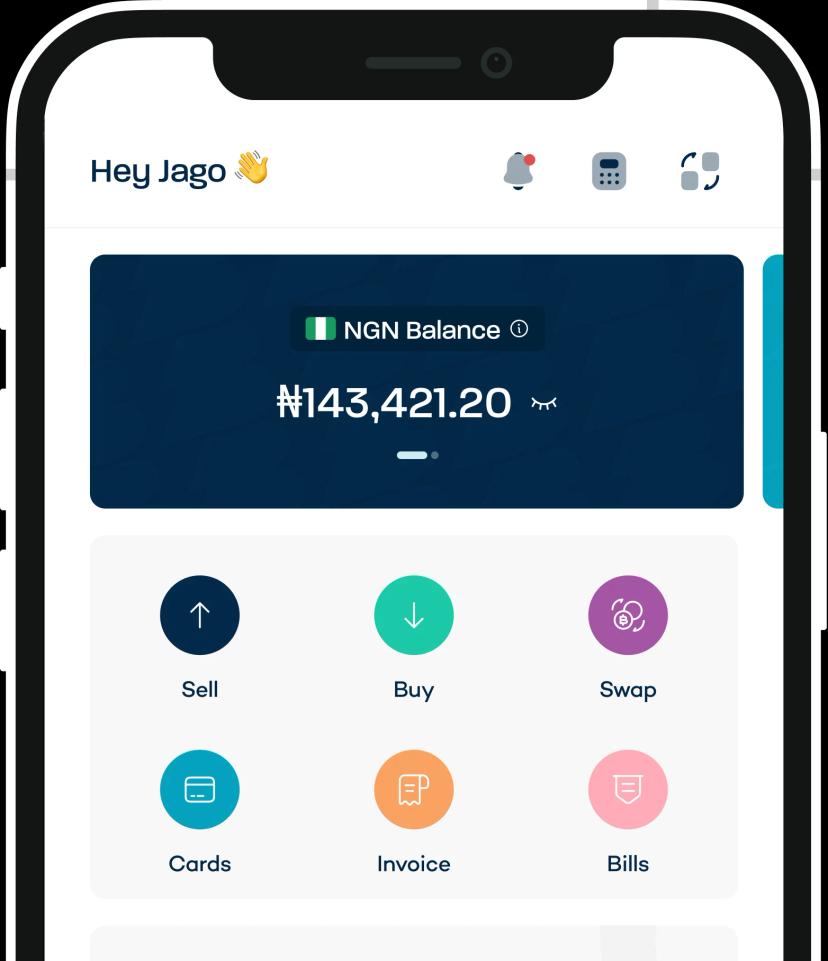
Breet generates a fresh deposit address for every swap and tells you exactly which token and network it’s expecting.
That single detail removes the most common way beginners lose money on a swap: pasting a contract address by hand and getting one character wrong, often from a copycat address designed to look right at a glance. On a DEX, that step is entirely on you. On Breet, it isn’t.
Settle to a bank account without a P2P counterparty
Swapping is usually only half the job. The other half is turning that value into money you can spend, and Breet’s settlement feature converts crypto to NGN or GHS and pays it out to a linked bank account directly, with no stranger to negotiate with, no chat window, and no dispute process to sit through.
That matters more as crypto adoption in Nigeria keeps climbing, because more of that activity is going to need a clean way out, not just a clean way in.
See the rate before you confirm, not after you swap
On Breet, the amount you’ll receive and the network fee are shown to you before you confirm, not after, so there’s nothing hiding inside a rounded-off total or anything eating into your spread.
Breet has also written publicly about why it changed its crypto rate structure, moving from a tiered rate table (where small transactions got a worse price) to one uniform rate plus a disclosed transaction fee, specifically because customers said the old system was confusing. That’s a level of pricing transparency most platforms in this category never offer, and it’s worth noting Breet doesn’t claim to be free either. It states the fee and shows the spread instead of hiding either one.
Ready to see your rate before you commit to it? Create an account and swap on Breet.
2. SimpleSwap: best for no-account swaps across the widest asset list
SimpleSwap is an instant, non-custodial swapper covering more than 2,800 assets, meaning SimpleSwap itself never holds your funds the way an account-based exchange would. No sign-up is required to start, and the coin you receive goes straight to your own wallet rather than sitting in a SimpleSwap account.
That breadth is real, and so is the gap in what SimpleSwap tells you about it. No fee figure appears anywhere on the site, and while a know-your-customer (KYC) policy exists in the footer, nothing on the platform states when it actually triggers. You find out when it happens to you, which is a strange way to run a service built on the promise of not asking for your ID.
Fee position: not published.
3. ChangeNOW: best for locking a fixed rate before you send
ChangeNOW is an instant swapper covering more than 1,000 assets with no registration required. It markets itself on low fees and offers a fixed-rate mode, where the amount you’ll receive holds steady regardless of price movement during confirmation.
What the site doesn’t spell out is the trade-off underneath that guarantee: a fixed rate is always quoted slightly worse than a floating one at that same moment, because you’re paying for certainty rather than getting it for free.
User discussions around instant swappers in this category also describe transactions held pending verification after the coins were already sent, so treat the “no registration” pitch with the same caution across this entire category, not just here.
Fee position: not published, marketed as among the lowest in its category.
4. Swapzone: best for comparing quotes across providers before you commit
Swapzone isn’t a swap venue itself. It’s an aggregator that compares live quotes across more than 18 instant exchanges and 1,000+ coins, charges nothing of its own, and offers both fixed and floating rates with a flagged “best rate” pick.
The catch is that your swap is only as good as whichever provider Swapzone hands you off to, so the KYC trigger and freeze risk from that provider travel with you. Swapzone’s homepage claims like “save up to 20%” also aren’t independently sourced, so treat them as marketing, not a guarantee.
Fee position: 0% aggregator fee; the routed provider’s spread still applies.
5. Bybit Convert: best for swapping coins you already hold on the exchange
Bybit is a global centralized exchange with a large Nigerian user base, much of it through its P2P marketplace, and its Convert tool prices the swap on Bybit’s own books, so no blockchain fee applies.
The trade-off is that the exchange sets the rate internally, which is exactly where a spread can hide without ever showing up as a line item. KYC is required, and you’re limited to listed pairs.
Fee position: no stated swap fee; the cost is carried in the rate.
6. Bitget Convert: best for one-tap swaps without touching an order book
Bitget is a centralized exchange accessible to Nigerian users, and its one-click convert skips the order book entirely, which makes it the fastest path for an already-funded account. Coverage is broad, and there’s no gas fee to think about.
The catch is the same one that applies to Bybit: an internal rate structure with nowhere for the spread to be visible, plus mandatory KYC and listed pairs only.
Fee position: no stated swap fee; the cost is carried in the rate.
7. Uniswap: best for swapping tokens no exchange has listed
Uniswap is the original decentralized exchange (DEX), a platform where your swap executes directly against a pool of other people’s deposited tokens instead of a company’s order book, and it’s now live across Polygon, Arbitrum, Optimism, and Base as well as Ethereum.
Because there’s no company sitting in the middle, nobody can freeze the trade or ask for ID; the trade-off is that you’re responsible for every technical detail a company would normally handle for you.
Pool fees currently range from 0.05% to 1% depending on the pair, with 0.3% standard for most, and Uniswap Labs added back a 0.05% interface fee in February 2026 after briefly running without one.
Gas is charged on every attempt, including failed ones, and gas fees are calculated depending on network congestion at the moment you send, which is part of why the same swap can cost twice as much on a busy afternoon as it did that morning.
8. PancakeSwap: best for cheap swaps on BNB Chain
PancakeSwap launched on BNB Smart Chain and has since expanded to Ethereum and Aptos. You connect a wallet, pick tokens or paste a contract address, and confirm, with materially cheaper gas than Ethereum mainnet for a comparable swap and deep liquidity on the major BNB Chain pairs.
Fees vary by pool rather than sitting at one flat number. Current V3 pools run from 0.01% up to 1% depending on the tier, while older V2 pools still charge a flat 0.25%, according to PancakeSwap’s own fee documentation.
Check the tier shown for your specific pair before confirming, because it genuinely changes the outcome. Small trades in thin pools also take a bigger hit from slippage, and the interface assumes you already know what a contract address is.
9. MetaMask Swaps: best for swapping inside the wallet you already use
MetaMask’s swap feature is built directly into the wallet, sourcing liquidity from multiple DEXs across Ethereum, other EVM chains, and now Solana and Bitcoin. There’s no transfer step before the swap, so you skip the extra risk of sending funds somewhere new, and custody never leaves your own wallet.
The part that catches people off guard is the cost stack. MetaMask charges a 0.875% service fee on top of whatever the underlying pool charges, and because it’s self-custodial, a lost seed phrase means a permanent loss with no support line to call.
Multi-chain swaps also need manual network selection, and pricing varies depending on which DEX it happens to route through that day. If you’re moving USDT specifically, the guide on how to add USDT to MetaMask covers the setup step this skips over.
Fee position: 0.875% service fee plus gas and the underlying pool’s spread.
10. Trust Wallet: best for wallet swaps on a phone
Trust Wallet is a self-custodial wallet with an in-app swap that routes through DEXs, automatically picking a path across whichever liquidity sources are available. They charge no swap fee, coverage spans multiple chains, and the whole thing is built for a phone, which matters more for this audience than for most.
Gas still applies and spikes hard on Ethereum mainnet specifically, and the real cost of the swap sits inside the rate rather than on a visible fee line, the same blind spot every wallet swap on this list shares. Slippage settings and contract addresses also read as technical for a first swap.
Fee position: no wallet fee; the cost is carried in gas and the routed rate.
Read the quote, not the fee line
The fee is the number a platform shows you. The spread is the number that actually decides what lands in your wallet. The route you pick determines which one you end up paying, and right now, nine of the ten sites on this list only show you the first.
One habit is worth keeping no matter which platform you use: before confirming any swap large enough that losing a percentage point would actually annoy you, open a second app and check one alternative quote. It takes under a minute, and it’s the only real defense against a cost that never shows up as a line item.
What Breet does differently: the receive rate and network fee are visible before you confirm, the swap and the cash-out settlement happen in one flow, and there’s no P2P counterparty waiting on the other end.
Sign up and run the quote check against Breet yourself.
Frequently asked questions
What are the best crypto swap sites?
Breet is the strongest option for Nigerians and Ghanaians because it shows the receive rate before confirmation and settles directly to a bank account. Centralized platforms like Bitget and Bybit offer fast, simple in-app conversions for listed pairs, while decentralized exchanges like Uniswap and PancakeSwap give you more control and less hand-holding.
Where can I swap my crypto?
You can swap on exchanges such as Breet, Bybit, and Bitget, inside wallets with a built-in swap feature such as MetaMask or Trust Wallet, on decentralized exchanges like Uniswap or PancakeSwap, or through an aggregator like Swapzone that shops your rate across several providers at once.
Is it free to swap crypto?
Almost never in practice. Even a platform that charges zero platform fees still passes on network gas fees or bakes a spread into the exchange rate. The number that matters is the total cost once both are counted, not the fee advertised on the homepage.
What’s the cheapest way to swap crypto?
It depends on the network and the pair. Low-fee chains like Base, BNB Smart Chain, and Polygon are generally cheaper to transact on than Ethereum mainnet, and platforms that show the full rate up front, rather than burying the cost in the spread, tend to save you more than chasing the lowest advertised fee.
What’s the difference between a fixed and a floating rate?
A floating rate moves with the market between the moment you get a quote and the moment it confirms. A fixed rate locks in your receive amount regardless of that movement, but it’s quoted slightly worse upfront, since you’re paying for the certainty rather than getting it free.