
Your freelancer didn’t choose their bank. You chose how you’d pay them, and that choice decides whether they’re stuck with high fees, long delays, and a verification wall before a single payment lands.
Take the Payoneer user who signed up because it promised “easy withdrawals to my local bank, exactly what a freelancer in Nigeria needs,” then got stuck behind a wall built for “established businesses, not individual freelancers.”
In this guide, we rank the seven ways to pay a freelancer by speed, real cost, whether they work for someone who banks in Nigeria or Ghana, and how much setup friction they add for both sides.
We’ll start with Breet, our own crypto payment infrastructure, and show how a business anywhere can use it to pay a freelancer in Lagos or Accra without the fees or the verification wall.
Top 7 ways to pay freelancers in 2026
| Method | Speed | Real Cost | Works for Nigerians/Ghanaians | Set-up Friction |
| Crypto with Breet | Minutes | Free, besides the network fees | Yes | Less than a day |
| Freelance platforms | 2 to 5 business days | Service fee for both sides. Upwork’s service fee is 10%, while Fiverr charges a 20% commission | Depends on the platform’s reach | None if already hired there |
| PayPal | Under 24 hours | 3-4% conversion markup and ~5% transfer fee | No | High |
| Wise | 1 to 4 business days | Typically well under 1% | Uneven, depends on local network | Low |
| Payoneer | 1 to 3 business days | 4% withdrawal fee plus a lower-than-market exchange rate | Extensive verification wall | High |
| Bank transfer/ACH | 1 to 3 business days | Low, usually free for the payer | Yes | Low |
| Wire transfer | 3 to 7 business days | Often $25-50 flat, regardless of payment size | Works but is costly | Medium |
1. Crypto payment with Breet: best for a freelancer who banks in Africa
Most methods on this list were built assuming the person getting paid holds a US or EU bank account, a dollar PayPal balance, or a registered business address a compliance team can verify online.
That assumption is exactly where they break down for a freelancer who invoices from Lagos or Accra: the payout either can’t reach a local bank at all, or it reaches one only after a fee stack and a verification process built for someone else entirely.
We built Breet’s invoicing tool around the opposite assumption. A client anywhere pays an invoice in whatever crypto they already hold, and the freelancer on the other end never has to touch crypto to receive the naira, cedis, or dollars that land in their bank account. Breet’s crypto invoice tool is free to create and free to receive; the only cost is the blockchain network fee, paid by whoever sends the crypto, and never marked up by us.
Below, we walk through each of these in more detail.
Lock the exchange rate at invoice creation to avoid volatility risk
Breet’s invoice tool locks the exchange rate the moment you generate the invoice, not whenever your freelancer eventually gets around to claiming it. Bill $500, and $500 is what settles on their end, even if the crypto market moves before the payment clears.
That kills the volatility objection most finance teams raise about paying in crypto. Neither side is exposed to a swing between sending the invoice and the freelancer getting paid, and the locked rate typically holds for a 15- to 30-minute payment window before the invoice needs refreshing.
The invoice also locks the payment to one specific coin and network, which matters more than it sounds. Crypto sent to the wrong network is usually unrecoverable, the same way a wire to the wrong account number would be, and it’s the single most common way a freelancer payment disappears for good.
Auto-settle every payment in fiat so nothing sits as a taxable crypto balance
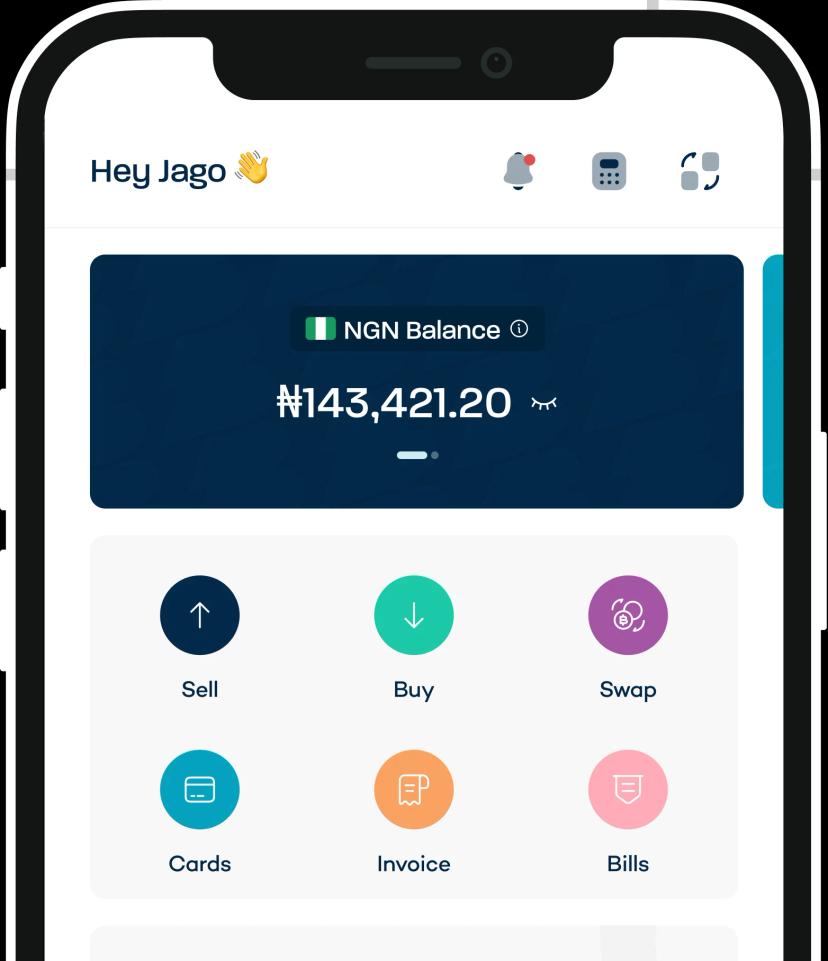
Turn on Auto-Settlement and the payment converts the moment your freelancer’s client pays, straight into naira, cedis, or USD in their bank account. A push notification confirms it the second the invoice status flips to “Paid,” with no manual withdrawal step in between.
Nothing sits as a crypto holding, even briefly, so there’s nothing to report as one. That’s the direct answer to the tax-complexity worry some guides raise about paying freelancers in crypto: if the money never sits as crypto on your freelancer’s end, there’s no crypto asset for them to account for at tax time.
Compare that to a Deel reviewer in South Africa, who described paying a currency-conversion fee and still waiting on a delayed payout in the same transfer. We collapse both problems into one step: convert on arrival, land in the account, done.
Run KYC and AML checks on every transaction so compliance teams can verify it themselves
Every transaction on Breet runs through KYC and AML checks before it settles, the same way a bank wire clears through a compliance layer you never see. We’re PCI DSS compliant, registered with FINTRAC as a money services business, and we process user data under Nigeria’s Data Protection Act 2023, enforced by the Nigeria Data Protection Commission.
Unlike an OTC desk or a P2P deal, none of that runs on trust. A finance team vetting a new payment method can check Breet’s registration status directly, before the first invoice goes out, not after.
Share one invoice link to get paid in minutes, not a verification queue
A freelancer either shares one invoice link, accepting BTC, ETH, USDT, USDC, and 12+ coins total, or generates a receiving wallet address directly. There’s no mandatory website-URL field, and no business-verification queue built for a registered company instead of one person freelancing.
For a business paying one or two freelancers, invoicing from Breet’s Business dashboard is the right tool: log in, fill in the amount and description, and share the link.
For a business paying contractors at volume, the Breet API handles wallet generation, on-chain confirmation, and fiat settlement automatically, instead of someone creating invoices by hand every payday.
Breet’s invoicing won’t be the right fit for every business, though. If a freelancer would rather never hear the word “crypto,” even in passing, or your finance team specifically wants a rail with decades of banking history behind it, the six methods below are worth knowing too.
Create your first crypto invoice on Breet today, free, and see the fiat land before your next freelancer follow-up email.
2. Freelance platform payments: best for hiring through Upwork or Fiverr
Upwork and Fiverr are marketplaces first and payment rails second, built for a client hiring and paying a freelancer they found through the platform itself.
A client funds escrow, the freelancer delivers against a milestone or logged hours, and payment releases to whatever payout method the freelancer connected, usually PayPal or direct deposit.
Key features:
- Escrow that holds funds before work starts, giving the client leverage if the work misses the brief
- A formal dispute process instead of an email back-and-forth
- Built-in freelancer discovery, useful if you haven’t already hired the person
- No portability: the freelancer builds no payment history outside the platform, and moving the relationship off-platform starts trust from zero
Upwork charges freelancers a flat 10% service fee, with clients paying an additional marketplace fee on top. Fiverr takes a flat 20% commission from every freelancer’s earnings, plus a separate service fee charged to the client at checkout.
3. PayPal: best for a quick, familiar payment to a freelancer who already has an account
PayPal is built for reach: almost every freelancer already has an account, so a client rarely has to ask which method someone prefers.
Key features:
- Send an invoice, a direct payment, or a QR code
- Funds usually land in a freelancer’s balance within minutes domestically
- International payments to Africa often take hours instead of minutes
- Withdrawing to a local bank is a separate step after the payment lands
PayPal’s currency-conversion markup sits at 3 to 4 percent above the mid-market rate (per Wise), separate from a transfer fee that typically runs around 5 percent on international personal payments.
Combined, that’s roughly 8 to 9 percent on a $1,000 payment, $80 to $90 gone in fees.
4. Wise: best for a cost-conscious business paying a handful of international freelancers directly
Wise is built around showing the real exchange rate instead of hiding a markup inside it; through a multi-currency account, a business can pay freelancers directly.
Key features:
- Batch payments to pay several freelancers in one session instead of processing each manually
- Rates that stay close to the mid-market rate, not a marked-up one
- Payout speed that depends on the receiving country’s local banking network, exactly where the Nigeria and Ghana corridor gets unpredictable
- A dedicated business account, not built for a one-off personal payment
Fees stay low relative to PayPal or a wire, typically well under 1 percent for major currency routes, moving slightly with the currency pair and payment method.
5. Payoneer: best for a freelancer already set up with a Payoneer receiving account
Payoneer is built specifically for freelancers billing international clients, with withdrawals going straight to a local bank account once approved. Getting approved comes first, and that process is its own project.
Key features:
- Local currency paid straight into a local bank account, without a slower international wire
- A verification process built around a mandatory business-website-URL field, something many freelancers working through referrals or platforms don’t have
- One G2 reviewer, a freelancer in Nigeria, described the approval process as endless and built for an established business rather than an individual
- Fast, repeatable withdrawals once approved
Withdrawal carries a 4% fee, charged on top of Payoneer’s built-in exchange rate. That gap is why some freelancers withdraw to a domiciliary account and hold dollars instead of converting to naira automatically.
6. Bank transfer and ACH: best for routine domestic payments where cost matters more than speed
ACH is built to strip out everything a third-party platform adds: no invoice tool, no escrow, no app, just one bank account paying another over existing banking infrastructure.
Key features:
- The cheapest rail on this list, often free for the paying business
- Only works between US bank accounts on both ends
- Unusable for a freelancer banking outside the US, no exceptions
- A 1 to 3 day settlement delay
Fees run lower than almost any other method here, often free, which is why ACH stays the default for US-domestic freelance payments specifically.
7. Wire transfer: best for a large, one-off payment where speed matters more than fee
A wire transfer is built to reach nearly any bank account in the world through a bank-initiated payment, making it the fallback when nothing else on this list covers a specific corridor.
Key features:
- Works even when the freelancer’s bank sits outside every other network here
- No locked rate before the transfer goes out if a currency conversion is involved
- Same-day to two-business-day processing
- A flat fee regardless of amount, so a $200 wire costs roughly what a $20,000 one does
Fees stack on both sending and receiving sides, often $25 to $50 flat on the sending side alone.
Pay your freelancer like their bank isn’t the problem
Every method on this list can move money from one place to another. Only one of them was built around what happens when the freelancer on the other end banks in Nigeria or Ghana.
With Breet, that means:
- A rate that locks the second the invoice gets created, not whenever payment eventually clears.
- No crypto balance sitting anywhere waiting to become a tax headache.
- KYC and AML screening on every transaction, verifiable directly instead of taken on faith.
- No verification process written for a registered company instead of one person doing freelance work.
Next time a freelancer brings up a slow payout or a fee that quietly ate part of their invoice, send that payment through Breet before reaching for whatever method has always been the default.
Ready to pay a freelancer without the fees, the delay, or the verification wall? Create your first crypto invoice on Breet.