Paying a team in stablecoins looks like one task. In Africa, it’s two: paying and cashing out. Sending USDC to a contractor is the easy part. The hard part, the part that decides whether the whole arrangement actually works, is turning that USDC into naira or cedis someone can spend today.
The shift is already here. B2B stablecoin payment volume grew from under $100 million a month in early 2023 to over $3 billion a month by early 2025, a 30-fold increase in two years.
By December 2025, total real-world stablecoin payment volume had reached $390 billion annually, with B2B payments accounting for roughly $226 billion of that.
Nigeria received $92.1 billion in crypto value between July 2024 and June 2025, the largest crypto market in Sub-Saharan Africa by a wide margin. The counterparties and the talent already expect this.
Why African teams are moving payroll onto stablecoins
African businesses and workers adopt stablecoin pay for protection and access, not novelty. Three concrete reasons drive it.
- A dollar-stable wage protects pay from local currency depreciation. USDT and USDC hold their value against the dollar, which matters when the naira has lost significant purchasing power over the past two years. If you want to save in dollars with USDT, stablecoins are already the practical tool most Nigerians and Ghanaians reach for.
- Cross-border payments get cheaper and faster. A SWIFT wire from a foreign client typically costs $25 to $50 plus a 2% to 5% FX spread and takes several business days to clear. Stablecoins skip both the fee and the wait.
- Banking reach improves. A worker without smooth access to USD banking can still receive and convert stablecoins. USDT has the deepest off-ramp liquidity of any stablecoin in Africa, which makes it the fastest to turn into spendable cash.
How to Set Up Stablecoin Payroll in Africa
1. Decide your model: contractors, employees, or direct
Before picking any tool, decide who you’re paying. This changes what’s legal and what’s simple, and most global guides skip straight past it.
- Contractors and freelancers: the clean, common path. You pay per invoice or on a schedule in stablecoins, with no employment relationship to complicate things. Most platforms, including early movers like Deel, started here for a reason.
- Full-time employees: the nuanced case. Crypto is legal in Nigeria, Kenya, and South Africa, but it isn’t legal tender in any of them, so a formal salary still usually needs to be paid in local currency to meet PAYE, tax, and labor law obligations. Many businesses handle this as a hybrid: a fiat base salary plus a stablecoin top-up.
- Direct, with no platform: for a small number of contractors, pay straight to a wallet or via a crypto invoice and let them cash out through a proper converter rather than a P2P trade.
If you’re paying contractors, the setup below is short. If you’re paying employees, read the compliance section first and structure around the legal realities before choosing a platform.
2. Choose a payroll platform (or skip it)
If you want scheduled payroll runs and multi-country compliance, use a dedicated platform. If you’re paying a few contractors, you may not need one at all. Here are the real platforms worth knowing:
- Rise: native fiat and crypto payroll, worker-controlled withdrawals, 190+ countries, supports USDC and USDT.
- Deel: mainstream HR and employer-of-record; stablecoin payout added via MoonPay, strongest if you also need employment or compliance coverage.
- Toku: token and crypto-native compensation and compliance.
- Bitwage: lightweight, freelancer-friendly, with a long track record.
What actually matters for an African team is contractor versus employer-of-record coverage, which coins are supported, the fees, and the one thing every platform under-delivers: recipient-side cash-out in Africa.
Every one of these solves paying the worker. None of them solves the African cash-out. They hand the recipient a USDC balance and a “sell it locally” shrug. That’s the next step.
3. Pick the stablecoin: USDT or USDC
Pick the stablecoin your recipients can actually convert with ease. In Africa, that usually means USDT, with USDC a strong second.
USDT has the deepest liquidity and the widest off-ramp coverage on the continent. Stablecoins account for 43% of all crypto transaction volume in Sub-Saharan Africa, and USDT drives the bulk of that activity.
USDC has a strong reputation for compliance and reserve transparency, which makes it popular for corporate and cross-border payments. Both run on multiple chains.
One practical note: choose a low-fee network for the payout. USDT on Tron (TRC-20) is the common choice because transaction fees are minimal.
Confirm your cash-out provider supports it before committing to a coin and chain. Whichever you pick, it’s only useful to your team once they can turn it into local money, which is the next problem.
4. Solve the cash-out: turn salaries into spendable naira or cedis
This is where African stablecoin payroll usually breaks down. P2P trades mean waiting on a stranger to take the other side of the trade, accepting a rate worse than what was quoted, and carrying real dispute risk if something goes wrong.
For a one-off transaction, that’s an inconvenience. For a recurring salary, it’s unacceptable.
Setting up the payment was never the hard part. Turning what lands into money your team can spend today is.
Breet Business is the cash-out and infrastructure layer that sits underneath whatever payroll platform you choose, or underneath a direct invoice arrangement.
To be direct, Breet is not a payroll platform. It doesn’t employ workers, issue payslips, or handle payroll tax. What it does is receive stablecoin payments and turn them into spendable local currency, fast and compliantly.
How Breet solves the cash-out side of payroll
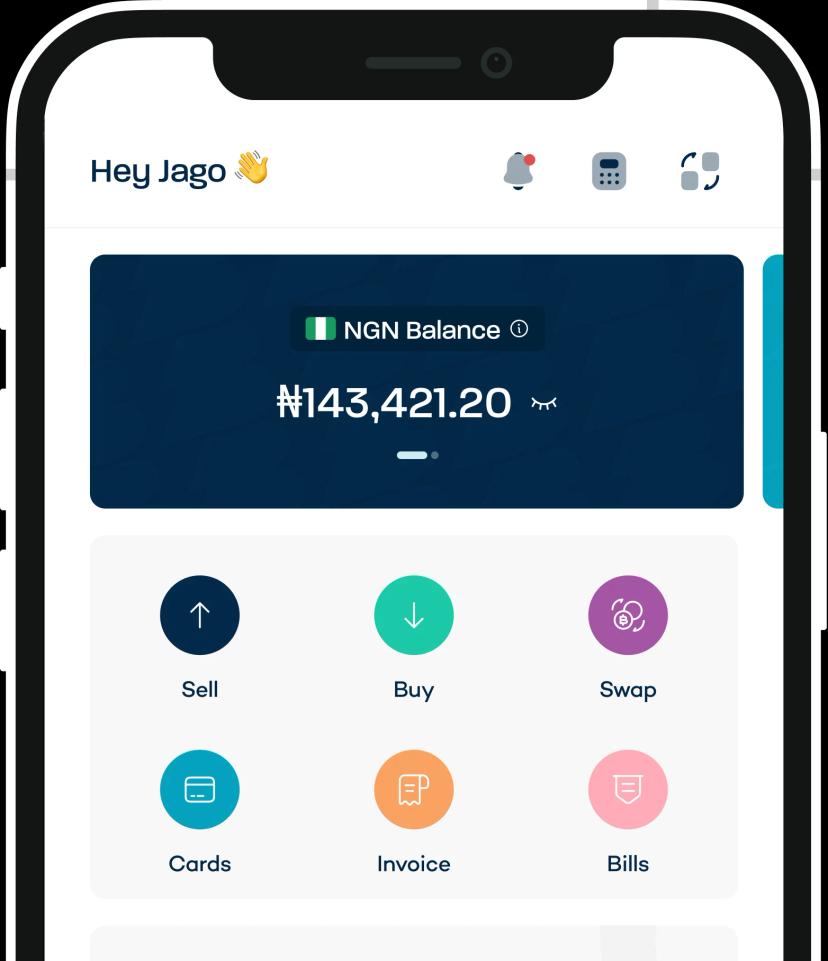
A worker or business receives USDT or USDC. With Auto-Settlement on, the conversion to naira or cedis happens the moment the payment lands, and the payout reaches a bank account or mobile money wallet in minutes, an average of around 287 seconds.
No P2P step, no waiting on a stranger, no manual conversion.
For contractors: invoice the client in USDT via crypto invoicing and auto-settle to local currency. Clean, recordable, no payroll platform needed. You can also generate a USDT invoice directly.
For businesses building payouts: Breet’s crypto and stablecoin API gives you wallet addresses, webhooks, automatic conversion and settlement, and the rails to disburse and cash out programmatically without holding custody of crypto or running blockchain infrastructure yourself.
See the API documentation for the technical details.
Settlement choice: convert to naira or cedis and land in a bank or mobile money wallet, or hold in USDT or USDC to keep the dollar value.
Full KYC and AML compliance is built in under NDPC and PCI DSS standards.
Scale: more than 250,000 people in Nigeria and Ghana already use Breet to convert crypto to local cash. For large or batch conversions, the VIP OTC Desk avoids the slippage that comes with retail-sized trades.
The local off-ramp currently covers naira and cedis (NG/GH). For teams paying recipients in Kenyan shillings or South African rand, Breet works as the dollar-stablecoin layer, paired with a local off-ramp provider in that country.
PIL, a business using Breet for wallet generation, webhooks, USDC funding, and periodic USD withdrawal, described the integration this way: “Breet fit in cleanly and let us stay focused on our core product.”
Book a demo to see how a stablecoin payout lands in seconds.
Stay compliant: the legal and tax checklist
Stablecoin pay is workable across Africa’s big markets, but the rules differ, and contractors are simpler than employees. The information below is dated as of June 2026.
Crypto is legal, but not legal tender, anywhere here. In Nigeria, the Investment and Securities Act 2025 treats stablecoins as securities under SEC oversight. The VASP Act 2025 of Kenya classifies crypto as an asset, regulated by the CBK and CMA. In South Africa, crypto is treated as a financial product under the FSCA. The Bank of Ghana is still developing its rules.
The practical checklist:
- Pay contractors in stablecoins freely, and treat the payment as normal contractor income for invoicing.
- For employees, keep salary, PAYE, and tax obligations in local currency. Use stablecoins as a top-up or restructure as a contractor arrangement instead.
- Keep clean records of the conversion rate and date for every payment.
- Use a KYC and AML-compliant cash-out provider so the crypto leg is auditable.
This is general information, not legal or tax advice. Confirm with local professionals and primary regulator sources, including the countries your workers sit in.
Don’t make your team fend for themselves
Stablecoin payroll has two problems: paying and cashing out. In Africa, the cash-out is the one that decides whether it works for the person receiving it.
- A dollar-stable wage that survives the trip from invoice to spendable cash the same day.
- No P2P step, no stranger to negotiate with, no dispute risk on a recurring salary.
- One compliant workflow, from KYC to settlement, instead of a “sell it locally” handoff.
Choose the payroll platform for paying. Pair it with a fast, compliant converter for cashing out. As adoption and regulation mature across Nigeria, Ghana, Kenya, and South Africa, the businesses that set this up properly now are the ones that keep the talent that already expects to be paid this way.
Book a demo and see how a stablecoin payout lands in seconds, not days.