- Every stablecoin payments framework runs on the same six layers
- Those six layers assume a banking system most of the world doesn't have
- There's a seventh layer, and it only shows up once you're clearing it
- What the seventh layer actually looks like in Africa
- What changes once a business accounts for the seventh layer
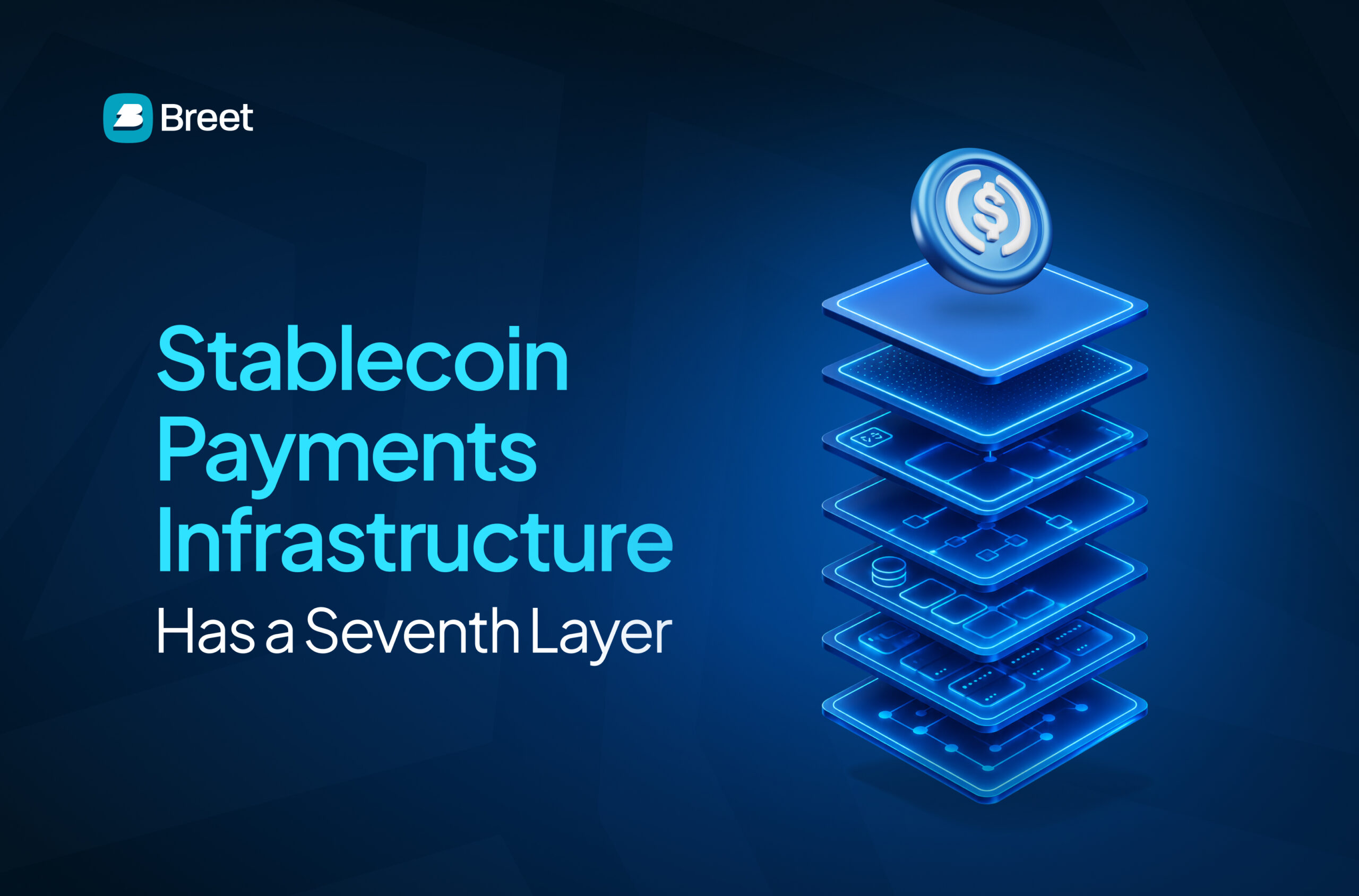
Discussions about stablecoin payment infrastructure currently focus on six layers: licensing, onboarding, custody, funding, distribution, and conversion.
Paxos has set the standard model that many in the industry follow, with companies like Circle and BVNK aligning their products similarly. This framework has become the go-to reference for understanding stablecoin operations.
This model is consolidating quickly, as seen with Mastercard’s $1.8 billion acquisition of BVNK, which integrates a key version of this framework into its card network.
Paxos also enables stablecoin settlements for Stripe and facilitates PYUSD for PayPal customers in 70 countries, with total volume exceeding $30 trillion.
However, the crucial layer that determines whether these systems work in places like Lagos or Accra is often overlooked.
Many frameworks highlight Africa to illustrate the value of stablecoins, noting that traditional cross-border transfers can cost 6% to 10%. The companies involved have not addressed the layer that affects functionality on the ground.
This overlooked seventh layer is the fiat off-ramp, where a stablecoin converts from being a blockchain token to a local currency, like naira or cedi, ready for spending.
This process remains largely invisible to outsiders and becomes clear only through daily operations. This article examines the strengths and assumptions of the six-layer model and sheds light on the unseen seventh layer.
Every stablecoin payments framework runs on the same six layers
Paxos describes the layers as:
- Licensing and regulatory foundation
- Customer onboarding
- Custody and wallets
- Fiat funding and stablecoin acceptance
- Distribution and payouts
- Fiat-stablecoin conversion
Each layer of a stablecoin infrastructure brings its own regulatory requirements, integration challenges, and operational risks. For instance, a missed Anti-Money Laundering (AML) check during onboarding or a wallet misconfiguration in custody can lead to significant issues downstream.
Additionally, these layers are interdependent; as Paxos notes, a failure in any one layer can “cascade” through the rest.
This framework is genuinely useful for fintech companies considering whether to build their own stablecoin infrastructure, as it provides a clear understanding of the commitments involved.
There is also a perspective issue to consider. Much of the foundational thinking in this space has come from infrastructure companies based in the US, Europe, and Singapore. For example, Circle issues USDC globally from a strong institutional position, while BVNK is licensed to operate across the UK, EU, and US.
Their frameworks are designed around the challenges enterprise fintechs and financial institutions encounter when integrating stablecoins into their existing payment systems, typically in markets where these systems already function effectively.
While this perspective is valid, it does not encompass the entire problem.
Those six layers assume a banking system most of the world doesn’t have
The six-layer model is not incorrect, but it is incomplete. It works well when businesses operate in financial markets with solid banking connections, established correspondent relationships, ample dollar liquidity, and mature local payment systems.
However, these conditions change when transferring payments to places like Lagos or Accra.
Paxos acknowledges this gap by stating that while “stablecoins have made real progress on the middle mile of cross-border payments, liquidity between stablecoins and local fiat currencies remains thin in many corridors.”
In simple terms, stablecoins can be sent quickly, but accessing local cash can be difficult.
This issue creates additional challenges. BVNK works with businesses and institutions that process at least $500,000 in payments monthly, setting a reasonable bar for enterprise infrastructure providers.
Ultimately, successfully transferring money across borders is of little benefit if the recipient cannot spend it.
There’s a seventh layer, and it only shows up once you’re clearing it
This is the crucial step for converting fiat currency: it turns a confirmed on-chain transaction into usable money for businesses, enabling them to pay suppliers or manage payroll.
This step differs from “conversion” in the six-layer model, which includes swapping fiat for stablecoins or shifting between stablecoins. The seventh layer specifically involves transferring stablecoins into a country’s financial system, such as converting USDT to NGN or USDC to GHS.
Three factors determine the success of this transfer:
- Rate. What local currency amount does the recipient receive?
- Timing. How quickly does the settlement occur—minutes, hours, or days?
- Reliability. Is the transfer accurate every time?
Addressing the challenge of “thin local liquidity” is essential for a successful off-ramp.
This requires solving issues corridor by corridor, highlighting the gap between stablecoin efficiency and the complexities of local banking and liquidity.
What the seventh layer actually looks like in Africa
Businesses handling stablecoin payments face daily challenges that go beyond presentation slides. For companies in Nigeria and Ghana, the key question isn’t whether a provider supports USDT or USDC, but what happens after a transaction is confirmed.
Same-day onboarding replaces the six-month qualification requirement
The goal is to quickly get a legitimate business operational, avoiding the extensive requirements typically faced by multinational treasury operations.
In Africa, there is a need for a more efficient onboarding process. One example of this is enabling same-day Business KYB (Know Your Business) compliance checks, allowing integration to begin simultaneously.
Breet ensures businesses can go live as quickly as possible. For example, Cardtonic went from sandbox access to production in two days. And PIL, a B2B virtual card platform serving businesses in Nigeria and Ghana, went live in under a week.
Such examples highlight how the onboarding experience should be structured for Africa. Instead of requiring lengthy track records, the focus should be on helping functional businesses onboard quickly and efficiently.
Auto-conversion on arrival closes the gap stablecoins were supposed to close
A stablecoin payment that requires manual conversion does not truly solve the payment problem; it merely shifts it. Cardtonic faced this issue before integrating with Breet, as customers had to convert their stablecoins to fiat before funding their virtual cards, leading to delays and foreign-exchange complications.
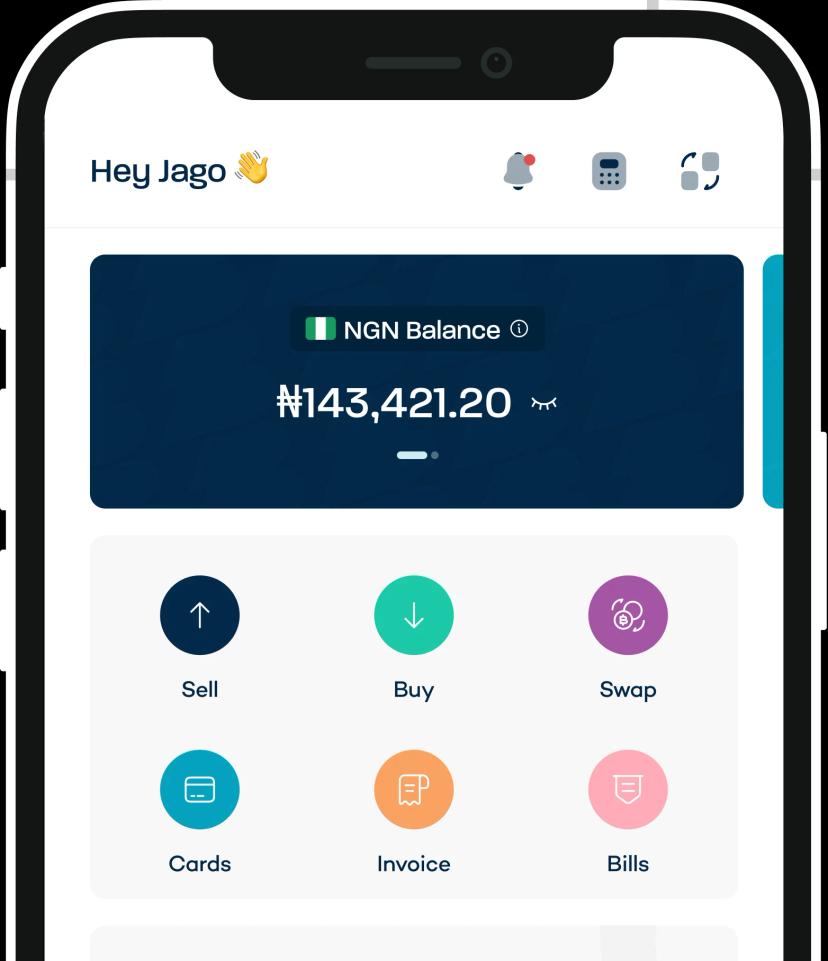
With Breet’s auto-settlement feature, incoming deposits are automatically detected, converted, and the fiat equivalent is sent to the linked account without manual steps. This service allows customers to pay in USDT or USDC, eliminating the need for Cardtonic to manage a crypto treasury operation.
One integration replaces the “dozen vendors” the industry warns about
The off-ramp cannot operate in isolation. For a business to accept stablecoins, it requires several integrated components: wallet generation, blockchain monitoring, transaction confirmation, anti-money laundering (AML) screening, conversion, settlement, reconciliation, and notifications. All these elements need to work together seamlessly.
Paxos specifically addresses this challenge in its documentation, stating that many platforms end up “stitching together point solutions from a dozen vendors.” The outcome is a system that may function technically but is operationally fragile and difficult to audit.
An effective alternative involves using a single API integration that handles wallet generation, on-chain confirmation, automatic fiat conversion, AML screening, and webhook notifications instead of relying on a fragmented system.
The OTC Desk locks in rates before trades
For larger transactions, the main concern is whether the exchange rate changes between trade agreement and settlement.
Breet’s OTC desk addresses this by locking in the rate before execution and settling within the same hour in currencies like NGN, GHS, USD, USDT, or USDC. Each trade provides a formal record detailing the asset, volume, agreed rate, settlement amount, and timestamp.
This service helps importers and exporters navigate the risks of the parallel market, where rates are often higher than official ones, while also providing the necessary audit trail.
By ensuring a locked rate and prompt settlement, Breet allows businesses to secure fair pricing and maintain proper documentation.
What changes once a business accounts for the seventh layer
The seventh layer shifts the questions businesses should ask. Instead of “Which stablecoin infrastructure framework should we use?” the better question is, “Who is clearing the last mile in the corridor where we operate?”
For fintech founders, this changes the build-versus-buy decision to a practical evaluation: Can the provider quickly complete KYB, generate wallets, confirm transactions, convert currencies, and settle into local payment networks?
For finance and operations leads, it means looking beyond a provider’s global coverage. A provider might look impressive on paper yet still rely on another vendor for key operations in places like Nigeria or Ghana.
The six-layer model remains necessary but is not sufficient on its own. Businesses that overlook the seventh layer often realize its importance only during failures, rather than addressing it proactively.
If your business has a stablecoin payments infrastructure in Nigeria or Ghana, the next step is to assess your off-ramp options against the same-day, same-hour requirements.
Want to see the seventh layer running in production? Book a demo, and we’ll walk you through your specific corridor.