A customer wants to pay you in USDT, and you freeze. Most businesses we talk to do one of two things: turn the customer away, or wing it through a risky informal P2P deal. Neither makes sense when there is a proper way to do this.
To accept crypto payments as a business in Nigeria, you connect to a licensed crypto payment provider that generates a wallet address for each customer, detects the incoming payment, and settles the value to your Naira bank account or a stablecoin wallet.
You do not need your own crypto licence, a blockchain developer, or a wallet built from scratch. The whole flow can run through a single integration, and with a provider like Breet Business, you can be live in days.
This guide is for Nigerian business owners, finance leads, and developers who want to accept crypto, especially stablecoins like USDT, the right way.
Key Takeaways
- A regular business that accepts crypto through a licensed provider does not need its own SEC VASP licence. The provider’s compliance covers you.
- Stablecoins (USDT, USDC) are the practical choice because their value is pegged to the US dollar, so a 1,000 USDT invoice is still worth roughly $1,000 when it settles.
- As of January 2026, crypto gains and income are taxable in Nigeria under the Nigeria Tax Administration Act (NTAA) 2025, so clean records are no longer optional.
The 3 Ways to Accept Crypto Payments in Nigeria
There are three common methods, ordered from most manual to most automated. The right one depends on how technical you are and how much volume you handle.
- Direct wallet transfers. You share a wallet address, the customer sends crypto, and you convert to Naira yourself on an exchange. It is simple and free to start, but fully manual, error-prone, and hard to reconcile at scale.
- Payment links and QR codes. You generate a hosted link or QR code, the customer pays, and the provider auto-converts to Naira. This suits small businesses and freelancers who want a professional checkout without writing code.
- API integration. You embed crypto checkout directly into your website or app, so paying with crypto feels like paying with a card. This is the route for fintechs, marketplaces, and SaaS platforms that need automation and scale.
The rest of this guide walks through the API and account route step by step, using Breet Business as the payment infrastructure, because it removes the manual conversion and reconciliation work that sinks the first method.
Step 1: Create your Breet Business account
Go to the crypto and stablecoin API page and book a demo. This is not a fully self-serve signup. We work with businesses directly to confirm fit and walk you through onboarding, which also makes sure compliance is handled from the start.
During onboarding, you will typically need your business registration documents (CAC certificate), KYC information for the directors or authorized signatories, and details about your use case.
Because Breet is KYC and AML compliant, operating through us means your business inherits that compliance layer.
You are not accepting unregulated payments; you are plugged into a framework that has already done the regulatory heavy lifting.
Step 2: Connect the API
Once your account is live, you get access to the Breet API, documented at docs.breet.io. The core flow is four calls:
- Your backend calls the API to generate a wallet address for a customer or transaction, and Breet returns the address.
- You display it to the customer or pass it through your checkout.
- The customer sends crypto to that address. Breet detects the transaction on-chain and fires a webhook to your system.
- You confirm the payment on your end and complete the order.
Breet supports Bitcoin, Ethereum, USDT, USDC, Litecoin, Tron, Solana, BNB, and several other assets.
For most Nigerian businesses, USDT over TRC-20 is the most common choice, because the network fees are low and settlement is fast. No in-house developer? Our team will walk you through the integration directly.
Step 3: Choose how you want to receive your money
Most businesses overlook this step, and it matters more than any other. Once a customer pays in crypto, what happens to the money is your call. You have three options:
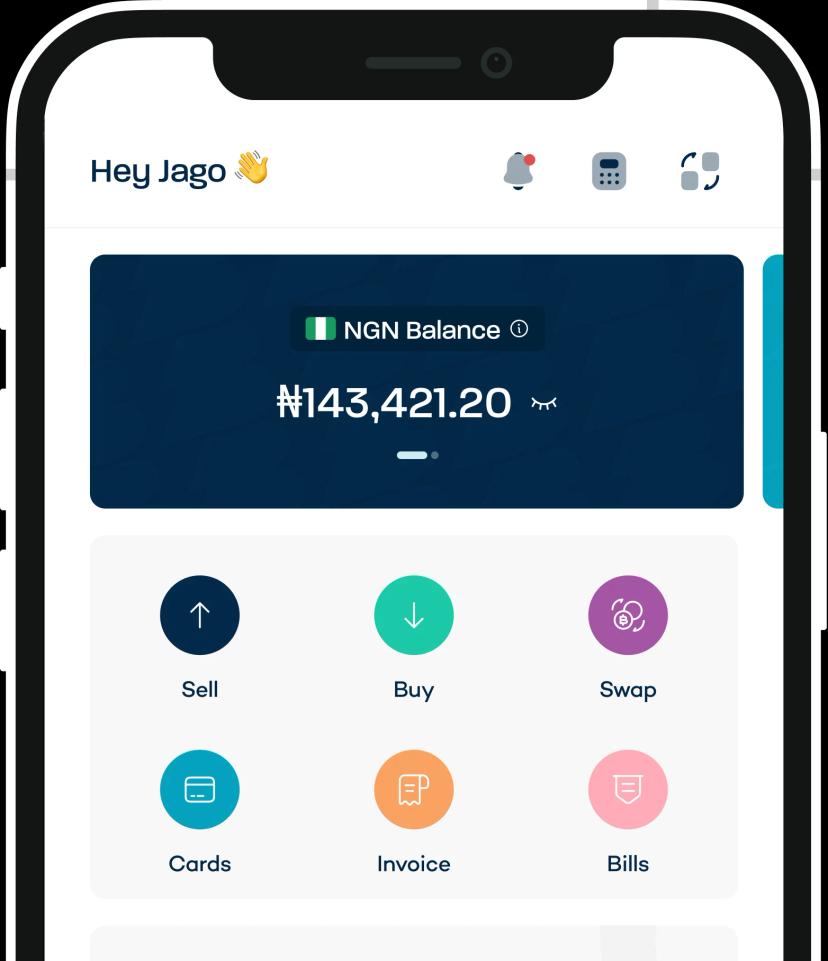
- Settle in naira. Breet converts the crypto automatically and sends the naira equivalent to your bank account. This is the simplest option if you want zero crypto exposure after payment.
- Settle in stablecoins (USDT or USDC). Breet holds the funds as stablecoins in your business wallet, which suits businesses with USD-denominated expenses or those protecting value against naira devaluation.
- Withdraw manually. You decide when and how to withdraw, whether to a bank account, mobile money, or a stablecoin wallet.
You set this in your Breet partner dashboard, and you can enable automatic settlement so withdrawals happen with no manual action.
This choice defines your operational model: a business paid by clients abroad might prefer stablecoin settlement, while a business with naira expenses will likely want automatic naira payouts.
Step 4: Run a test payment, then go live
Before you take a single live payment, process a test transaction end to end. Send a small amount of crypto (USDT works well) to a wallet address your system generated.
Confirm the webhook fires and your system records the payment. Then check that settlement reaches your preferred destination.
That first settlement is your proof the flow works. After it, you are fully operational.
What Crypto Payments Cost
Pricing for crypto payment infrastructure in West Africa is usually a percentage of each transaction. Charges range from 0.5% to 2% per transaction.
On a 1,000 USDT payment, a 0.5% fee is 5 USDT, which is a fraction of what a typical international wire would cost in flat fees and exchange markups.
When you compare providers, watch for the costs that hide outside the headline rate: setup fees, withdrawal fees added after conversion, and the spread baked into the exchange rate.
Your ongoing compliance duties
Even when your provider handles platform-side compliance, your business keeps a few obligations of its own, and these got more concrete in 2026. Keep records of who paid you and how much, and for customers making significant crypto payments, collect basic KYC information on your end.
If you operate in a regulated sector such as fintech, lending, or insurance, you may need to declare crypto payments in your financial reporting.
The tax position has changed and is no longer a “later” problem. Under the Nigeria Tax Administration Act (NTAA) 2025, signed in June 2025 and effective from January 1, 2026, crypto gains and income are taxed as chargeable gains under personal income tax at progressive rates up to 25%, with the first ₦800,000 of gains tax-free, as reported in Tekedia’s breakdown of the framework (as of 2026).
A 7.5% VAT applies to specific crypto-related services, and licensed exchanges must now report transaction-level data to the tax authority.
The FIRS has not yet issued detailed crypto tax-reporting guidance, but Nigeria’s 2026 tax framework makes clean records a now-or-later question, so it is worth keeping them tidy from your first transaction rather than reconstructing them under audit.
Turn the next “Can I pay in USDT?” into a sale
The next time a customer asks to pay in USDT, you will not freeze, and you will not improvise a risky P2P deal. You will send a wallet address, and the money will land in your account as naira or stablecoins, screened and settled.
That is the whole point of putting crypto on proper infrastructure: it turns an awkward question into a completed sale.
If a full API integration is more than you need right now, crypto invoicing gets you accepting crypto with no code at all.
Ready to take your first crypto payment? Book a demo and go live in under a day.
Frequently Asked Questions
Do I Need to Register With the SEC to Accept Crypto Payments as a Nigerian Business?
No, not if you use a licensed payment infrastructure provider. The SEC licensing requirement applies to Virtual Asset Service Providers, which are platforms that offer trading, exchange, or custody of crypto. A regular business simply accepting payments through a licensed provider is covered by that provider’s compliance framework.
Can I Accept USDT Payments and Receive Naira Directly in My Bank Account?
Yes. A provider like Breet automatically converts USDT and other cryptocurrencies into Naira and sends it straight to your linked bank account, so you never have to manually convert anything.
What Happens if a Customer Sends the Wrong Amount or to the Wrong Address?
Each wallet address generated for a transaction is unique, which reduces address errors. If a customer sends the wrong amount, your system receives a webhook reflecting the actual amount sent, and your own business logic decides how to handle underpayments or overpayments. Your provider’s support team can also help with edge cases.
Is Crypto Payment Infrastructure Available to All Types of Nigerian Businesses?
Breet Business works with fintechs, SaaS platforms, marketplaces, agencies, and other businesses that need to accept crypto at scale. It is business infrastructure, not a consumer product, so contact the sales team to confirm fit for your specific use case.
Which Crypto Should My Business Accept in Nigeria?
Most Nigerian businesses accept USDT on the TRC-20 network because it holds a stable dollar value and carries low transaction fees. Stablecoins are generally preferable to volatile assets like Bitcoin for invoicing, since their value does not swing between the time you bill and the time you are paid.
Is It Legal to Accept Crypto Payments in Nigeria?
Yes, businesses in Nigeria can legally accept crypto payments, with one nuance: crypto is not legal tender, so no one is obligated to accept it, but you are free to.