IvoryPay built its name around a straightforward use case: an African business could accept crypto from a client, then cash out in Naira or Cedis. Its website now pitches a broader operation, from helping businesses pay suppliers in China and India to accepting payments from global brands and NGOs, alongside newer products such as x402 Payments and Duffle.
Five SaaS directories list IvoryPay alternatives, but mostly as unranked logo grids; Capterra even shows zero IvoryPay reviews and recommends Venmo, which doesn’t support crypto payments. This list compares seven crypto-native payment gateways, five with a stronger African focus and two global options, against the factors that matter when you’re actually deciding whether to switch:
- Real fees: an actual percentage or dollar figure, not “competitive pricing.”
- Verification speed: how quickly a business can get approved and whether rejected documents come with an explanation.
- Local settlement: whether payments reach a Nigerian or Ghanaian bank account in Naira or Cedis, or leave you holding crypto.
- Setup friction: how quickly you can go from signing up to your first transaction.
On those criteria, Breet is the only option here that combines free crypto invoicing, fast KYB, and automatic Naira or Cedi settlement.
Top 7 IvoryPay Alternatives in 2026
| Gateway | Verification speed | Settles to NGN/GHS? | Best for |
| Breet | Under 24 hours | Yes | African businesses that want local settlement |
| Busha | Not publicly stated | Yes | Payments + treasury + OTC |
| Quidax / Basqet | Not publicly stated | Yes | Payment infrastructure backed by an exchange |
| Paychant | Under 30 minutes to integrate | Yes | Embedded crypto-to-fiat infrastructure |
| Yellow Card | Not publicly stated | Yes | Multi-country African operations |
| NOWPayments | Not publicly stated | No | Global crypto acceptance |
| CoinGate | Not publicly stated | No | European e-commerce |
1. Breet: Best for a Nigerian or Ghanaian business that wants to accept crypto and settle locally
Breet is the strongest IvoryPay alternative for an African business that cares about what happens after a crypto payment arrives. It combines crypto invoicing, business payments, API infrastructure, and automatic fiat settlement, so a business can accept crypto without making its customer payment workflow depend on a separate exchange or manual conversion.
What makes it stand out is how directly it addresses the four criteria above: Know Your Business (KYB) can be completed in under 24 hours, payments can settle automatically in Naira, Cedis, or dollars, and its invoicing product is free to use.
Clear KYB in a day, not weeks of resubmitted documents
Breet’s KYB can be completed in under 24 hours, with sign-up to a first live transaction taking less than a day across its API, over-the-counter (OTC), and invoicing products. That matters because verification is where things actually break down for businesses on gateways close to IvoryPay’s peer group.
None of the other alternatives in this list publishes a comparable under-24-hour KYB claim across its business products.
Settle every payment as Naira, Cedis, or dollars, never a coin you have to convert yourself
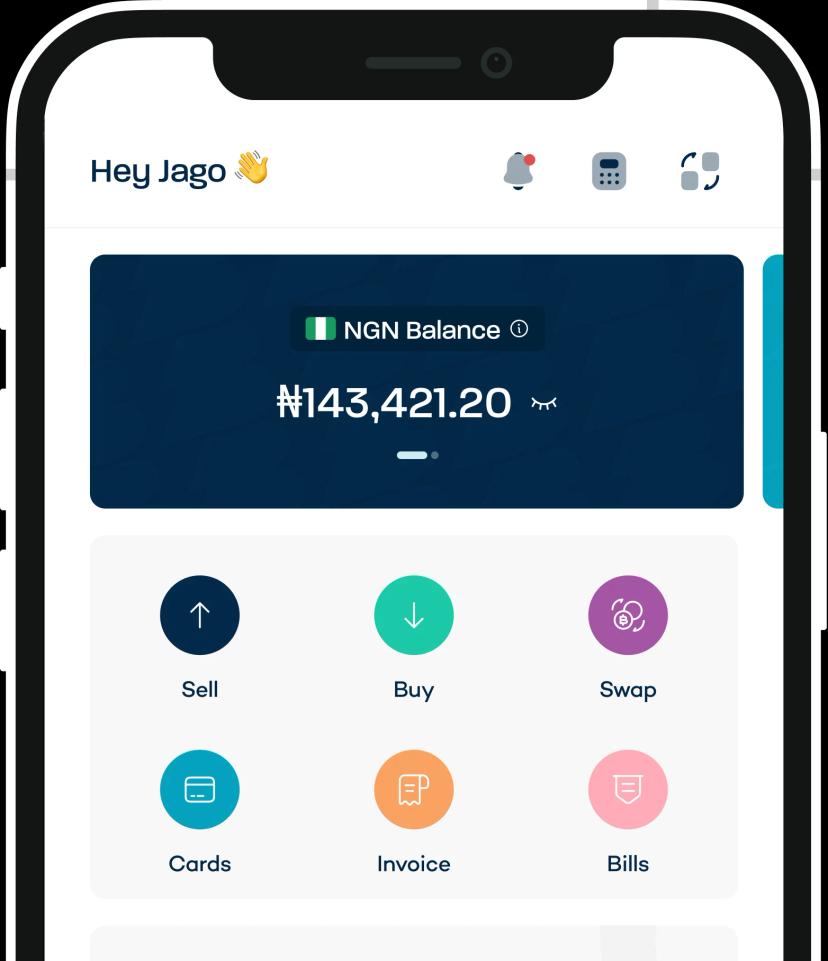
Breet’s business payment infrastructure automatically converts incoming crypto when the payment arrives, so the business does not have to receive a coin first and then arrange a separate conversion. In Breet’s own framing, your books see Naira, Cedis, or dollars, not coins.
A business that invoices a client in USDT and needs Naira in its account by Friday doesn’t have to time a manual conversion or watch the market; the conversion already happened before the payment shows up. It also separates Breet from global gateways such as NOWPayments and CoinGate, where settlement options do not include direct Naira or Cedi payouts.
See the exact fee in every webhook, not a surprise later
Breet’s API uses transaction-based pricing without setup or monthly fees. More importantly for a business comparing payment gateways, the completed trade data includes the exact fee percentage and fee amount in the webhook payload, alongside the settlement information.
Businesses can also add a merchant markup of between 0% and 10%, with that amount visible in the same transaction data. That gives developers and finance teams a clear record of what was charged rather than requiring them to calculate the effective cost after settlement.
For businesses building a more integrated checkout, Breet’s crypto and stablecoin payment API handles wallet generation, payment detection, settlement, and webhook notifications without requiring the business to build that infrastructure itself; work Breet’s own documentation puts at roughly 18 months if done in-house.
Send a crypto invoice for free, with no percentage cut
Breet’s invoicing product is free to create and receive payments through. There is no percentage charge on the invoice itself, which gives it a significant pricing advantage for a business whose main need is sending clients a crypto payment request rather than integrating a full checkout.
A business processing regular client invoices can therefore compare a known zero-fee invoicing option against a named percentage charge rather than choosing based on vague claims about affordability.
Ready to start accepting crypto payments? Create your first crypto invoice on Breet for free.
2. Busha: Best for a business that wants payments, treasury, and OTC on one licensed platform
Busha became the first digital asset platform licensed by Nigeria’s SEC, and its business arm bundles crypto payments with trading, treasury, and OTC services on the same account. It became the first digital asset platform licensed by Nigeria’s SEC and its business offering supports local payouts across currencies including NGN, KES, GHS, UGX, TZS, XOF, and RWF.
Pros
- SEC-licensed in Nigeria
- Supports payments and local payouts across multiple African currencies
- Combines payment infrastructure with treasury and OTC capabilities.
Cons
- Business payment pricing is not publicly listed, so you cannot make a straightforward fee comparison with IvoryPay’s published rates or Breet’s free invoicing without contacting sales.
3. Quidax (Collections / Basqet): Best for a payment gateway backed by a licensed exchange
Quidax is another African-focused IvoryPay alternative, combining its crypto exchange infrastructure with business payment products. The company holds a provisional Digital Assets Exchange license from Nigeria’s SEC, while its business offering includes Basqet, a dedicated crypto payment gateway, and a stablecoin API for businesses that need local on- and off-ramp capabilities.
For a business that wants a payment gateway and a place to convert or trade the crypto it collects, Quidax offers both under one account instead of two separate logins.
Pros
- SEC-licensed infrastructure
- Dedicated payment gateway through Basqet
- Stablecoin API for local on- and off-ramp
Cons
- Businesses have to navigate the separate Basqet brand for payment-gateway services, and neither Quidax nor Basqet publishes straightforward self-serve pricing for an apples-to-apples fee comparison.
4. Paychant: Best for a wallet, remittance, or savings app that needs an embedded on/off-ramp
Paychant is an IvoryPay alternative for businesses that want to build crypto payments or fiat conversion directly into an existing product. Its infrastructure connects stablecoins to local bank transfers and mobile money across markets including Ghana, Kenya, Nigeria, Uganda, and Zambia, with its developer documentation stating that integration can go live in under 30 minutes.
That makes Paychant particularly relevant for fintechs, wallets, remittance platforms, and savings apps that need crypto-to-fiat functionality without building the underlying rails themselves.
Pros
- Supports multiple African markets
- Connects stablecoins to local payment methods
- Designed for quick API integration
Cons
- Its infrastructure is primarily designed to be embedded inside another product, rather than serving as a standalone merchant checkout or invoicing platform like IvoryPay or Breet.
5. Yellow Card: Best for a remittance company or global platform entering Africa at scale
Yellow Card is built for businesses that need stablecoin infrastructure across multiple African markets rather than a simple crypto checkout. Its Payments API supports 20+ African countries and more than 20 local currencies, giving companies a way to build crypto payments, payouts, and treasury flows across the region.
That makes it a stronger fit for remittance companies, fintechs, and global platforms expanding into several African markets at once.
Pros
- Supports 20+ local currencies
- Handles incoming payments and outgoing payouts in one API, so a business doesn’t need a separate vendor for payroll or supplier payments across markets
- Suited to businesses operating across multiple countries.
Cons
- Its infrastructure is geared more toward companies building at scale than businesses looking for a simple invoicing solution, and public self-serve pricing is not available for an easy fee comparison.
6. NOWPayments: Best for accepting a wide range of cryptocurrencies at a low global fee
NOWPayments is a global crypto payment gateway that supports more than 350 cryptocurrencies and 30+ stablecoins. Its transaction fee starts at 0.5% to 1% processing fee for standard crypto deposits, and can go down to 0.3% appealing to businesses that want to accept a wide range of coins without a separate integration for each one.
It is a better fit for businesses that primarily need global crypto acceptance rather than African local-currency settlement.
Pros
- 350+ supported cryptocurrencies and 30+ stablecoins
- It has fees starting from 0.5%
- Useful for businesses serving international customers.
Cons
- No direct Naira or Cedi settlement, so African businesses still need another route to convert their proceeds locally.
- Reviews also flag the lack of a mobile app and additional conversion fees as potential drawbacks.
7. CoinGate: Best for a business selling into Europe that needs a fast plugin installation
CoinGate is a global crypto payment gateway with support for more than 70 cryptocurrencies and integrations for platforms including WooCommerce, PrestaShop, and WHMCS. Its plugins install in minutes on WooCommerce, PrestaShop, or WHMCS, making it a practical option for e-commerce businesses that want to add crypto payments without building a custom integration.
It is particularly suited to businesses selling into European markets, where its regulatory and fiat-settlement infrastructure is more relevant than local African payouts.
Pros
- MiCA-licensed (the EU’s crypto regulatory framework), relevant mainly if you’re settling in euros
- Supports major e-commerce platforms
- Quick plugin installation
- 4.0/5 rating on G2 from 47 reviews.
Cons
- Does not settle directly in Naira or Cedis.
- Bureaucratic verification processes and difficulties getting clear explanations when compliance documents are rejected.
Which IvoryPay alternative should you actually pick?
The right IvoryPay alternative depends less on the gateway’s name and more on where you need the money to end up.
- For a Nigerian or Ghanaian business that wants to invoice clients and settle locally: Breet is the clearest fit, particularly if free invoicing and automatic Naira or Cedi settlement are priorities. If you’re specifically trying to figure out how to accept crypto as a small Nigerian business, Breet makes it easier.
- For payments combined with treasury or OTC services: Busha or Quidax makes more sense if you want trading and OTC alongside payment collection.
- For an app that needs embedded crypto-to-fiat conversion: Paychant is better suited to wallets, remittance products, and fintech apps than traditional merchant invoicing.
- For multi-country African operations: Yellow Card is the stronger option for businesses building payment or treasury infrastructure across several markets.
- For global or European customers without a need for Naira or Cedi settlement: NOWPayments or CoinGate can make sense if wide crypto support or e-commerce integrations matter more than local payouts.
If you’re moving larger crypto volumes rather than sending individual invoices, Breet’s OTC desk is designed for that use case, while businesses looking to build payment infrastructure can talk to Breet about its API and business solutions.
Pick an IvoryPay alternative that speaks local payouts, not just crypto
Every gateway on this list can help a business accept crypto. The bigger question is what happens after the payment arrives. For a Nigerian or Ghanaian business, accepting crypto is only useful if the proceeds can become money the business can actually spend.
That is where Breet stands apart. It combines free crypto invoicing with KYB in under 24 hours and automatic settlement in Naira, Cedis, or dollars, without requiring a separate conversion step. Instead of choosing the most recognizable global gateway, check whether it actually supports the payout currency and workflow your business needs.
Ready to accept crypto and get paid in Naira or Cedis? Book a demo