You’re probably here because you’ve been burned once by failed transactions, settlements that crawl, flaky uptime, thin documentation, or a provider that turned out not to support the stablecoins your customers actually use. You are not alone. Many teams switch providers two or three times before they find infrastructure that holds up in production.
The choice matters more than it looks. As fintech, remittance, and cross-border businesses adopt crypto, the API you pick decides your settlement speed, your transaction cost, your uptime, and how much your users trust the experience.
This guide ranks the five best crypto and stablecoin APIs in Nigeria in 2026 on the things a business actually feels: settlement time, stablecoin support, transaction speed, and how far it scales.
Here is how they stack up:
- Breet API: best for automatic stablecoin conversion and fast settlement to naira or cedis
- Yellow Card API: best for multi-country stablecoin and fiat payments across Africa
- Quidax API: best for startups building wallet or exchange products
- Binance Pay and Binance API: best for global liquidity and trading-heavy use cases
- Busha API: best for wallet and exchange features in African markets
The 5 Top Crypto and Stablecoin APIs in Nigeria
| Provider | Best for | Settlement | Fee | Custody |
| Breet | Stablecoin acceptance and fast naira/cedis settlement | ~287s average, to bank/mobile money/stablecoin | Talk to sales | No custody for the business |
| Yellow Card | Multi-country stablecoin and fiat payouts | Varies by country | ~1% to 2% on conversion/payout | Provider-managed |
| Quidax | Wallet and exchange products | Local bank rails (can slow at peak) | Trading/usage-based | Provider-managed |
| Binance | Global liquidity and trading | Global rails, not Nigeria-first | Standard trading/payment fees | Provider-managed |
| Busha | Wallet and exchange features | Platform-based | 0.5% to 1% spread | Provider-managed |
1. Breet API
Best for: businesses that need to accept stablecoins, convert automatically, and settle to naira or cedis without building crypto infrastructure.
Breet’s crypto and stablecoin API lets Nigerian businesses accept USDT and USDC, convert incoming funds at the point of receipt, and settle straight into their Nigerian bank accounts. Breet offers no setup fees, monthly subscription costs, or hidden platform charges. This gives businesses a predictable pricing structure when processing crypto and stablecoin payments at scale.
It runs on infrastructure that has processed over 5 million transactions and secured more than $30 billion in volume, with a 4.9-star user rating, so you are building on rails already tested at scale rather than a new integration finding its feet.
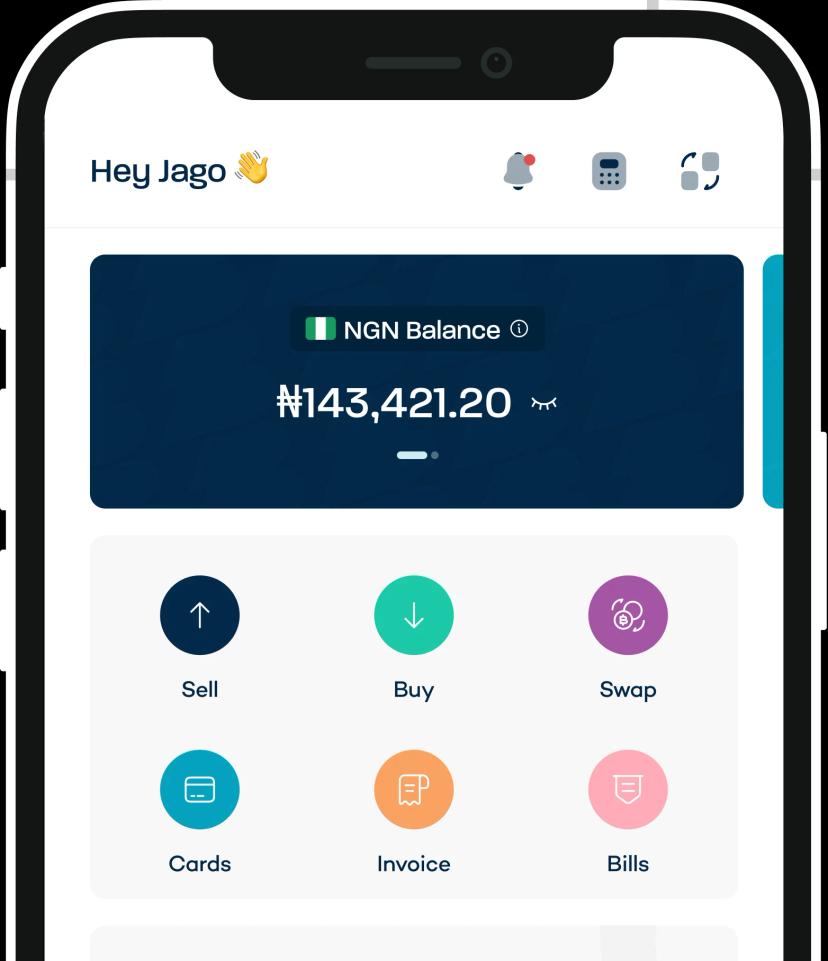
The point is that a business runs a crypto payment system without touching blockchain internals: Breet generates and monitors wallets, converts incoming crypto to fiat or stablecoins, and pushes withdrawals to bank accounts.
That makes it a fit for fintech startups, remittance platforms, marketplaces, payroll products, SaaS, gaming platforms, OTC desks, and any business with recurring crypto transactions. Businesses can integrate and start accepting payments in about 30 minutes using the documentation and sandbox.
Converts crypto to naira on deposit, so volatility never touches your revenue
Breet supports USDT and USDC across TRC-20, ERC-20, Solana, BNB Smart Chain, Polygon, TON, Arbitrum, and Base. The moment a customer pays, Breet converts the funds into your chosen currency, NGN or USD. The value is locked at payment, so volatility and manual conversion stop being your problem.
Fires real-time webhooks, so reconciliation runs without you watching the chain
Breet sends an instant webhook when a transaction is detected, confirmed, or settled. Your systems update balances, trigger delivery, and reconcile payments automatically, with no staff time spent monitoring the chain and no payments slipping through unrecorded.
Runs the full wallet-to-bank flow, so you build no infrastructure
The API generates wallet addresses, receives payments, detects deposits, fires confirmations, converts to fiat or stablecoins, and settles to bank accounts. Withdrawals run automatically or by hand in the Partner Dashboard, so your team runs a full crypto payment system without blockchain engineers or nodes.
Supports 40+ coins on one integration, so you can add assets without more code
Beyond USDT and USDC, Breet handles more than 40 assets, so you accept the coins your customers want without wiring up a separate wallet system for each.
The Breet API is built to remove the work of running crypto payments, so you can accept stablecoins, convert automatically, and settle to naira without building any infrastructure yourself. To see how it fits your business, book a demo with us.
2. Yellow Card API
Best for: businesses paying or collecting across several African countries in one integration.
Yellow Card offers a stablecoin and fiat payment API for emerging markets, letting businesses send, receive, and settle in USDT, USDC, and other stablecoins across 30+ blockchains, built around cross-border infrastructure that connects stablecoin liquidity to local currency rails.
Key features: send and receive stablecoins across chains like Ethereum, Tron, and Solana; convert between stablecoins and local currencies such as NGN and KES; wallet generation and balance management; webhooks; built-in compliance and identity verification.
Pros: works across multiple African countries, not just Nigeria; handles both stablecoin settlement and fiat payout in one system.
Cons: onboarding requires extensive Know Your Business (KYB) documentation; fiat-to-stablecoin conversion and payout fees run roughly 1% to 2%, depending on channel and country.
Pricing: not public; set through commercial agreements based on volume and use case.
3. Quidax API
Best for: startups building wallet or exchange-style products for African users.
Quidax provides a crypto exchange API and wallet infrastructure for African fintech apps, so developers can add trading, deposits, withdrawals, and wallets to their products.
Key features: create and manage wallets via API; deposits and withdrawals for multiple cryptocurrencies; built-in exchange and trading; developer APIs for fintech and exchange-style apps.
Pros: strong alignment with Nigerian and African banking behavior; well suited to wallet or exchange builds; fairly straightforward integration for trading use cases.
Cons: heavily localized to markets like Nigeria and Ghana; during peak volatility, naira withdrawals through local banking rails can slow.
Pricing: no fixed public API pricing; costs are based on trading fees and product usage.
4. Binance Pay and Binance API
Best for: trading-heavy products and teams that need deep global liquidity.
Binance offers a global crypto stack with trading APIs, wallet services, and merchant tools through Binance Pay.
Key features: Binance Pay merchant payments; spot, futures, and margin trading APIs; wallet and address management; high-throughput infrastructure; deep liquidity across major pairs.
Pros: one of the largest liquidity pools in crypto; extensive developer docs and a mature ecosystem; wide range of trading and payment use cases.
Cons: not built for Nigeria-first fiat settlement; setup takes considerable development time next to plug-and-play processors; compliance and availability vary by region; business setup requires strict corporate verification.
Pricing: API access is generally free, but you pay standard trading and payment fees per Binance’s published schedule.
5. Busha API
Best for: adding wallet and exchange features for users in African markets.
Busha provides a crypto exchange and developer API for wallet services, deposits, withdrawals, and trading inside applications.
Key features: wallet creation and management; deposits and withdrawals; buy and sell; transaction tracking and balance endpoints; support for BTC, ETH, USDT, and USDC.
Pros: built for African markets, including Nigeria; covers both wallet services and trading.
Cons: focused on exchange and wallet use cases, not merchant checkout; you rely on their centralized servers and liquidity, so their downtime can halt your rails; buy/sell spread fees often run 0.5% to 1%.
Pricing: no separate public API pricing; costs are based on transaction activity and usage.
Which crypto API should you choose?
The best crypto API in Nigeria in 2026 depends on what you are actually building:
- Choose Breet if you need to accept stablecoins, convert automatically, and settle to naira or cedis fast, without owning custody or blockchain operations. It is the most complete fit for payments and settlement.
- Choose Yellow Card if your priority is to reach across multiple African countries in one integration.
- Choose Quidax if you are building a wallet or exchange product for African users.
- Choose Binance if you need deep global liquidity and are building trading-heavy systems.
- Choose Busha if you want wallet and exchange features and can accept exchange-style pricing.
For most Nigerian businesses focused on getting paid in crypto and receiving clean local currency, Breet pulls the pieces into one system: stablecoin acceptance, automatic conversion, roughly 287-second settlement, a flat 0.5% fee, and no-custody integration. Book a demo to test it on your platform, or read the API documentation to start building.
Frequently asked questions
What is a crypto API?
A crypto API lets a business connect its product to cryptocurrency systems. It handles wallet generation, crypto payments, transaction tracking, and settlement, so the business does not build blockchain infrastructure from scratch.
How do Nigerian businesses integrate the Breet API?
Integration usually means creating API keys, generating wallet addresses for users, and setting up webhook endpoints for real-time payment updates. Developers can test transactions in a sandbox before moving to production.
How fast are crypto-to-naira settlements on Breet?
Breet processes transactions in about 287 seconds on average, after which funds can be withdrawn to a Nigerian bank account or converted into supported stablecoins, depending on the configuration.
Does Breet support USDT and USDC payments?
Yes. Breet supports USDT and USDC across major networks, including TRC-20, ERC-20, and Solana, with automatic conversion into the selected settlement currency after the deposit is confirmed.
Is Breet regulated by the SEC or CBN in Nigeria?
Breet operates as a crypto conversion and payment infrastructure platform within Nigeria’s evolving digital-asset framework. Businesses using crypto APIs are expected to meet applicable regulatory and compliance requirements based on their use case.
Why do businesses prefer crypto APIs over building their own systems?
Building in-house means managing blockchain nodes, wallet security, liquidity, transaction monitoring, and settlement. An API provides those components ready-made, so the team can focus on its core product instead of backend crypto operations.