Picking a crypto platform in Ghana sounds like a trading decision, but buying and selling crypto is the easy part. On major exchanges such as Binance and Bybit, the basic fee for buying or selling crypto is around 0.1% per transaction.
The harder part is getting cedis in and out. For global exchanges, that means Peer-to-Peer (P2P): finding a buyer or seller, sending money through MoMo, and waiting for the other person to complete the trade.
Here are the nine best crypto trading platforms in Ghana in 2026, ranked by how easily you can move between crypto and cedis, whether P2P is involved, and what each platform is good for.
Top 9 crypto trading platforms in Ghana
1. Breet: best for cashing out to MoMo without P2P
Breet is a crypto conversion platform, not an exchange. There are no charts and no order book. It does the one step the other eight make hard: turning your crypto into cedis in MoMo or your bank. If you trade actively, keep your exchange for trading and use Breet at both ends of the trip.
Get cedis in MoMo within 5 minutes by sending coins to your Breet address
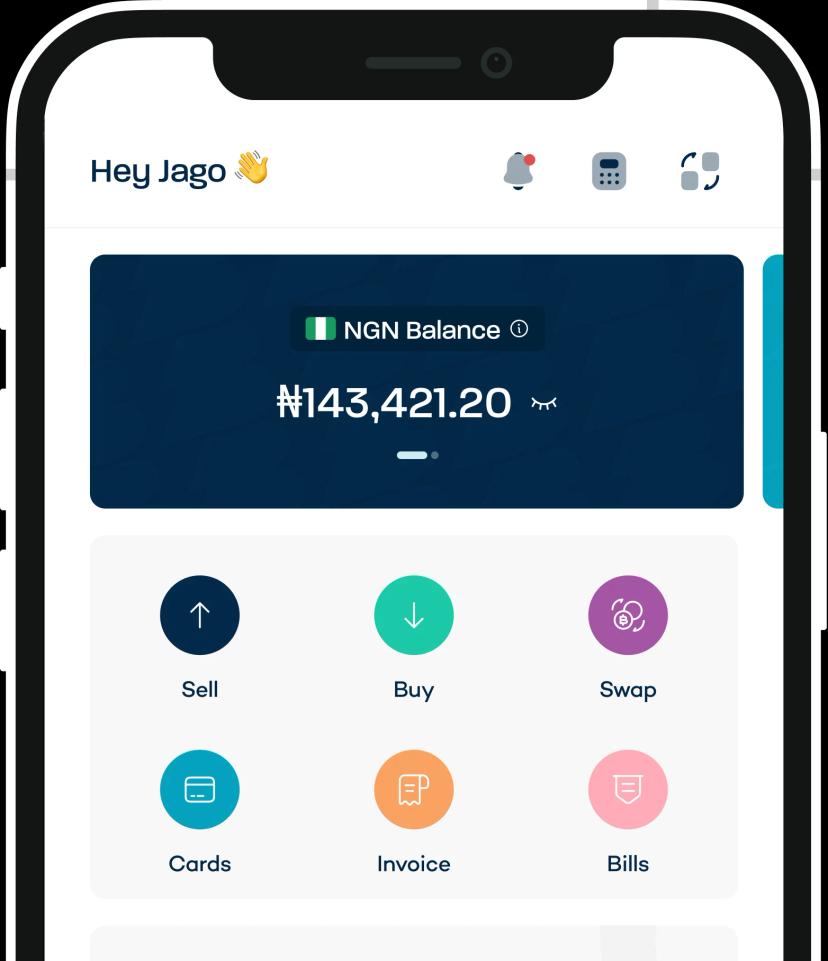
To cash out, send BTC, USDT, ETH, SOL, TRX, or any of the 13 cryptocurrencies listed on Breet’s Ghana sell page to your Breet wallet address. Once the network confirms the transaction, Breet converts it and pays out in 5 to 15 minutes. You can receive the cedis through MTN MoMo, Telecel Cash, AirtelTigo Money, or a Ghanaian bank account.
If your crypto is sitting in a Binance wallet, getting it into your Ghanaian MoMo account can mean finding a P2P buyer, waiting for payment, and confirming the trade. Breet cuts that down to one step: send your crypto to your Breet address and receive cedis in your MoMo account.
To convert crypto to Cedis on exchanges, the answer was three steps: move it to the exchange wallet, place a sell order, then wait for a P2P buyer to pay. On Breet, it’s one step: you send, the cedis land.
Avoid fake payment proof and disputes by selling to Breet directly, with no buyer
There is no individual buyer on the other side of a Breet sale. The cedis come from Breet, so you are not waiting for a stranger to transfer money, checking a payment screenshot, or opening a dispute because the buyer claims to have paid.
Breet’s own P2P research gives some context for why that distinction matters. In more than 100 live Nigerian P2P trades across apps including Bybit and Bitget, 31% of trades were short-paid, meaning the seller received less money than agreed. Another 17.5% of traders reported a fraud attempt. These figures come from Breet’s Nigerian P2P research, so they show the risks observed in Nigeria, not Ghana specifically.
In a Ghana App Store review, an OKX user also complained that after raising a dispute, the platform completed it without their notice.
See your exact cedi payout before sending with a published, size-based fee
Breet charges 1.5% on transactions up to $999, 1% from $1,000 to $4,999, and 0.5% from $5,000 upward, plus the blockchain network fee for sending the crypto. That network fee goes to the blockchain, not Breet.
Before you send, Breet shows the rate and expected cedi payout, so you can see the number you will receive before confirming the transaction. For example, if you sell $500 worth of crypto at a rate of ₵15 to $1, the gross value is ₵7,500. A 1.5% Breet fee is ₵112.50, leaving ₵7,387.50 before the network fee.
That makes the cost easier to compare with P2P, where the platform fee may be zero but the buyer can build their margin into the exchange rate. With Breet, you can see the rate, fee, and expected payout upfront instead of working out the real cost from a buyer’s offer.
Sell crypto to MoMo in minutes with Breet.
2. BitAfrika: best for buying Bitcoin with MoMo in a local app
BitAfrika supports Ghanaian payment methods including MTN MoMo, Telecel Cash, and bank cards, so users can buy and sell crypto through payment methods they already use. The app’s Ghana listing also has a 4.4 rating from more than 500 ratings.
The main drawback is pricing transparency. BitAfrika does not give you a simple public fee percentage to compare before you start. An App Store review said the payment method “delays something which is really frustrating.” More recent reviews are mixed, with some users reporting delayed payments were resolved quickly.
Pros
- Built around Ghanaian users and local payment methods, including MoMo.
- You can buy Bitcoin through the app instead of finding a P2P seller.
- BitAfrika has an office in Accra and specifically markets itself as a crypto app for Africa.
Cons
- You need to check the quoted rate rather than comparing a straightforward headline trading fee.
- Some Ghanaian users have reported delays with payments.
3. Mybitstore: best for crypto and gift cards in one Ghanaian app
Mybitstore combines crypto buying and selling with gift-card trading, so you can handle both from the same account. Its current platform supports MTN MoMo, Telecel Cash (formerly Vodafone Cash), AirtelTigo Money, and bank transfers.
Quick buying is listed at 1% plus any processor fee, while selling costs $1 for transactions up to $50 and 2% above $50, again with possible processor fees. P2P buying and selling each carry a separate 1% fee.
Pros
- You can sell Bitcoin for cedis and receive the money through Mobile Money or a Ghanaian bank account.
- Mybitstore lists separate fees for quick buying and selling, conversions, withdrawals, and P2P transactions, so you can see the applicable fee before you trade.
- It also has a P2P marketplace if you want it, where Mybitstore holds the coins until the buyer pays (escrow).
Cons
- Sales above $50 carry a 2% fee before any applicable processor charges.
- External BTC and USDT withdrawals include a $2 fee plus network fees.
4. Blockchain.com: best for buying 100+ coins directly with cedis
Blockchain.com added GHS support in March 2026, letting users in Ghana buy, sell, and swap more than 100 cryptocurrencies directly with GHS. You can fund the account through Mobile Money, with deposits starting at GHS 50.
Ghanaian users with a valid MoMo number can withdraw GHS directly to Mobile Money. Withdrawals start at about GHS 1.08 and are capped at GHS 20,000 per transaction, with a 1% fee capped at GHS 15.
Blockchain.com requires at least one successful GHS MoMo deposit before you can link a number for withdrawals. Once that deposit is completed, the same MoMo number can be used for future deposits and withdrawals.
The main drawback is how new the Ghana service is. There is not yet much Ghana-specific user history.
Pros
- You can buy, sell, and swap a broad range of assets directly with cedis.
- You can fund your account directly from a Ghanaian Mobile Money number.
- Sell crypto and withdraw your GHS balance to a linked Ghanaian MoMo number without using P2P.
Cons
- The service only launched in Ghana in 2026, so there is limited local track record to judge.
- GHS MoMo deposits currently carry a 1.6% fee, capped at GHS 30.
5. Binance: best for the deepest P2P market and widest coin choice
Binance runs one of the biggest cedi P2P markets, with Mobile Money as a payment option, and offers 350+ cryptocurrencies, giving it the widest coin selection among the platforms on this list. Binance added GHS to P2P in June 2020 and Mobile Money payments later that year.
A normal trade costs 0.1%. But that fee doesn’t cover P2P, where your real cost is the seller’s rate.
The trade-off is that cashing out to cedis still happens through P2P. One Ghanaian App Store reviewer wrote that “P2P is expensive since people hike the prices exorbitantly.” Your cedis transaction is with another user or merchant rather than Binance itself.
Pros
- There are established P2P listings for buying and selling crypto with cedis.
- You can use Mobile Money as a payment method for GHS P2P trades.
- Binance gives active traders access to 350+ cryptocurrencies and hundreds of trading pairs, far more choice than a local conversion app built primarily for moving between crypto and cedis.
Cons
- For GHS transactions, you are dealing with a P2P counterparty rather than simply selling crypto to Binance for cedis.
- Zero platform fee doesn’t mean zero cost. The seller’s rate decides how much crypto you receive or how many cedis you get.
6. Bitget: best for P2P that supports all three MoMo networks
Bitget is best for buying or selling crypto through Ghana’s three major Mobile Money networks. Its GHS P2P marketplace supports MTN MoMo, Telecel Cash, and AirtelTigo Money, and it has no Bitget service fee, although your payment provider may charge separately.
For regular spot trading, Bitget’s base maker and taker fee is 0.1%, so it also works if you want to trade after funding your account.
The downside is verification. One Ghanaian user wrote: “Can’t capture my Ghana card for verification; I have tried so many times” (App Store, Sep 2024). You can’t use P2P until you’re verified, so a stuck ID scan means you’re stuck too.
Pros
- P2P supports MTN MoMo, Telecel Cash, and AirtelTigo Money, giving you more payment options when buying or selling crypto.
- Ghanaian users can verify with a Ghana Card or passport.
- Bitget holds the seller’s coins until you’ve paid, so they can’t take your MoMo and keep the crypto.
Cons
- Some Ghanaian App Store reviews report problems capturing the Ghana Card during verification.
- The MoMo payment goes to or comes from another user, rather than directly from Bitget.
7. Bybit: best for futures and derivatives traders
Bybit offers spot trading alongside perpetual contracts, futures and options, while its P2P marketplace supports GHS. GHS P2P is available on Bybit, but Ghana is on Bybit’s separate restricted list for fiat deposits, fiat withdrawals and One-Click Buy, updated 18 September 2026. That means users moving cedis through Bybit currently rely on the P2P marketplace rather than a direct fiat withdrawal route.
For non-VIP users, Bybit’s base spot fee is 0.1% for both makers and takers. Its base derivatives rates are 0.055% for takers and 0.02% for makers.
The trade-off is the cash-out route. One Ghanaian App Store reviewer wrote: “BYBIT needs to put in a withdrawal protocol whereby one can convert the cryptocurrency to cash and withdraw to a bank account.”
Pros
- You can buy and sell crypto against the Ghanaian cedi through Bybit’s P2P marketplace.
- No fee when you buy from an existing GHS P2P offer. Bybit’s current fee table lists a 0% taker fee for GHS, while the person posting the offer pays a separate fee.
Cons
- You still need a P2P counterparty to turn crypto into cedis through the marketplace.
- Bybit does not set the buy and sell offers on its P2P page, so the rate depends on the advertiser.
8. OKX: best for low regular spot trading fees
OKX has the lowest base fee on this list: 0.08% when you place an order that waits to be filled (maker), 0.10% when you take an existing one (taker).
For Ghanaian users, the catch is getting between crypto and cedis. OKX has GHS P2P, so you can use the marketplace to buy or sell crypto with cedis, but the rate comes from individual P2P advertisers rather than a fixed OKX conversion rate.
A Ghanaian App Store reviewer, Prinskino Glover, wrote in January 2025 that OKX “has become increasingly overpriced, making it difficult for many users to buy and sell cryptocurrencies.”
Pros
- Ghanaian users can buy and sell crypto against the cedi through OKX’s P2P marketplace.
- The lower spot rate can matter more as your trading volume increases.
Cons
- Your GHS buy or sell still involves a P2P advertiser rather than a direct OKX cedi conversion.
- The 0.1% fee doesn’t include the P2P seller’s markup, which is where most of your cost sits.
9. KuCoin: best for small-cap altcoins
KuCoin has more than 1,600 listed crypto assets, including newer projects and tokens that are less established than coins such as Bitcoin and Ethereum. It also has a GHS P2P route, with KuCoin’s Ghana BTC marketplace currently listing MTN Money (MoMo), Telecel Cash and “Airtel Money” as payment methods. In Ghana, that AirtelTigo service is now branded AT Money.
For regular spot trading, KuCoin’s base Level 0 fee is 0.1%, although the exact rate depends on the trading pair and your fee tier.
The downside is that cedi transactions go through P2P rather than a direct GHS cash-out. A Ghanaian App Store reviewer wrote: “I’ve verified my country card’s several times but still I can’t confirm with my trade”.
Pros
- KuCoin gives traders access to a broad range of smaller and newer tokens.
- You can buy and sell crypto against cedis rather than converting through another currency first.
- Its GHS marketplace lists MTN MoMo, Airtel Money and Telecel among the available payment methods.
Cons
- There is no simple direct crypto-to-cedi payout route like a local conversion service.
- The price you actually get depends on the advertiser, payment method, and available offers.
Frequently asked questions
Which crypto app is best in Ghana?
Breet if you want to turn crypto into cedis in MoMo without P2P. Binance or Bybit if you want charts and hundreds of coins. Most people end up using one of each.
Can I buy Bitcoin using MoMo in Ghana?
Yes. You can buy Bitcoin directly with MoMo through BitAfrika or Blockchain.com, while Binance, Bitget, and Bybit offer GHS P2P markets where you pay a seller through a supported payment method.
Is Bybit allowed in Ghana?
Ghanaian users currently have access to Bybit’s GHS P2P market, including BTC/GHS and USDT/GHS trading. However, Ghana appears on Bybit’s separate list of countries restricted from its general fiat deposit, withdrawal, and One-Click Buy services, so the exact service available depends on the route you use.
Where can I buy USDT in Ghana?
You can buy USDT through Breet using GHS. Blockchain.com also supports GHS deposits through MoMo, while exchanges such as Binance and Bybit offer USDT through their GHS P2P markets.
What is the best platform to sell Bitcoin in Ghana?
For a crypto-to-cedi cash-out, Breet lets you send Bitcoin and receive cedis through MoMo or a bank, with the payout typically taking 5 to 15 minutes after network confirmation.
How much money do I need to start?
There is no single minimum across these platforms. Breet’s current minimum for buying USDT or USDC is shown by network, while Blockchain.com requires at least GHS 50 for a MoMo deposit.
Is Binance banned in Ghana?
There is no current Binance notice indicating that Ghana has been banned from Binance P2P. Binance currently supports GHS P2P trading, including Mobile Money, and its latest GHS zero-fee promotion runs through October 31, 2026.
Which crypto wallet can I use in Ghana?
You can use established non-custodial wallets such as Trust Wallet, MetaMask, and Exodus, depending on the networks and assets you need to hold.