The crypto market continues to grow rapidly, and with this growth comes a stronger need for secure storage.

While mobile apps and exchange wallets are convenient, they are always connected to the internet, which makes them more vulnerable to hacking, phishing, and malware attacks.

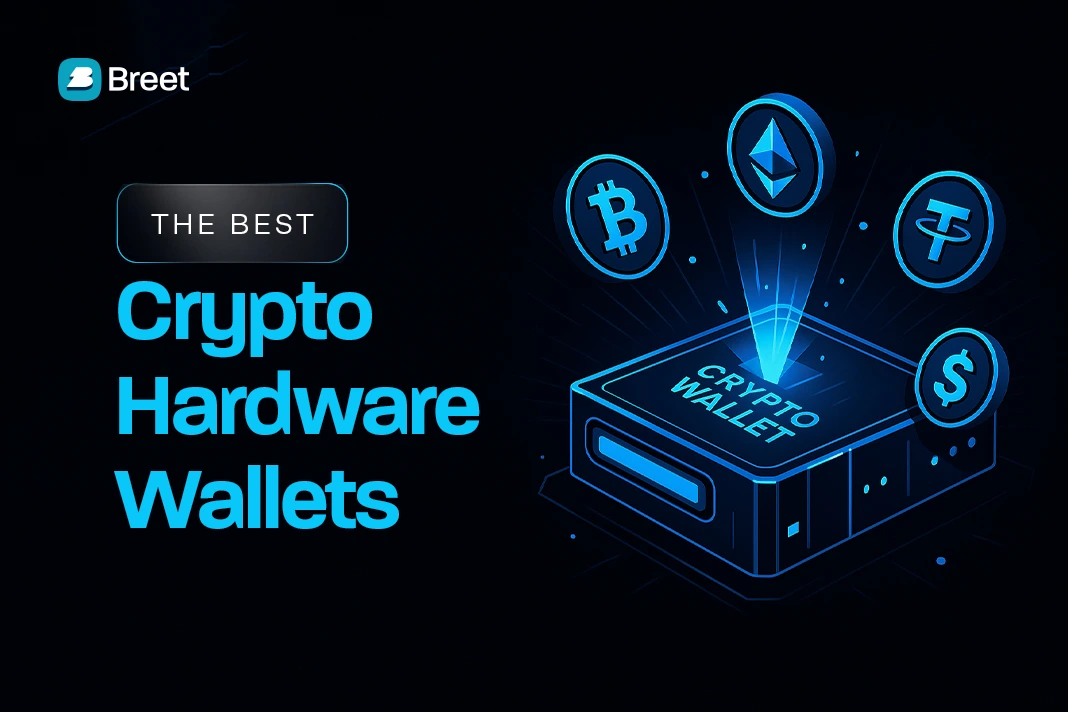
For anyone who wants maximum safety for their digital assets, a crypto hardware wallet is one of the most reliable tools available today.

This guide explains what a crypto hardware wallet is, why it is important, how to choose the right one, and the best crypto hardware wallets in 2025.

Related:

What is a Crypto Hardware Wallet?

A crypto hardware wallet is a physical device that stores your private keys offline. Private keys are the codes that give you access to your digital assets. If someone gets your private keys, they can take full control of your crypto. This is why storage matters.

Unlike mobile or exchange wallets that stay connected to the internet, hardware wallets keep your private keys offline. This offline or “cold storage” method means hackers cannot reach your keys remotely.

Even if your phone or computer gets infected with malware, your crypto remains safe because the private keys never leave the hardware device.

A hardware wallet does not store your crypto directly on the device. Your coins remain on the blockchain, but the wallet securely manages the keys you need to access and move them.

This makes hardware wallets one of the safest storage methods for long-term investors, traders, and anyone holding significant amounts of digital assets.

Why You Should Use a Crypto Hardware Wallet

1. Enhanced security 

One of the main reasons people choose hardware wallets is the added security. Online exchanges and software wallets may be convenient, but they face constant threats.

Cybercriminals target them because they can access millions of dollars in assets at once.

Hardware wallets offer stronger protection for several reasons.

First, they store private keys offline, which eliminates the risk of remote hacks. Even if your computer is compromised, the attacker cannot reach your hardware wallet’s keys.

2. Protection from online threats

Second, hardware wallets protect users from common online threats such as phishing and fake websites. Since you confirm transactions directly on the device, a hacker cannot trick you into sending funds to the wrong address.

3. Ideal for long-term asset safety 

Third, hardware wallets are ideal for long-term asset safety. If you plan to hold crypto for years, you need a solution that does not depend on apps, servers, or internet connectivity.

Hardware wallets give you full control over your crypto, which is an important part of being a responsible investor.

4. Full asset ownership and control

Finally, a hardware wallet ensures that you are the true owner of your assets. If an exchange is hacked, shut down, or restricted by a government, your funds could be at risk. With a hardware wallet, you avoid these problems because you control your private keys.

Top Pick:

How to Choose the Right Crypto Hardware Wallet

crypto hardware wallet

Choosing a hardware wallet depends on your needs, the type of crypto you hold, your budget, and your security expectations. Before buying one, it helps to understand the most important factors.

  • Multi-asset support

One key factor is supported cryptocurrencies. A hardware wallet should support the coins you own or plan to acquire. While most devices support major assets like BTC, ETH, and USDT, some wallets offer broader support for hundreds or thousands of tokens.

  • High security 

Security features are also important. Look for wallets that offer PIN protection, biometric verification, secure chips, and firmware isolation. These features make it harder for anyone to break into the device.

  • Simplicity 

Ease of use matters as well. A hardware wallet should be simple to set up and manage, even if you are new to crypto. Some devices have touchscreens, while others use buttons. Choose what feels comfortable for you.

  • Backup and recovery features 

Backup and recovery options ensure you can always regain access to your funds if your device gets lost or damaged. A strong hardware wallet will provide a secure recovery phrase and clear instructions on how to store it safely.

  • Cost

Finally, consider the price range. Hardware wallets vary from budget-friendly options to premium devices with advanced features. A higher price does not always mean the best option; it depends on your needs. What matters most is that the wallet is secure, reliable, and purchased from an official source.

Related:

11 Best Crypto Hardware Wallets for Beginners 

  1. Ledger Nano X
  2. Trezor Model T
  3. SafePal S1
  4. Keystone Pro
  5. Ellipal Titan
  6. BitBox02
  7. CoolWallet Pro
  8. GridPlus Lattice1
  9. SecuX V20
  10. D’Cent Biometric Wallet
  11. KeepKey

1 Ledger Nano X

Ledger nano x hardware wallet

Ledger Nano X is widely regarded as the industry standard for hardware wallets. It is built with a secure element chip and supports more than 5,500 digital assets, including major cryptocurrencies and ERC-20 tokens.

The device connects via both USB and encrypted Bluetooth, allowing users to manage their funds comfortably from smartphones or desktops. 

Its integration with the Ledger Live app gives users access to portfolio tracking, swapping, buying, and staking features in a single interface.

With its combination of mobility and robust protection, Ledger Nano X is ideal for both beginners and experienced investors who want security without sacrificing convenience.

Security

  • Ledger Nano X uses a CC EAL5+ certified secure element chip to isolate and protect users’ private keys. All operations requiring key signatures are performed within the secure chip, preventing exposure to the internet. 
  • The device is protected with a PIN code, supports passphrases, and encrypts Bluetooth communication. Ledger Live further ensures authenticity by verifying each transaction before it is signed on the device.

Fees

Ledger does not charge any fees for storing or holding crypto. However, standard network fees apply when sending transactions. Some services available inside Ledger Live, such as swapping, buying, or selling, are processed by third-party partners and may include service fees.

Setup

Setup involves installing the Ledger Live app, initializing the device, creating a PIN, and generating a 24-word recovery phrase. Connectivity through USB or Bluetooth is quick, and Ledger Live provides step-by-step instructions, making onboarding easy even for first-time users.

2. Trezor Model T

Trezor model T

Trezor Model T is a premium crypto hardware wallet known for its transparency and open-source structure.

It supports thousands of cryptocurrencies and gives users complete control through its touchscreen interface. 

Trezor’s firmware and software are fully open for public review, which strengthens trust and auditability.

The device integrates with the Trezor Suite desktop application, offering portfolio management, secure password storage, and coin management. It is especially favored by users who value full visibility into the software running on their wallet.

Security

Trezor Model T adopts an open-source security framework, meaning its code is publicly audited by the community and security researchers. The device uses a PIN, recovery seed, and optional passphrase for added protection.

Sensitive operations take place offline, and the touchscreen reduces reliance on potentially compromised keyboards or computers.

Fees

There are no ongoing subscription fees for using the Trezor Model T. You only pay standard network fees for sending transactions.

If you use third-party apps or services within Trezor Suite (such as crypto swapping), those services may introduce additional costs.

Setup

Setup is done through the Trezor Suite interface. The onboarding flow guides users through PIN creation, recovery seed generation, and device verification.

The touchscreen makes navigation intuitive and makes seed generation more secure because the process does not depend on an external device.

Recommended:

3. SafePal S1

Safepal s1 wallet

SafePal S1 is an affordable yet highly secure hardware wallet designed for users who want strong offline protection.

Unlike many wallets, it is fully air-gapped and does not connect via USB, Bluetooth, Wi-Fi, or NFC. 

Instead, it uses QR codes to sign and authorize transactions, ensuring that private keys remain physically isolated from digital networks. The device is compact and portable, and it is backed by Binance Labs, which adds institutional credibility.

This wallet appeals to users who want maximum offline security at a budget-friendly price.

Security

  • SafePal S1 employs a completely air-gapped model where private keys are stored in an isolated environment and never come into contact with internet-connected devices. 
  • Transactions are approved using QR code scanning, and the device includes a self-destruct mechanism that wipes data if any tampering is detected.

Fees

SafePal does not charge any fee for using the wallet. Users only incur standard blockchain network fees. Optional services inside the SafePal app, such as swaps or buying crypto, may involve third-party charges.

Setup

Setup occurs via the SafePal mobile app. Users pair the device by scanning a QR code, generate their mnemonic recovery seed, and follow simple prompts to complete initialization.

Given that the wallet is air-gapped, all communication happens visually through QR exchanges.

4. Keystone Pro

keystone pro hardware wallet

Keystone Pro is a high-grade hardware wallet designed with advanced users and DeFi investors in mind. It features a large touchscreen, fingerprint authentication, and full air-gap security. 

The device signs transactions using QR codes and integrates seamlessly with popular wallets such as MetaMask, Rabby, and other DeFi platforms.

Keystone Pro is modular in design and equipped with a secure element, making it a powerful option for users managing complex Web3 portfolios.

Security

  • Keystone Pro operates completely offline, with private keys stored in a secure element and protected by fingerprint authentication. 
  • QR code signing adds an extra layer of isolation from the internet. 
  • The device has multi-layer security architecture, and sensitive operations take place internally without exposing keys to connected devices.

Fees

  • There are no management fees for using Keystone Pro. Users only pay blockchain network fees when making transactions. 
  • Third-party applications connected to the wallet may add optional service charges depending on their operations.

Setup

Setup begins by downloading the Keystone mobile app. You register your fingerprint, generate a recovery phrase, and pair the device with external wallets using QR codes. The touchscreen makes it easy to follow prompts and configure security settings.

5. Ellipal Titan

Ellipal Titan is known for its rugged, tamper-proof design. Built from a single piece of metal, it is resistant to physical intrusion and designed specifically for offline security. 

The device is fully air-gapped and does not support USB, Bluetooth, cellular, or Wi-Fi connections. All transactions are signed with QR codes, making it one of the most secure offline wallets available. Its mobile app is well-designed and provides clean portfolio and trading options.

Security

  • Ellipal Titan features a metal body that seals its internals and prevents physical tampering. It is fully air-gapped, ensuring private keys remain isolated from digital networks. 
  • All communication occurs through QR codes, and its secure chip protects private keys from extraction or unauthorized access.

Fees

  • Ellipal does not charge extra fees for holding or storing crypto. Normal blockchain network fees apply for transactions. 
  • Some in-app transaction services may involve partner fees depending on the provider.

Setup

  • Setup involves downloading the Ellipal app, linking the Titan using QR scanning, and generating a recovery phrase on the device itself. 
  • The touchscreen and guided prompts simplify the initialization process for beginners.

For You:

6. BitBox02

bitbox 02 wallet

BitBox02 is a privacy-focused crypto hardware wallet developed by Shift Crypto in Switzerland. It offers a compact design, strong security features, and microSD card backup options. 

The wallet has two versions, including a Bitcoin-only edition designed for maximum security and minimal exposure, and a multi-currency edition for broader asset management.

Its minimalist interface appeals to users seeking simplicity without compromising cryptographic protection.

Security

  • BitBox02 uses a secure chip to store private keys and is built with open-source firmware that the community can audit. 
  • The device includes touch sensors for confirming actions, reducing the need for physical buttons. Backup is handled through encrypted microSD cards, ensuring offline recovery options.

Fees

  • There are no ongoing wallet fees. You only pay blockchain network fees when transferring assets. 
  • The BitBox app itself does not impose additional charges for normal use.

Setup

  • Setup is performed through the BitBoxApp. You simply connect the device, create backups on a microSD card, and generate a secure recovery seed. The process is straightforward, making it suitable even for those new to hardware wallets.

7. CoolWallet Pro

coolwallet

CoolWallet Pro is a slim, credit-card-shaped hardware wallet designed for portability and everyday convenience. It connects to smartphones through encrypted Bluetooth, letting users manage crypto on the go. 

Despite its compact design, it includes a secure element and supports staking for certain assets. The water-resistant and bend-resistant build allows users to carry it like a physical card without worrying about damage.

Security

  • CoolWallet Pro uses a secure element (SE) chip to protect private keys and relies on encrypted Bluetooth for communication.
  • The wallet must be physically activated using the built-in button, reducing the risk of unauthorized transactions. 
  • Mobile biometric authentication adds an additional layer of access control.

Fees

  • There are no storage or subscription fees. Network fees apply for transactions. 
  • Optional features like staking or swapping may involve partner fees depending on the service used.

Setup

  • Setup is carried out through the CoolWallet mobile app. You simply pair the wallet with a phone through Bluetooth, generate a seed phrase, and follow guided steps to begin managing assets. The process is optimized for mobile-first users.

8. GridPlus Lattice1

GridPlus Lattice1 is a premium hardware wallet built for users who need enterprise-level security. It includes a large touch display, modular architecture, and high-performance secure enclave technology. 

The device provides unique SafeCards that allow users to store multiple wallets or backups securely. It integrates with MetaMask and other trusted software wallets, making it ideal for large-scale crypto management or professional environments.

Security

  • Lattice1 uses a secure enclave to generate and store private keys. SafeCards add an extra layer of isolation and portability for key management. 
  • The device includes physical tamper detection and strict access controls. 
  • All signing operations happen within the secure enclave, reducing the risk of key leakage.

Fees

  • There are no monthly or annual fees. You only pay standard network fees for blockchain transactions. 
  • The device itself is costlier than others due to its advanced security features, but it does not impose ongoing operational costs.

Setup

  • Setup involves powering on the device, initializing a SafeCard, creating a password, and following the display prompts. 
  • You can integrate the wallet with MetaMask or other interfaces for full Web3 functionality.

Related:

9. SecuX V20

SecuX V20

SecuX V20 is a robust crypto hardware wallet with a modern touchscreen and versatile coin support. The wallet is designed with military-grade encryption and a durable casing that protects it from physical tampering.

It works well with both desktop and mobile platforms, and the large screen makes transaction verification clearer and more user-friendly.

Security

  • The V20 uses a secure element to store private keys offline and relies on military-grade encryption for communication. 
  • Its casing is tamper-resistant, and all sensitive operations occur within the secure chip environment. The touchscreen allows users to verify transaction details directly on the device, reducing external risks.

Fees

  • There are no maintenance or storage fees. Standard network fees apply for transactions. 
  • Optional services accessed through SecuX-compatible platforms may include third-party charges.

Setup

  • Setup is completed through the SecuXess web interface or mobile app. 
  • All you need to do is initialize the device, create a PIN, and generate their recovery phrase. The touchscreen simplifies navigation for new users.

10. D’Cent Biometric Wallet

D’Cent Biometric Wallet

D’Cent is one of the first hardware wallets to adopt biometric authentication, giving users the ability to unlock the device with a fingerprint.

It supports major coins and tokens and integrates with a companion mobile app for easy management. The large display and intuitive interface make it convenient for daily use.

Security

  • D’Cent stores private keys in a secure chip and adds biometric fingerprint authentication as a primary access method. 
  • The device also supports PIN protection and recovery seed backup. Communication with the mobile app is encrypted, ensuring secure transaction flow.

Fees

D’Cent does not charge fees for storing assets. Network fees apply when sending crypto. Third-party services inside the app, such as swaps, may include optional charges.

Setup

Setup involves pairing with the D’Cent mobile app, registering a fingerprint, and generating a recovery phrase. The on-device prompts guide users through initial configuration.

Related:

11. KeepKey

KeepKey is a simple, beginner-friendly hardware wallet with a large display that makes transaction verification easy. It supports major cryptocurrencies and pairs with ShapeShift’s platform for asset management.

While it has fewer advanced features compared to newer devices, its clean interface and large screen appeal to users who want ease of use above all else.

Security

KeepKey secures private keys offline and requires a PIN for access. Its large display provides clear visibility for transaction confirmation, reducing signing mistakes. It uses recovery seeds for backup and relies on standard cryptographic protection to prevent unauthorized access.

Fees

There are no storage fees for using KeepKey. Users pay only standard blockchain network fees when sending crypto. Optional services on the ShapeShift platform may include third-party fees.

Setup

Setup is straightforward as you just need to connect the device via USB, initialize it using ShapeShift or a compatible wallet interface, and generate a recovery seed. The large display makes navigation simple for first-time hardware wallet users.

Tips for Keeping Your Crypto Hardware Wallet Secure

  • A hardware wallet is only secure when used correctly. 
  • It is important to buy your device directly from the official website or verified stores to avoid tampering. 
  • Avoid second-hand hardware wallets entirely.
  • Your recovery phrase is the master key to your assets. Never share it with anyone, and do not store it online. Write it down and keep it in a safe, private location. If someone gets your recovery phrase, they can fully access your crypto.
  • Also, keep your device’s firmware updated. Manufacturers release updates to fix issues and improve security. Storing physical backups securely and keeping your device away from extreme heat or moisture ensures long-term durability.

Conclusion

Crypto hardware wallets are among the safest tools for protecting digital assets. They store your private keys offline, shield you from online threats, and ensure only you have full control over your funds.

The wallets listed in this guide are among the best available in 2025, offering strong protection, ease of use, and support for different cryptocurrencies. 

Choosing the right crypto hardware wallet and following proper security practices, you can confidently safeguard your crypto portfolio and enjoy peace of mind in this risky space.

Frequently Asked Questions (FAQs) on Crypto Hardware Wallets

What is a Crypto Hardware Wallet?

A crypto hardware wallet is a physical device that stores your private keys offline, protecting your cryptocurrency from online hacks or malware attacks.

Are Hardware Wallets Safer than Online Wallets?

Yes. Hardware wallets are offline and immune to most online attacks, making them the safest way to store long-term crypto holdings.

What Happens if I lose my Hardware Wallet?

If you lose your wallet, you can recover your funds using your recovery or seed phrase. This is why keeping the phrase secure is vital.

Can Hardware Wallets be Hacked?

While no system is 100% immune, hardware wallets are extremely difficult to hack. They offer advanced encryption and are designed to protect your keys even if connected to an infected computer.

Where Should I Buy a Crypto Hardware Wallet?

You should always buy directly from the official manufacturer or verified partners to avoid tampered or counterfeit devices.

Author

  • Ndianabasi Tom

    Ndianabasi’s interest since 2018 has been studying the ever-growing field of blockchain and cryptocurrency, keenly evaluating the innovation, exploration, and expansion of this field locally and globally.

    With a passion for crypto education, he is an expert content writer and founder of Nitadel.

    When he is not drilling resources in the blockchain and cryptocurrency field, Ndianabasi is singing, reading, watching crime movies, or playing football.