- What Is a Bitcoin Wallet and How Does It Work?
- Why Secure Wallets Matter When Storing Bitcoin
- Types of Bitcoin Wallets Available in Nigeria
- 11 Best Bitcoin Wallets in Nigeria
- Common Mistakes Nigerians Make With Bitcoin Wallets
- How to Set Up and Use a Bitcoin Wallet Safely
- Conclusion on Bitcoin Wallets in Nigeria
- Frequently Asked Questions (FAQs) About Bitcoin Wallets in Nigeria
Bitcoin adoption in Nigeria continues to grow at a rapid pace.
From freelancers receiving international payments to traders and long-term investors, more Nigerians now hold Bitcoin than ever before. However, with this growth comes an important responsibility which is keeping your BTC safe.
Many losses in Nigeria happen because people store Bitcoin on unsafe platforms, share private keys unknowingly, or use wallets they do not fully understand.
A good Bitcoin wallet protects your funds, gives you control, and allows you to send or receive Bitcoin without fear.
This guide explains the best Bitcoin wallets in Nigeria, how they work, and how to choose one that fits your needs.
Related:
- What Is a Bitcoin Contract Address: Does it Really Exist?
What Is a Bitcoin Wallet and How Does It Work?
Bitcoin wallets is a digital management systemthat generates, stores, and manages private keys, which are required to access and spend Bitcoin on the blockchain. It lets you send, receive, and manage Bitcoin (BTC) securely. A Bitcoin wallet acts as the interface that allows you to interact with the Bitcoin blockchain and access your funds.
A common misconception is that Bitcoin wallets actually store Bitcoin. In reality, Bitcoin itself always remains on the blockchain. What your wallet stores are private keys, secret cryptographic codes that prove your ownership of Bitcoin and give you permission to spend it.
In simple terms, a Bitcoin wallet holds your private keys, not your Bitcoin. These keys are what authorize transactions on the blockchain and grant access to your funds.
Think of it this way: your Bitcoin sits in a digital vault on the blockchain, while your wallet is the key to that vault. Whoever controls the private key controls the Bitcoin.
This is why wallet security is so important. If someone gains access to your private key or recovery phrase, they can move your Bitcoin without your consent.
Why Secure Wallets Matter When Storing Bitcoin
If there’s one thing every Bitcoin user learns sooner or later, it’s that your wallet security is everything. Bitcoin doesn’t come with a customer care line you can call when something goes wrong. Once your funds are gone, they’re gone for good.
In Nigeria especially, where crypto adoption is high, hackers and scammers are always looking for easy targets.
Using an insecure wallet, clicking suspicious links, or storing your Bitcoin on unreliable platforms can expose you to phishing attacks and outright wallet hacks. Many people lose their Bitcoin not because the technology failed, but because their wallets were poorly secured.
A secure Bitcoin wallet helps you stay in control of your funds by protecting your private keys. This means only you can access or move your Bitcoin. Wallets with strong security features like encryption, backup recovery phrases, and offline storage greatly reduce the risk of unauthorized access.
In simple terms, choosing a secure wallet keeps your Bitcoin safe, protects you from common scams, and allows you to hold and transact confidently, knowing your assets are well protected.
Types of Bitcoin Wallets Available in Nigeria
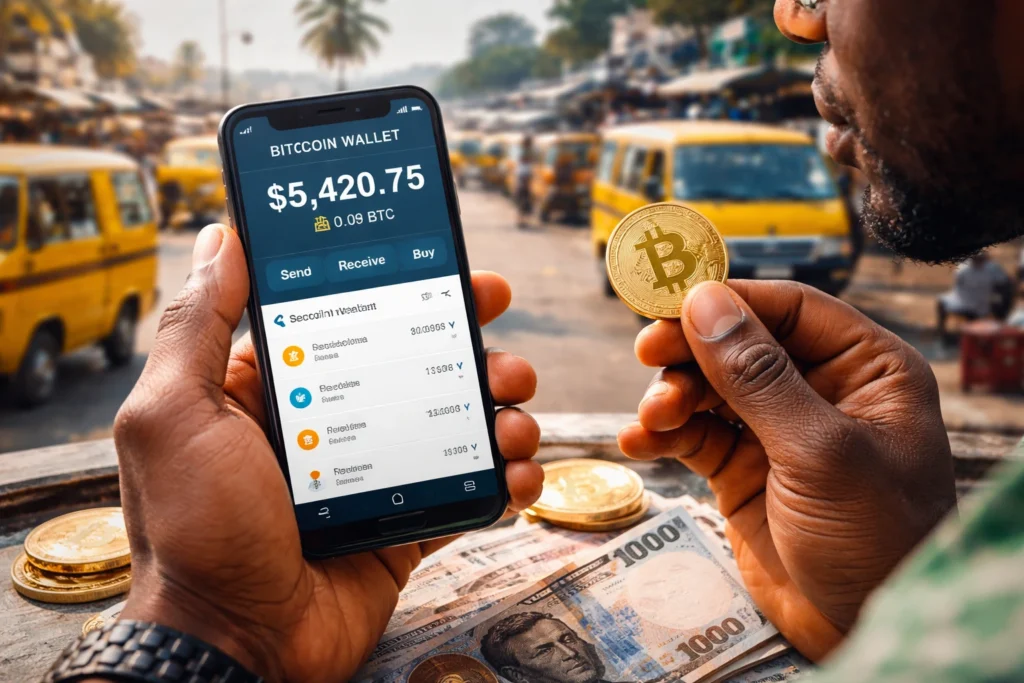
Bitcoin wallets generally fall into two broad categories: hot wallets and cold wallets. The main difference between them is internet access, which directly affects convenience and security.
- Hot Wallets
Hot wallets are crypto wallets connected to the internet. They are the most commonly used wallets in Nigeria because they are easy to access and simple to use for daily transactions. Examples include mobile, web and desktop (or extension) wallets.
- Mobile wallets
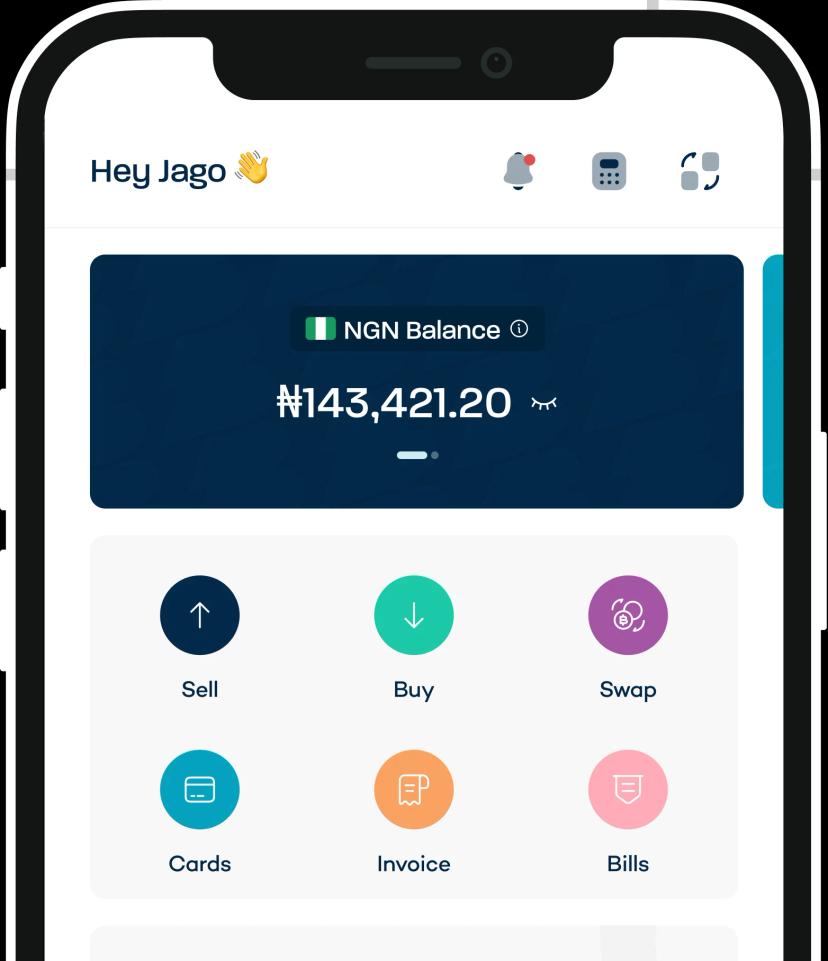
Mobile wallets are apps installed on smartphones. They are ideal for beginners and everyday Bitcoin use, such as quick crypto to cash withdrawals. Their major advantage is convenience. An example of this is the Breet Wallet
- Web wallets
Web wallets run on browsers and are often provided by exchanges or online platforms. They allow access from any device with an internet connection. While they are easy to use, they carry higher risks since users rely on third parties to secure their funds, making them common targets for hacks and phishing attacks.
- Desktop wallets
Desktop wallets are software programs installed on computers. They offer more control than web wallets and can be more secure if the device is well-protected. However, they are still exposed to risks like viruses, system crashes, or compromised computers.
Top Pick:
- XRP Wallet Address: How to Get the Best One, in Seconds
11 Best Bitcoin Wallets in Nigeria
- Breet Wallet
- Trust Wallet
- Coinbase Wallet
- Binance Wallet
- Blockchain.com Wallet
- MetaMask
- Phantom
- Ledger Wallet
- Trezor Model T
- OKX Wallet
- Exodus Wallet
1 Breet Wallet
Breet Wallet is a mobile crypto wallet and crypto-to-cash app built specifically for African users, with Nigeria and Ghana as a major focus. It is designed to remove complexity and make Bitcoin and crypto usage feel simple and practical.
How it works: Breet securely holds and manages users’ private keys on their behalf. This removes the need for users to worry about seed phrases or private key storage. With Breet, you can send, receive, store, and instantly convert Bitcoin to cash directly within the app. With Breet, you can send, receive, store, and swap
Fees: Breet does not charge wallet maintenance fees. However, standard blockchain network fees apply when sending Bitcoin. Swap and conversion services may also include small spreads.
Features:
- Simple and beginner-friendly interface
- Fast crypto-to-cash conversions
- Supports Bitcoin and other assets
- Designed for African users
Best for: Nigerians and Ghanaians who want a secure, simple wallet with fast access to their funds and easy conversions.
2. Trust Wallet
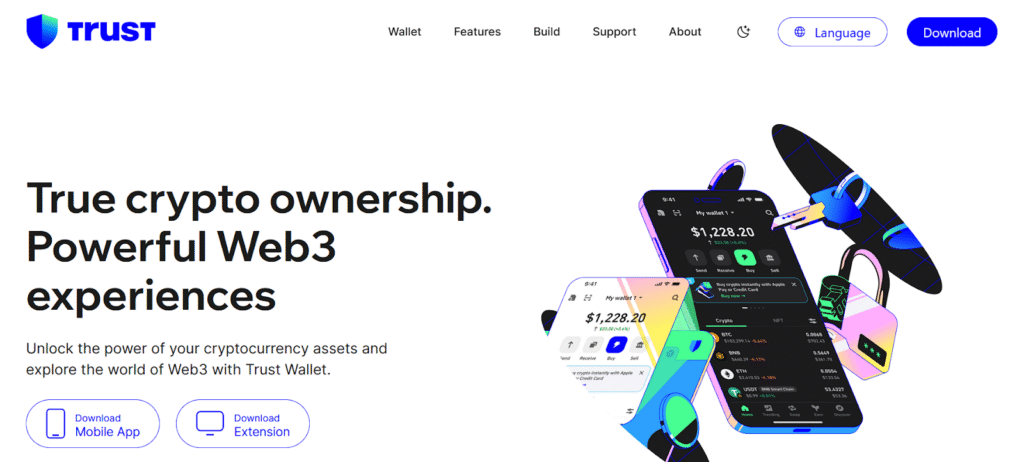
Trust Wallet is one of the most widely used mobile Bitcoin wallets in Nigeria. It supports Bitcoin and thousands of other cryptocurrencies, making it a popular choice for users who want flexibility in one app.
How it works: Trust Wallet is a non-custodial wallet, which means you fully control your private keys. You can send, receive, store, and swap Bitcoin directly from the app without relying on a third party.
Fees: Trust Wallet does not charge wallet fees but you only pay standard blockchain network fees when making transactions. Swap services also include small service fees.
Features:
- Supports Bitcoin and thousands of other assets
- Built-in decentralized exchange (DEX)
- Private key ownership
- Simple and beginner-friendly interface
Best for: Beginners and everyday users who want a secure, all-in-one mobile wallet without technical stress.
3. Coinbase wallet
Coinbase Wallet is separate from the Coinbase exchange and is designed for users who want full control of their crypto.
How it works: It is a non-custodial wallet, meaning you control your private keys. It supports Bitcoin and many other digital assets and connects easily to decentralized applications.
Fees: Coinbase Wallet does not charge wallet fees. You only pay network fees when sending crypto or interacting with decentralized applications (dapps).
Features:
- Self-custody and private key control
- Clean, beginner-friendly interface
- Supports dapps and NFTs
- Multi-asset support
Best for: Users who value simplicity, security, and full ownership of their crypto assets.
4. Binance Wallet
Binance Wallet is popular among Nigerian traders who actively buy and sell Bitcoin. It is closely integrated with the Binance exchange, making trading fast and convenient.
How it works: Binance Wallet is a custodial Bitcoin wallet, meaning Binance holds your private keys on your behalf. Funds can be easily moved between your wallet and the exchange for trading.
Fees: There are no wallet storage fees, but trading, withdrawal, and network fees apply depending on the transaction.
Features:
- Direct access to Binance trading tools
- High liquidity and fast transactions
- Strong security infrastructure
- Easy conversion between crypto assets
Best for: Active traders who frequently buy, sell, and move crypto assets rather than long-term holders.
Related to Binance:
- Does Binance Work in Nigeria? (2026 Update)
5. Blockchain.com Wallet
Blockchain.com wallet is one of the oldest crypto wallets in the industry and is trusted by millions of users globally.
How it works: It is a non-custodial wallet that allows users to store and manage Bitcoin and other cryptocurrencies through web and mobile apps.
Fees: The wallet itself is free but network fees apply when transferring assets like BTC.
Features:
- Web and mobile access
- Simple interface
- Long-standing reputation
- Private key ownership
Best for: Users who want a simple, well-established wallet for holding and sending cryptocurrencies.
6. MetaMask
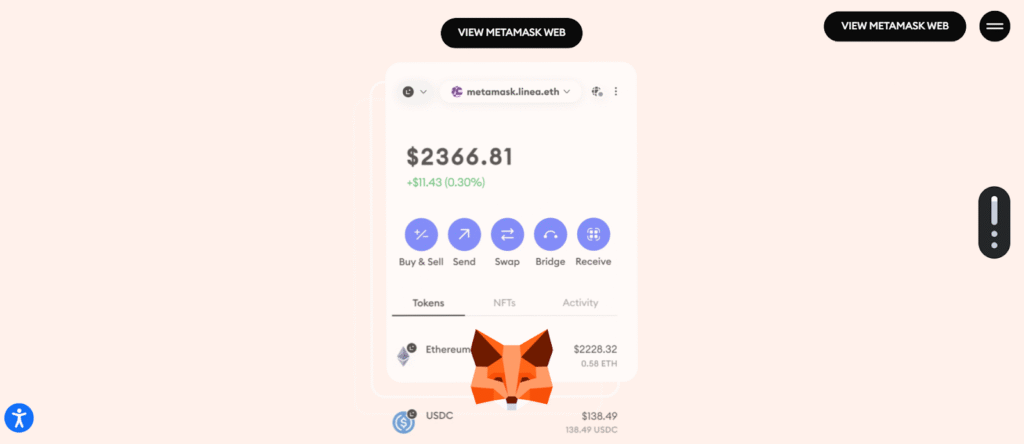
MetaMask is one of the most widely used Bitcoin wallets in the world. While it started as an Ethereum wallet, it now supports multiple blockchains such as BNB Chain, Polygon, Avalanche, Solana and more.
How it works: It is a non-custodial wallet, giving users full control over their private keys. It is designed to allow users to interact directly with DeFi platforms across multiple blockchains.
Fees: MetaMask is free to use, but users must pay gas fees when making transactions. These fees depend on the network being used and can sometimes be high on Ethereum.
Features:
- Multi-chain support with custom RPCs
- Connects directly to decentralized apps (dapps)
- Built-in swap feature
- Strong security when used correctly
Best for: Users who interact with DeFi, dapps, NFTs, and multiple networks. It’s ideal for people who want to explore beyond Bitcoin into broader crypto ecosystems.
Related to Metamask:
- How to Add USDT to MetaMask in Minutes
7. Phantom

Phantom is primarily known as a wallet for the Solana blockchain, but it’s expanding support for other assets and networks such as Bitcoin, Ethereum, etc.
How it works: Phantom is a non-custodial crypto wallet, meaning you control your private keys and recovery phrases. It’s available as a browser extension and mobile app.
Fees: Phantom itself doesn’t charge wallet fees. You only pay network fees (very low on Solana). If you interact with DeFi or NFTs, there may be protocol fees.
Features:
- Super fast and low-cost transactions (especially on Solana)
- Easy access to DeFi and NFTs
- Built-in swap functionality
- Sleek, beginner-friendly interface
Best for: Solana users and anyone who wants fast, cheap transactions with a smooth interface. Great for NFT collectors and DeFi explorers on Solana.
8. Ledger Nano X
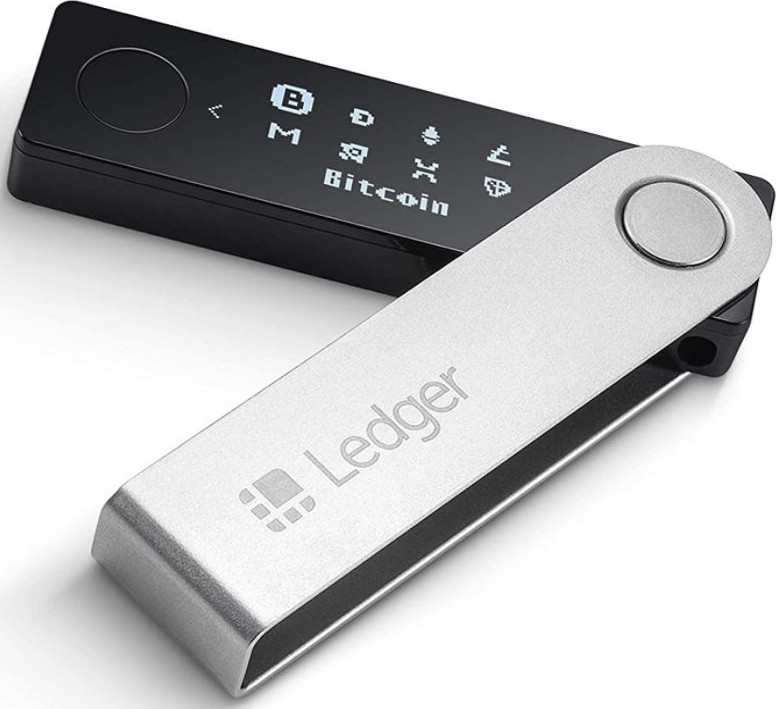
Ledger Nano X is one of the most trusted hardware wallets in the world. It is designed for maximum security and long-term asset storage.
How it works: Ledger Nano X stores private keys offline on a physical device. The wallet requires that transactions must be approved on the device itself, protecting funds even if your phone or computer is compromised.
Fees: There are no wallet usage fees. You only pay network fees when sending assets. The main cost is the one-time purchase of the device.
Features:
- Offline storage of private keys
- Bluetooth support for mobile use
- Supports Bitcoin and many other assets
- High-level security protection
Best for: Long-term crypto holders and users who prioritize high-grade security.
Top Pick:
9. Trezor Model T
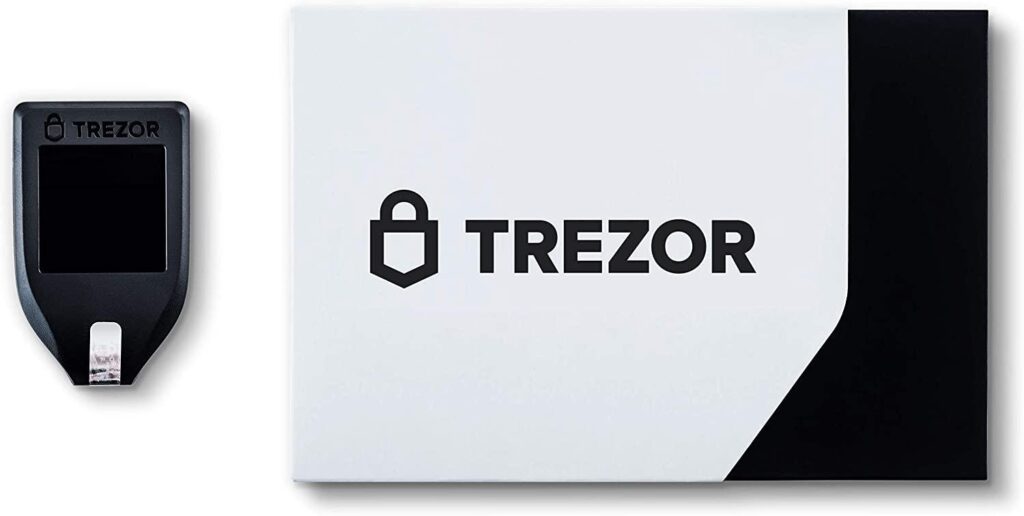
Trezor Model T is a premium Crypto hardware wallet known for transparency and strong security.
How it works: Like Ledger, Trezor stores private keys offline. It uses open-source software, allowing public review of its security architecture.
Fees: No wallet fees apply. Users only pay blockchain network fees and the one-time cost of the device.
Features:
- Offline key storage
- Open-source software
- Touchscreen interface
- Strong security features
Best for: Advanced users who want maximum control, transparency, and long-term storage security.
10. OKX Wallet
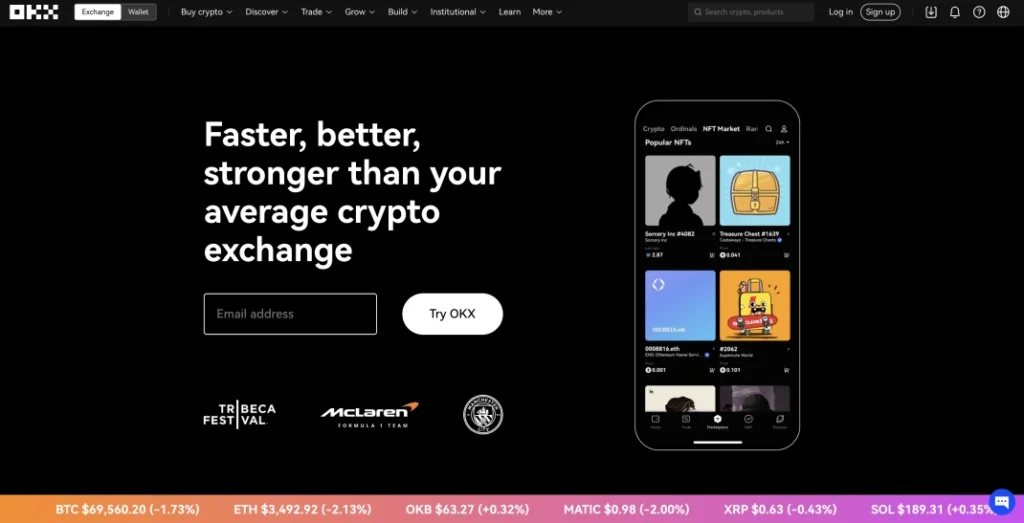
OKX Wallet is the crypto wallet associated with the OKX ecosystem, a major global exchange.
How it works: OKX Wallet can be used as both a custodial and non-custodial solution. You can hold assets directly in the wallet app and use features linked to the OKX exchange.
Fees: No wallet maintenance fees, but sending assets still incurs network (blockchain) fees. If you trade or use exchange services, trading fees will apply.
Features:
- Easy link to OKX exchange services
- Supports many cryptocurrencies
- Cross-chain transfers
- Staking and DeFi access
Best for: Users who want a wallet that ties into a larger exchange ecosystem with advanced trading and staking features.
Related to OKX
- Does OKX Still Work in Nigeria? 2026 Update
11. Exodus Wallet
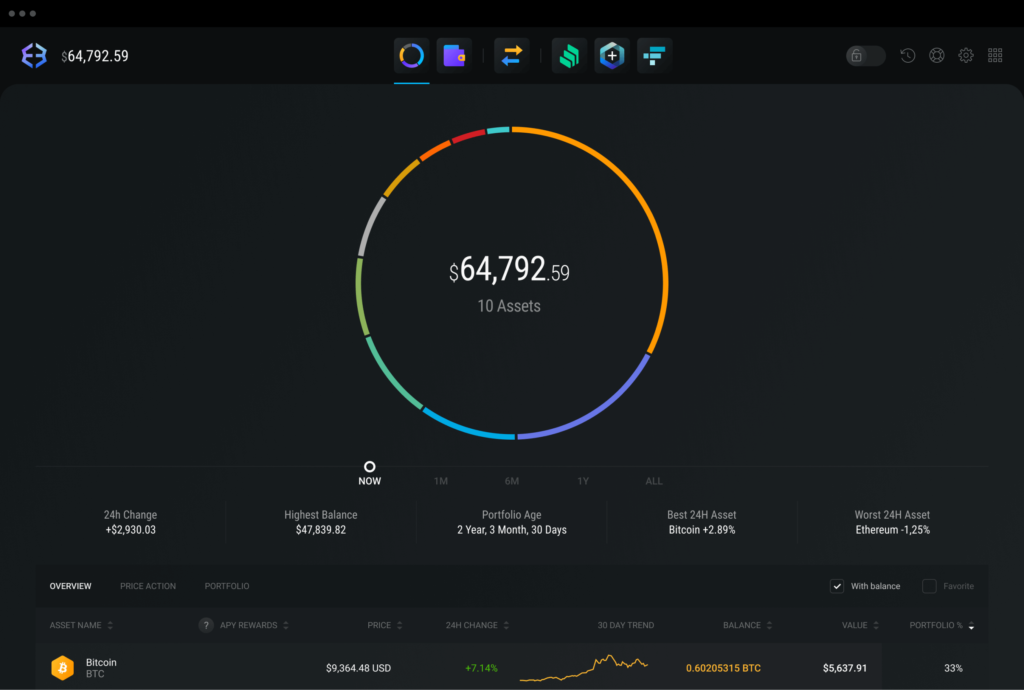
Exodus is as a non-custodial wallet available on mobile and desktop, known for its clean design. It can be accessed anywhere by anyone with internet connection.
How it works: You control their private keys and can store, send, receive, and swap Bitcoin and other assets directly within the wallet.
Fees: Exodus does not charge wallet fees. Network fees apply, and built-in swaps may include small spreads.
Features:
- Beautiful, user-friendly design
- Multi-asset support
- Built-in swap functionality
- Private key ownership
Best for: Users who want a visually appealing wallet that balances ease of use with control.
How to Choose the Right Bitcoin Wallet
Most Nigerians don’t choose a Bitcoin wallet but they stumble into one.
A friend sends a link. A Twitter thread mentions a wallet name or someone in a Telegram group says, “This one works.” So you download it, set it up in five minutes, and move on.
The truth is, the “best” Bitcoin wallet depends on how Bitcoin fits into your life, not on hype or popularity alone. Here’s how to settle for the right wallet:
- What do you use Bitcoin for?
If you use Bitcoin to receive payments, settle small bills, or convert to cash regularly, you’ll value speed and simplicity more than advanced features. A wallet that makes everyday actions easy will serve you better than one packed with tools you never touch. But if you plan to hold Bitcoin long-term and rarely move it, security should matter more than convenience.
- What’s the Nature of the Wallet?
Next, consider custodial versus non-custodial wallets. Custodial wallets manage your private keys for you. They are easier to use and great for beginners, but you rely on the platform’s security. Non-custodial wallets, on the other hand, give you full control, but you must protect your recovery phrase yourself.
- Cost and Accessibility
Some wallets are easily accessible and free to use whereas you have to buy others such as hardware wallets. Accessibility is important in Nigeria as some wallets have limitations. A good wallet should work smoothly on mobile, support reliable transactions, and ideally make it easy to move between crypto and cash when needed.
Related:
- USDT TRC20 Contract Address: What is it & How to Get it?
Common Mistakes Nigerians Make With Bitcoin Wallets
One of the biggest mistakes Nigerians make is treating Bitcoin wallets casually. Bitcoin is not like a bank account where you can reset everything if something goes wrong. Small mistakes can lead to permanent loss. Below are some common mistakes and how to avoid them.
1. Not backing up recovery phrases
A common error is not backing up recovery phrases properly. Some users screenshot their seed phrase or save it on their phone. If that phone is hacked, lost, or damaged, the Bitcoin may be gone forever.
2. Keeping large amounts in exchange wallets
Another mistake is keeping large amounts of Bitcoin in exchange wallets for too long. Exchange wallets are convenient for trading, but they are frequent targets for hacks. Many people forget to move funds into safer storage once trading is done.
3. Clicking on unverified links
Phishing scams are also a major issue. Fake links, giveaway scams, and impersonation messages often trick users into entering their wallet details on fake websites. Once private keys or seed phrases are exposed, funds can be drained instantly.
How to Set Up and Use a Bitcoin Wallet Safely
1. Download Wallets from Verified Sources
Setting up your Bitcoin wallet safely starts with choosing the official app or website. You should always download wallets from verified app stores or the wallet’s official website. Also, endeavour to avoid links sent through random messages or social media ads.
2. Secure your Recovery Phrases
When creating your wallet, pay close attention to the recovery phrase. Write it down on paper and store it in a safe place. Never share it with anyone and always remember that no legitimate wallet or support team will ever ask for it.
3. Enable strong Security Settings
To keep your assets safe, use strong security settings like enabling PINs, passwords, and biometric locks where available. For wallets that support it, turn on two-factor authentication.
4. Double-check Wallet Addresses
When sending Bitcoin, always double-check wallet addresses. Copy and paste addresses carefully, and confirm details before approving transactions because Bitcoin transactions cannot be reversed.
Don’t Miss:
- The Best 13 Crypto Apps in Nigeria, by User Ratings
Conclusion on Bitcoin Wallets in Nigeria
Choosing the right Bitcoin wallet in Nigeria comes down to balance. You want something secure enough to protect your funds, simple enough to use daily, and reliable enough to fit your lifestyle. No single wallet does everything perfectly, which is why many users combine options, using convenient wallets for everyday transactions and more secure ones for long-term storage.
Frequently Asked Questions (FAQs) About Bitcoin Wallets in Nigeria
What is the Safest Bitcoin Wallet in Nigeria?
There is no single “safest” Bitcoin wallet. Safety depends on how you use and secure your wallet.
Custodial wallets are easier to use but rely on the platform to protect your funds. Non-custodial wallets give you full control, but you are responsible for securing your keys. Hot wallets are convenient for daily use but are online. Cold wallets store keys offline and offer the highest security.
Are Bitcoin Wallets Legal in Nigeria?
Yes, Bitcoin wallets are legal in Nigeria. Nigerians are allowed to own, use, and store Bitcoin in wallets, even though banks do not directly process crypto transactions.
Can I have more than One Bitcoin wallet?
Yes. Many users use multiple wallets for different needs, such as one wallet for daily transactions and another for long-term storage.
What happens if I Lose my Wallet Phone?
If your wallet is non-custodial, you can restore access using your recovery phrase on a new device. Without that phrase, the funds cannot be recovered.
How do I Convert Bitcoin from my Wallet to Naira?
You can send Bitcoin from your wallet to Breet. Once received, Breet converts it instantly and sends the equivalent amount to your Nigerian bank account.