A series of actions go on between you clicking send on your wallet and your money actually arriving at its destination address. The blockchain is pretty fast, especially on high scale networks like Polygon or Avalanche, so many people think all blockchain networks are these magically instant databases that update the second a button is pressed.
There is an invisible layer called the mempool, and if you have ever spent four hours staring at a pending notification, you have had a taste of it.
Related:
- What is a Blockchain Validator?
What Is the Mempool in Cryptocurrency?
Simply, the mempool (which is short for memory pool) is the staging area for all unconfirmed transactions on a blockchain. When you send Bitcoin or Ethereum, it doesn’t just go onto the blockchain.
It is first sent to a network of computers, called the nodes, where it sits in their native memory until a miner or validator decides to pick it up, solve the computation and include it in a block.
The mempool is not a permanent record. It is rather a volatile, high speed database that exists locally on the nodes running the network. Every transaction in the mempool is simply a request.
You are saying to the network, “I would like to move this amount of money, and I am willing to pay this much in fees for the privilege.”
One of the biggest misconceptions in crypto is the idea that there is one big global mempool that everyone shares. That’s just not how decentralization works.
Every single node on the network has its own local mempool. When you send a transaction, your wallet sends it to one node. That node checks if the transaction is valid. If it is, the node puts it in its own mempool and then shares it with its neighbor nodes. This continues really quickly until almost every node on the network knows about your transaction.
However, if a node has a small amount of RAM, other hardware constraints or a very high fee threshold, it might choose to ignore your transaction entirely. This is why you might see your transaction on one block explorer but not another.
Related:
- What are Gas Fees in Crypto? Why Should I Pay It?
How the Mempool Works Step-by-Step
The mempool is basically a big, fast paced decentralised gossip network. Here is exactly how it runs from the moment you click send
1. The Broadcast + Validation
The second you sign a transaction with your private key, your wallet broadcasts that data to the network. The first node that receives it performs a series of checks. It first verifies that your signature is real, that the transaction format is correct, and, most importantly, that you actually have the balance you are trying to spend.
If you try to spend money you don’t have, the node drops the transaction immediately. It doesn’t even make it to the mempool.
2. Propagation Step
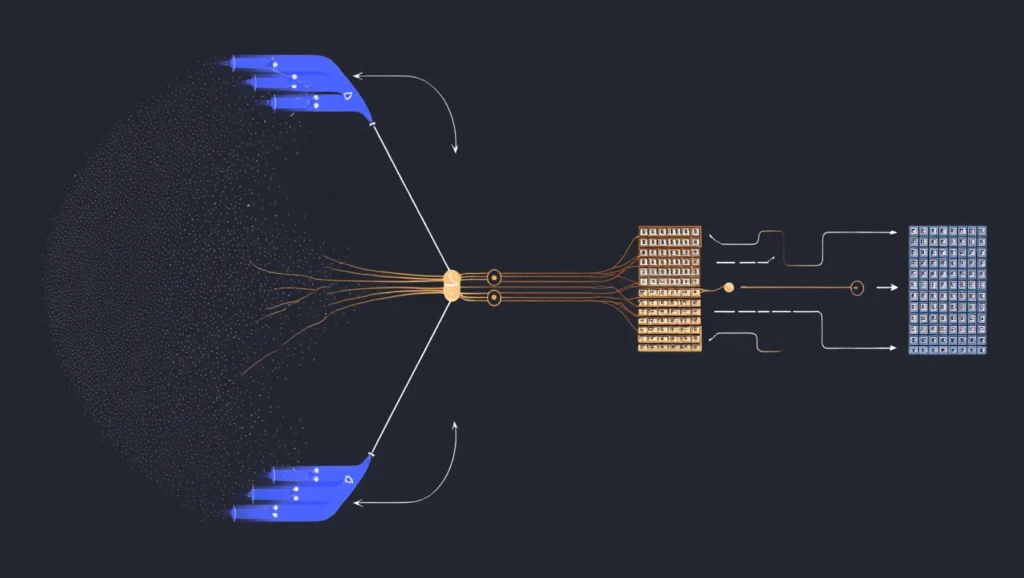
If the transaction passes the initial tests, the node places it in its own mempool and tells its peers. This is known as a gossip protocol. It is like a rumor spreading through a village market. One person tells two people, those two tell four, and within a few seconds, the entire network is aware.
By the time you refresh your screen, your transaction is sitting in the local memory of thousands of computers across the globe, all waiting for one miner to take notice.
3. The Miner’s Selection
Miners aren’t charity workers. They’re business people. Their goal is to maximize their profit from every block they mine. When a miner starts building a new block, they look at their mempool and sort the transactions by fee.
They don’t care about who sent the money or why. They care about who is paying the most per byte of data. They scoop up the highest-paying transactions, pack them into a block, and solve the cryptographic puzzle to add that block to the chain.
4. Eviction and Expiry
You might ask, “What then happens if your transaction never gets picked up?” If the network is too busy or your fee is too low or both, the nodes will eventually get tired of holding onto your data. Most Bitcoin nodes, for example, have a default expiry time of 30 days. If your transaction hasn’t been confirmed by then, it is purged from the mempool and the funds return to your wallet (technically, they never left. The transaction just failed to happen).
Read Also:
Why the Mempool Matters in Crypto Transactions
Now you have a basic understanding of the mempool and what it does. Here’s why it’s important:
1. Real-Time Fee Discovery
The mempool is an auction. By peeking at the current state of the mempool you can tell what transactions are going to get processed and which aren’t. If the mempool is mostly empty a transaction with a smaller fee will probably get picked up in 10 minutes. However, if there are 100,000 pending transactions on the mempool then to make your transaction more attractive to a miner you’re going to have to set a higher fee to be considered.
Most modern wallets use fee estimators that look at the mempool for you, but they aren’t always perfect. Knowing how to check the mempool yourself ensures you don’t overpay for a transfer.
2. Predicting Network Congestion
If you see the mempool size spiking, it means a period of high fees and slow confirmations is incoming. This is usually triggered by market volatility or a new trend like the Ordinals and Inscriptions craze we saw a few years ago.
3. Transaction Prioritization
The mempool is where the priority of your cash flow is decided. If you are sending money to an exchange to catch a price pump, you cannot afford to be at the bottom of the mempool.
Understanding how to “grease the wheels” of the mempool ensures your high-stakes trades actually happen when you need them to.
Related:
- How to Use a Blockchain Explorer to Confirm Transactions
What Causes Mempool Congestion?
1. Market Volatility and Panic
Whenever Bitcoin or Ethereum sees a massive price move, everyone rushes for the exits or the entries at the same time. Traders move funds to exchanges to sell, or whales move coins into cold storage. This sudden influx of tens of thousands of transactions creates a massive backlog for miners.
2. Limited Block Space
Blockchains have a physical limit. Bitcoin blocks are about 1MB to 4MB in size, depending on how the data is structured. If there is 50MB of transaction data waiting in the mempool, it will take at least 12 to 15 blocks to clear it all out. Since a Bitcoin block takes ten minutes on average, that is a guaranteed wait of over two hours for the people at the back of the line.
3. Low Transaction Fees
If you are trying to be economical during a period of high activity, you are likely to get stuck (and in extreme cases for days or weeks). Miners will always bypass a 10 cent fee to pick up a 10 dollar fee. During periods of high congestion, the minimum fee required to get into a block can skyrocket in seconds.
How to Avoid Delays Caused by the Mempool
You don’t have to just sit there and hope for the best. There are several professional tools and strategies to help you navigate a crowded mempool.
1. Set Higher Transaction Fees
The simplest way to avoid the mempool headache is to pay for priority. Always check a real-time mempool explorer like mempool.space, which is an opensource mempool visualiser for the Bitcoin network, before you send. If the high priority fee is 80 sats/vB, and your wallet is suggesting 40, manually bump it up. It is better to pay an extra dollar now than to have your money in limbo for three days.
2. Use Replace-By-Fee (RBF)
RBF is a literal lifesaver. It is a feature that allows you to replace a pending transaction with a new version that has a higher fee. Essentially, you are telling the miners, “Forget that old request, here is more money to pick up the same transaction right now.” Most professional wallets have an Increase Fee or Speed Up button that uses RBF in-app.
3. Child Pays For Parent (CPFP)
If you are the one receiving money and it is stuck in the mempool because the sender used a low fee, you can use CPFP. You create a new transaction using the pending funds you are about to receive and pay a very high fee for this new transaction. To get the high fee of the child transaction, the miner is forced to also confirm the parent transaction.
4. Transact During Off-Peak Hours
Blockchain activity follows a rhythm. Usually, the mempool is much quieter during the weekends or late at night (in Western time zones). If your transaction isn’t urgent, waiting a few hours can save you 50% or more on fees.
5. Use Layer-2 Solutions
If you are tired of paying 20 dollars to move 50 dollars, it is time to stop using the main Layer 1 networks for everyday things. Networks like the Lightning Network for Bitcoin or Arbitrum and Base for Ethereum bypass the main mempool entirely, offering much faster confirmations for pennies.
Don’t Miss:
- What Is Liquidity Pool in Crypto?
- USDT TRC20 Contract Address: What is it & How to Find it?
Frequently Asked Questions About the Mempool
How Long can a Transaction Stay in the Mempool?
Technically, a transaction can stay in a node’s mempool as long as that node wants to keep it. However, most nodes are configured to purge transactions after 72 hours to 2 weeks if they aren’t confirmed. If your transaction is purged, the funds remain in your wallet as if the transfer was never initiated.
Why is the Bitcoin Mempool Full?
Simply because more people want to move money than the network has room for. Every node has a fixed memory so when network activity spikes transactions will pile up. Think of it as a crowded bus stop with 100 people but only 15 seater buses. The extra people have to wait until the next bus
What Happens when the Mempool Clears?
When the mempool clears, the fee war ends. Miners start picking up transactions with low fees that have probably been sitting there for days. If you ever see fees drop really low, that is the mempool clearing. It is the best time to move your long-term savings or dust into a different wallet without losing half of it to fees.
What Should I do if My Transaction is Stuck in the Mempool?
First, don’t panic. Your money isn’t gone. It’s just stuck in a queue. A long queue. You can wait it out or you can use more proactive methods like Replace By Fee (RBF) to resend the transaction with a higher fee or, if you are the one receiving the money, you can use Child Pays For Parent (CPFP). This is where you create a new transaction with a very high fee using the pending funds, forcing the miner to confirm the old transaction so they can get the reward for the new one.
Conclusion
The mempool is the engine of the crypto world that is invisible to normies. It is the place where supply meets demand, and where the true price of blockchain space is decided every ten minutes. While it can be frustrating to deal with congestion and stuck transactions, understanding how this waiting room works gives you total control over your digital finances.
Your goal should be to spend as little time as possible in the mempool. By using tools like RBF, CPFP, choosing the right time to transact, or using platforms like Breet that handle the complexity for you, you can ensure that your money is always moving, even when the rest of the world is stuck in the mempool.