- What Exactly is RBF in Crypto and Why Does it Exist?
- How RBF Actually Works Under the Hood
- How to Speed Up a Stuck Bitcoin Transaction With RBF
- Why RBF Matters for Users and Exchanges
- Misconceptions and Risks of Using RBF
- Frequently Asked Questions About Replace-By-Fee (RBF)
- Conclusion on RBF in Crypto
If you have ever tried sending Bitcoin during a busy period, you already know the pain.
Your transaction gets stuck in the mempool, confirmations take forever and you start refreshing blockchain explorers like someone waiting for a delivery that is clearly not coming anytime soon.
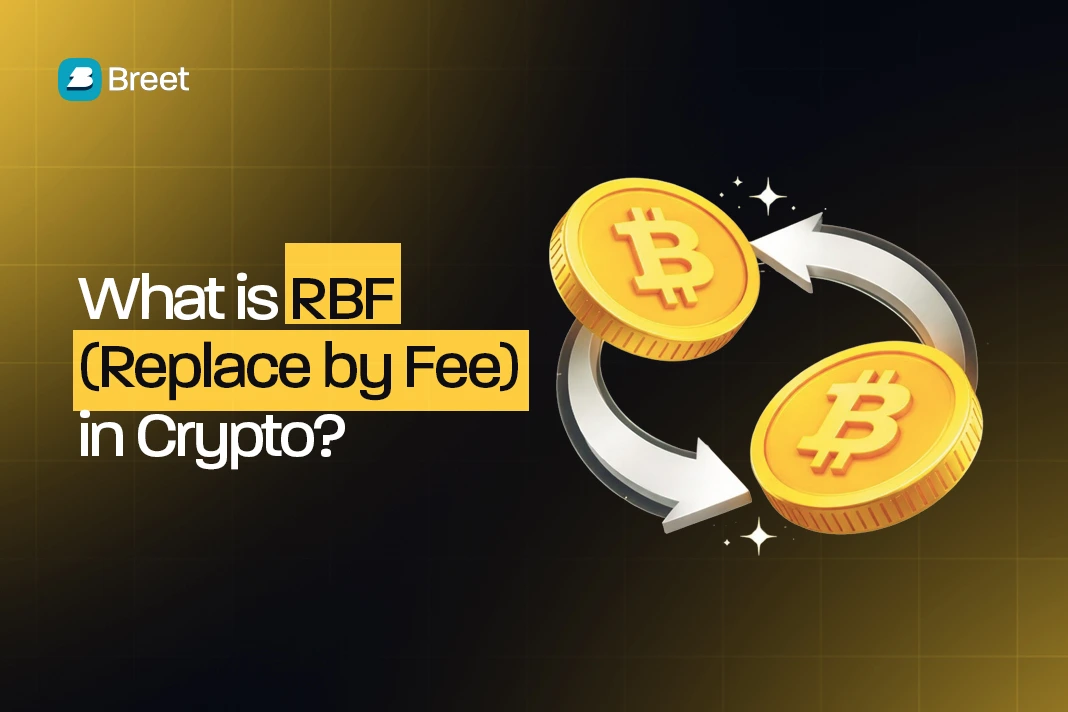
That is where RBF comes in. RBF stands for Replace by Fee. It is a feature on the Bitcoin blockchain that lets you increase the fee of an unconfirmed transaction to incentivize miners to pick it up faster.
It is one of those features that crypto newbies usually don’t know about and overlook until they get stuck once and start looking for answers.
This article breaks everything down properly. What RBF is, how it works, when to use it and when not to.
By the time you are done reading this you will know exactly how it affects your Bitcoin experience and whether you should turn it on or leave it alone.
What Exactly is RBF in Crypto and Why Does it Exist?
RBF is a transaction mechanism introduced to fix one simple problem. Bitcoin was the very first cryptocurrency and has the highest transaction volume.
As such, the Bitcoin blockchain gets congested especially during peak periods. Once you broadcast a transaction, the major criteria that determines how fast miners pick it up is your fee.
If you set a low fee your transaction can sit in the mempool for hours or even days. Before RBF existed you were stuck with it. There was no way to change the fee after broadcasting.
RBF changed that. Once enabled, you as the sender can resend the same transaction with a higher fee.
Miners now simply replace the old version with the new one because the network rewards higher fee transactions.
It is not complicated at all. You are basically telling miners to forget that first version and replace it with a better paying version instead.
This feature was made formal in an improvement proposal BIP 125 and has been supported by almost all major Bitcoin wallets by 2025.
However, many of these wallets still hide it behind settings or do not explain how it works or its implications in their blog forums.
Related:
- HODL Meaning in Crypto, Fully Explained
How RBF Actually Works Under the Hood
To better understand RBF you need to first understand that Bitcoin transactions are not final until they get at least one confirmation.
Before that they are just sitting in the mempool waiting to be mined. Since miners are free to choose any unconfirmed transaction they want they naturally prioritize the ones with higher fees.
When a wallet uses RBF it constructs a new transaction spending the exact same inputs as the original one. This automatically invalidates the old transaction because two transactions cannot spend the same input at the same time.
The new transaction just has a higher fee. Once this new one hits the mempool miners throw away the first one and consider the new one the valid transaction.
You are not canceling the transaction. You are not reversing anything. You are literally replacing your own earlier transaction with a better paying version.
The entire process is safe and expected behavior on Bitcoin. It does not bypass any security rule. It does not break immutability. It simply gives the sender flexibility before confirmation.
Related:
- Bull Run Meaning in Crypto: Explained for Beginners
How to Speed Up a Stuck Bitcoin Transaction With RBF
So, if you’re sending Bitcoin and it gets stuck in the mempool because of a low transaction fee, here are specific steps to get your transaction mined faster using RBF.
We’ll use the popular Bitcoin wallet, Electrum as a use case.
Note that to do this, you need to have RBF enabled in the first place, before sending the initial transaction.
- Step 1: Open Electrum and unlock your wallet.
- Step 2: Make sure that RBF is enabled. To do this, click Tools and then Preferences and then Fees. In the resulting screen, make sure enable RBF is checked. On Electrum RBF is enabled by default but check to be sure.Now you can send the low fee transaction
- Step 3: Click on Transactions and find the unconfirmed, low fee transaction that is stuck. It will show that it is pending with zero confirmations.
- Step 4: Right click the pending transaction and choose Replace by fee. On the new dialog opened, pick a new fee rate. Use the ETA or Mempool options if you want Electrum to estimate target-confirmation time.
- Step 5: Click Confirm and Electrum will construct and broadcast a replacement transaction that spends the same inputs but pays the higher fee.
- Step 6: The process is the same for a hardware wallet but at this point you will be prompted to sign in on your hardware device.
You’re done! Now you can watch the History tab or a block explorer for the new transaction id and the confirmation. The original unconfirmed transaction will be replaced by the new one with an entirely new transaction id.
Read Also:
- How to Fix Bitcoin Unconfirmed Transactions (Step-by-Step)
- The Best 9 Litecoin Faucets to Earn Free LTC
Why RBF Matters for Users and Exchanges

RBF is great because it’s not just a technical jargon that the end user can’t interact with. It solves real user problems, especially on days when the Bitcoin network experiences mempool congestion.
Here are some reasons why it matters.
- Fee mistakes : Many users pick fees without understanding how volatile Bitcoin fee markets are. You may select a low fee right before the mempool spikes. Without RBF you could be stuck for hours. With RBF you easily increase the fee and go about your day.
- Exchanges and merchants rely on predictable confirmation times: Exchanges hate stuck transactions. Merchants hate stuck transactions. If a customer sends BTC with a low fee the merchant may sit there waiting for confirmation before crediting the payment. With RBF the sender can quickly increase fees and fix the delay.
- Improved user experience: RBF makes Bitcoin feel less rigid. You get control even after broadcasting the transaction. You can fix mistakes or delays. Without it Bitcoin feels old school compared to newer blockchains with flexible fee adjustments.
Misconceptions and Risks of Using RBF
RBF is great but some people misunderstand it. Let’s clear up the most common misconceptions.
- RBF does not let you cancel a confirmed transaction. Once a transaction gets even one confirmation it is final. RBF only works on unconfirmed transactions.
- RBF does not allow fraud unless the receiver accepts zero confirmation payment. If a merchant accepts a Bitcoin payment with zero confirmations they are taking a risk. With RBF the sender can replace the transaction with a new one going back to themselves. Any serious business already waits for confirmations so this is not a new threat. It is just something beginners should be aware of.
- RBF does not break Bitcoin immutability. Some people assume that being able to replace transactions means Bitcoin is mutable. That is not accurate. Only unconfirmed transactions can be replaced. Confirmed ones are permanent.
- Not every wallet enables RBF by default. Some wallets like Electrum let you choose between opt-in RBF and mandatory RBF. Others hide the feature. Mobile wallets like BlueWallet, Muun and Phoenix handle fee adjustments differently. By 2025 most reputable wallets support RBF but the behavior varies.
- It is not the same as CPFP. CPFP is Child Pays for Parent. It is another fee bumping method but works differently. RBF replaces the original transaction. CPFP creates a new child transaction with a higher fee to pull the parent along. You should not confuse both.
Top Pick:
- 13 Best Crypto Faucets That Actually Work
Frequently Asked Questions About Replace-By-Fee (RBF)
Is Replace-By-Fee (RBF) Safe To Use On Bitcoin?
Yes, RBF Is Safe And Widely Used On The Bitcoin Network. It Is A Standard Bitcoin Feature That Allows Users To Increase The Transaction Fee On An Unconfirmed Transaction So Miners Are More Likely To Include It In The Next Block. RBF Does Not Compromise Your Funds Or Security, And It Follows Bitcoin’s Consensus Rules.
Does RBF Cancel My Bitcoin Transaction?
No, RBF Does Not Cancel Your Bitcoin Transaction. Instead, It Replaces The Unconfirmed Transaction With A New Version That Has A Higher Transaction Fee. The Original Transaction Is Removed From The Mempool Once The Replacement Is Accepted, But Your Bitcoin Is Never Reversed Or Lost.
Can I Use RBF After My Bitcoin Transaction Is Confirmed?
No. Once A Bitcoin Transaction Receives A Confirmation, It Becomes Final And Irreversible. RBF Only Works While A Transaction Is Still Unconfirmed. After Confirmation, The Transaction Cannot Be Modified, Sped Up, Or Replaced.
Why Is My Bitcoin Transaction Taking A Long Time?
A Bitcoin Transaction Usually Takes Long Because:
-
The Transaction Fee Is Too Low
-
The Bitcoin Network Is Congested
-
Many Higher-Fee Transactions Are Being Prioritized By Miners
In Such Cases, Using RBF Allows You To Increase The Fee And Speed Up The Confirmation Without Creating A New Transaction From Scratch.
Do All Bitcoin Wallets Support Replace-By-Fee (RBF)?
No, Not All Bitcoin Wallets Support RBF. While Most Modern Wallets Include RBF Support, Some Older Or Custodial Wallets Do Not. To Use RBF, The Wallet Must Allow You To Enable RBF Before Sending The Transaction. Always Check Your Wallet’s Transaction Settings Before Sending Bitcoin.
Related:
- Crypto Bubble: What is it & How to Avoid Burst Losses
Conclusion on RBF in Crypto
RBF is one of those Bitcoin features that becomes essential the moment you deal with slow or stuck transactions.
It gives you control over your fee and lets you fix mistakes without waiting hours for the mempool to clear. Every serious Bitcoin user should know how it works because it directly affects how fast your transfers confirm.
And speaking of speed, if you want fast and smooth crypto conversions in Nigeria without stressing over mempool madness use Breet. It handles the heavy lifting for you and lets you convert crypto to cash quickly and cleanly.