
If you’re off-ramping crypto to Naira in Nigeria, selling is the easy part. The hard part is the stretch between the sale and your bank account, because that’s where the money disappears.
Over 70% of Nigerian P2P traders have lost money to scams at least once, mostly through fake payment proofs and chargebacks. And when the EFCC traces tainted funds through a P2P trade, banks freeze entire account chains, not just the trade amount. Your salary, savings, and business capital go with it.
The right off-ramp removes those risks at the source. You’re likely checking every platform for the same three things:
- It pays you directly from its own verified business account, so no stranger’s flagged transfer ever touches your bank, and no chargeback can reverse your payout.
- It settles in minutes because a withdrawal that stalls exactly when rent or a supplier invoice is due defeats the point of an off-ramp.
- The rate you see is the rate that lands. A hidden 5% spread on a ₦500,000 cash-out is ₦25,000 gone before you notice.
This guide ranks 7 off-ramp platforms for Nigeria and Ghana against those criteria, plus coin support and P2P exposure.
We start with Breet, our own platform, and we’ll show our reasoning rather than just assert the ranking: over 400,000 people across Nigeria and Ghana use it to sell crypto for Naira, Cedis, or USD in under five minutes with zero P2P exposure.
Want to cash out without the P2P risk? Create a Breet account to get started
The 7 top crypto off-ramp platforms
Here’s how the seven compare on the criteria that decide whether your money arrives:
| Platform | Best for | Payout currency | Payout speed | P2P exposure | Fees/rate transparency |
| Breet | Naira/Cedis in bank in minutes, no P2P | NGN, GHS, USD | Minutes | None | Transparent rate, no hidden fees |
| Luno | Beginners wanting a simple app | NGN, ZAR, KES | Hours to days | None | Spread-based, not published |
| Quidax | Nigerians wanting local Naira support | NGN | Minutes to hours | None (P2P discontinued) | Flat fees, but reports of inflated costs |
| Monica | Zero-fee instant conversions | NGN | Under 60 seconds | None | 0% fees, rate-based |
| Roqqu | A local all-in-one app | NGN | Minutes | None | Not published |
| Busha | Crypto plus bill payments | NGN, KES, USD | Minutes | None | Spread-based |
| Cheda | Fast zero-fee off-ramp | NGN | Under 2 minutes | None | 0% fees |
1. Breet
Best for: Nigerians and Ghanaians who want crypto converted to Naira or Cedis straight to their bank in minutes, with no P2P risk.
Breet is a crypto-to-cash platform used by over 400,000 people across Nigeria and Ghana. The structural difference from a P2P marketplace: you transact with Breet, not with an individual.
You send crypto, Breet converts it, and deposits Naira, Cedis, or USD directly to your linked bank account. Breet holds a 4.3-star rating on the Apple App Store and 4.4 stars on Google Play.
Here’s why it ranks first on each criterion from the intro.
Automatic Settlement pays you in minutes, with no manual steps
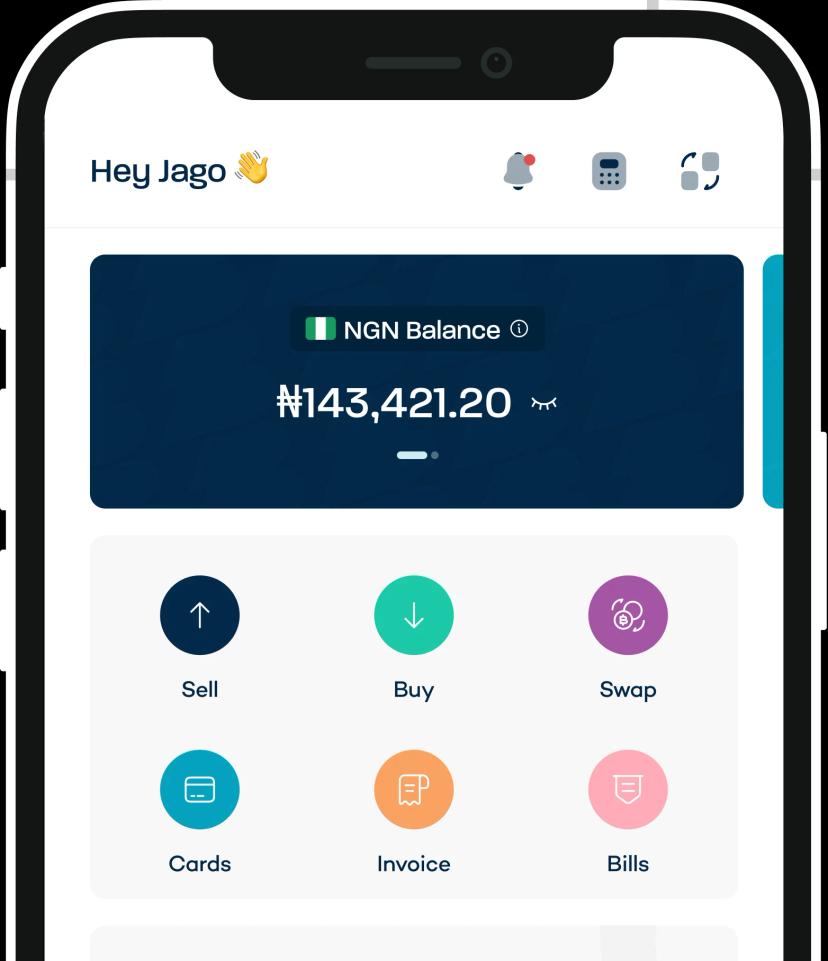
The moment you send supported crypto and hit withdraw, Breet auto-converts it and pays the equivalent straight to your linked bank account. Most transactions settle in under 287 seconds. There’s no scrolling merchant offers, no waiting for a buyer to come online, no “has he paid?” messages.
Because the system is automated and always on, there’s also no “withdrawals paused” surprise during regulatory tension, a failure mode you’ll see on other entries in this list. If you’d rather hold dollars than Naira, Breet’s USD settlement option lets you convert crypto to dollars in Nigeria instead.
No P2P counterparty, so scams and frozen accounts can’t reach you
You sell to Breet, never to a stranger, which kills the two biggest local risks at once. No counterparty means no fake payment proofs, no chargeback fraud, and no coin locking. And because your payout comes from a verified business account rather than a random individual’s transfer, the flagged-third-party pattern that gets entire account chains frozen never enters your bank history.
The scale of what this removes: over 70% of surveyed P2P traders have lost money to scams at least once, with fake payment alerts topping the list. One chargeback victim reported losing ₦689,908 after releasing crypto against fake proof. On a direct off-ramp, that risk category doesn’t exist.
The quoted rate is the rate that settles
No surprise spread, no “processing fee” deducted after you confirm. What you see during checkout is what lands in your bank.
This matters more than most people realize because the spread is where other platforms take their margin. One Quidax user reported paying ₦59,000 to buy $1,000 worth of crypto, a near-10% cost disguised as a rate adjustment. Luno users describe spreads as high, unpredictable, and visible only after the transaction completes. Breet shows you the rate first; you can check today’s on Breet’s Bitcoin-to-Naira rate calculator.
Pros: Fastest realistic route to money in your bank; removes P2P scam and frozen-account risk entirely; quoted rate is final; purpose-built for Nigeria and Ghana; no crypto expertise required.
Cons: Nigeria and Ghana only for now. And it’s a conversion platform, not a trading exchange: if you want charts, futures, or leverage, Breet isn’t built for you.
Pricing: Rate-based and transparent, with no hidden charges.
Reviews: 4.3 stars on the App Store, 4.4 on Google Play, 400,000+ users. The recurring theme in user sentiment is withdrawal speed; see what users are saying about Breet on Twitter [INSERT LINK].
Want to cash out without the P2P risk? Create a free Breet account to get started.
2. Luno
Best for: beginners who want a simple app with local African fiat support.
Luno is one of the oldest crypto exchanges in Africa, launched in Nigeria in 2015, and in July 2026, it became the first global exchange admitted to the SEC’s Accelerated Regulatory Incubation Programme (ARIP) in Nigeria. The trade-off for that pedigree: users report Naira withdrawals paused during regulatory tension, and instant conversions carry high, unpredictable spreads.
Key features: staking for yield, NGN/ZAR/KES support, an OTC desk for large transactions, tokenized US stocks, and a trading API.
Pros: simple interface, long track record, SEC-registered in Nigeria, direct bank transfers.
Cons: slow and occasionally paused Naira payouts; high, unpredictable spreads; no P2P option if you wanted one.
Pricing: spread-based, varying by transaction size and method. Instant buys cost more than limit orders on the exchange.
Reviews: generally positive for beginners, with slow withdrawals and fees as the recurring complaints. The app itself is genuinely easy to use.
3. Quidax
Best for: Nigerians who want a local, SEC-licensed exchange with Naira on/off-ramp.
Quidax is a Nigerian-founded exchange that received a provisional SEC operating licence in August 2024 and discontinued its P2P feature in January 2026, pivoting to automated trading. User experiences are polarized: some praise fast Naira deposits and withdrawals, while others report inflated conversion costs, including the ₦59,000-on-$1,000 case above.
Key features: instant swap for zero-fee crypto conversions, spot trading with an order book, an OTC desk for trades above $100k USDT, and a developer API suite.
Pros: SEC-registered, simple Naira on/off-ramp, flat and published deposit/withdrawal fees.
Cons: reports of inflated conversion fees, app slowness during peak periods, and polarized reviews that include lost-funds claims.
Pricing: ₦100 flat for Naira deposits, ₦200 flat for withdrawals. Trading fees vary.
Reviews: deeply split. Positive reviewers praise reliability; negative ones allege hidden fees and stuck funds. Read both sides before moving large amounts.
4. Monica
Best for: zero-fee instant crypto-to-Naira conversions.
Monica is a newer Nigerian platform focused on direct crypto-to-fiat conversion, claiming over 500,000 users and sub-60-second payouts. The question worth asking any zero-fee platform is whether the spread quietly covers what the fee doesn’t, so always compare the quoted rate against the market before confirming.
Key features: automatic settlement (crypto converts to Naira with no manual step), a Naira reserve system for immediate payouts, and real-time pricing from CoinGecko.
Pros: zero advertised fees, very fast payouts, no P2P counterparty risk.
Cons: shorter track record than Breet or Luno; the rate spread may run higher to compensate for zero fees; limited transparency on exact rates.
Pricing: zero flat fees; revenue comes from the conversion spread.
Reviews: generally positive on speed and simplicity, with some users noting the spread is wider than advertised.
5. Roqqu
Best for: Nigerians who want a local all-in-one crypto app.
Roqqu is a Nigerian platform with 1.8 million users and an aggressive roadmap: futures trading launched in beta in December 2025 with 30,000 testers, it acquired the Kenyan exchange Flitaa in 2025, and crypto cards and a prediction market are in the works. The caveat: it’s still awaiting an SEC provisional licence, which the top local competitors already hold.
Key features: futures trading, crypto-backed Naira loans, up to 6% APY on USDT savings, and a Roqqu debit card.
Pros: growing feature set, active development, large Nigerian user base.
Cons: no SEC licence yet, core products still maturing, less established than Breet or Busha.
Pricing: competitive rates; check the app for current pricing.
Reviews: positive sentiment on growth and features, with some users wanting more stability before trusting it with large amounts.
6. Busha
Best for: users who want crypto combined with bill payments and savings.
Busha serves over 1 million users across Nigeria and Kenya and was one of the first two exchanges admitted to the SEC’s ARIP in August 2024. In January 2026, it rebranded as a full-service digital money app, adding local-currency savings, asset-backed loans, and plans for tokenized real-world assets. That breadth is the draw and the risk: a platform expanding into savings and loans may not keep conversion rates as sharp as a dedicated off-ramp.
Key features: Busha Grow savings with up to 18-20% APY on NGN and 7.5% on USD, crypto-backed loans, bill payments from your crypto balance, and a business API for crypto on/off-ramps.
Pros: SEC-registered, goes beyond crypto into savings and bills, strong Nigerian and Kenyan presence.
Cons: the pivot to broader financial services may dilute the crypto focus; newer brand identity post-rebrand; conversion rates may lag dedicated off-ramps.
Pricing: competitive rates with a transparent fee structure.
Reviews: positive on the expanded services, particularly bill payments and savings.
7. Cheda
Best for: the fastest non-custodial crypto-to-Naira conversion with zero fees.
Cheda is a non-custodial off-ramp that converts USDT, USDC, BTC, ETH, BNB, and SOL to Naira, with funds landing in under 2 minutes and zero fees. It’s operated by Gouda Technology Limited, a registered Nigerian company in Victoria Island, Lagos, and supports the TRC20, ERC20, and BEP20 networks Nigerians actually use. The main caution is age: the review footprint is thin compared to established platforms, so test with small amounts first.
Key features: an auto-conversion engine for crypto-to-Naira and a Telegram bot for checking live rates and initiating conversions without opening an app.
Pros: fastest payout claim in the segment; zero fees; non-custodial, so no one holds your funds; simple flow with no app download required; registered Nigerian company.
Cons: fewer supported coins than Breet or Roqqu; shorter track record; NGN payout only; limited features beyond conversion.
Pricing: zero flat fees; the revenue model isn’t publicly detailed, so verify the quoted rate against the market before large conversions.
Reviews: positive early social proof on X, highlighting speed and a clean interface. Smaller user base than Breet or Roqqu, but growing.
Which off-ramp should you choose?
Match the platform to your priority rather than picking the biggest name:
| Your priority | Best platform |
| Naira/Cedis in bank in minutes, no P2P risk | Breet |
| Raw off-ramp speed | Breet, Cheda |
| Pan-African coverage | Busha, Breet |
| Simple beginner app (accepting slower payouts) | Breet, Luno |
| All-in-one app | Busha, Roqqu |
Then run the three-question gut check before you commit:
- Does it pay my local currency straight to my bank?
- Am I exposed to a P2P counterparty at any step?
- Is the quoted rate what actually lands?
Three yeses mean you’ve found a safe off-ramp.
Check who pays you before you check anything else
Off-ramping without P2P risk comes down to one question: does the platform pay you from its own verified account? If yes, you never receive tainted funds from a stranger, your account stays unfrozen, and no chargeback can claw back your payout. That single distinction predicts most of the trouble in this article’s complaint data, and every platform on this list passes it. The differences are speed, fees, coin support, and track record.
So pick by your job. If rent or a supplier invoice depends on crypto clearing to Naira within minutes, Breet and Cheda lead on raw speed. If you want one app for crypto, savings, and bills, Busha covers the most ground. If you want the strongest track record with multi-currency payouts across Nigeria and Ghana, that’s Breet.
Ready to cash out without the P2P risk? Create a free Breet account.
Frequently asked questions
How do I cash out crypto in Nigeria without using P2P?
Use a dedicated off-ramp like Breet that buys your crypto directly and pays Naira to your bank account, with no middleman. The platform handles conversion internally, so there’s no buyer to negotiate with and no P2P scam exposure. Funds typically land within minutes.
What is the best app to convert crypto to Naira in Nigeria?
Breet is widely regarded as the best for converting crypto to Naira because it offers instant conversion, competitive rates, and direct bank withdrawal without P2P. Quidax and Busha are strong alternatives, each with different strengths in speed or coin support. The right choice depends on which coins you hold and how fast you need the funds.
Are there fees for converting USDT to Naira on these platforms?
Most platforms charge a spread or conversion fee ranging from roughly 0.5% to 2%, depending on the platform and market conditions. Breet offers some of the most competitive rates with no charges hidden beyond the displayed rate. Always check the final amount shown before confirming.
How do I avoid getting my bank account flagged for crypto trading?
Use regulated off-ramps that pay you through proper channels rather than receiving funds from random individual accounts. Large sums arriving from multiple unknown senders are the exact pattern that triggers flags. A platform like Breet pays from a verified business account, which reads normally to banks.
Is it safe to sell crypto on platforms like Breet or Monica in Nigeria?
Yes. Both are registered businesses with established processes, and Breet in particular has a reputation for fast payouts, secure wallet infrastructure, and responsive support. As with any financial platform, test with a smaller amount before committing larger sums.
Conclusion
I leave you with a great selection of crypto off-ramp platforms. It’s up to you to use your discretion to choose the crypto off-ramp platform that is the most convenient with features that are the most important to you.
For instance —if you’re in Nigeria or Ghana and you’re looking for an exchange with the juiciest exchange rate and automatically credits your bank account with your funds, Breet is the best bet.
So, go forth, fellow crypto enthusiasts, and seamlessly convert your crypto to cash!