If you have been in the Nigerian crypto space for a while now, chances are that you’ve heard of Monica Cash.
Monica has certainly earned its place in the Nigerian crypto market. It is one of the most recognised crypto-to-cash platforms in the country. However, it may not be the right fit for everyone and for a growing number of traders across Nigeria and Ghana, the search for something better is very real.
It could be that you want zero fees on every coin including Bitcoin or you want a platform that lets you buy crypto as well as sell it. It could also be that you need a USD wallet to hold your funds before converting, a free invoicing tool for your freelance business, or simply a more rewarding experience each time you trade.
Whatever the reason, there are strong alternatives and this article breaks down the 7 best ones. Let’s begin. Before then, let’s see why people would need a Monica alternative.
Why People Look for Monica Crypto Alternatives
Monica operates as an automated OTC off-ramp. You send crypto, it converts automatically and Naira lands in your bank account. That model is clean and it works but the platform has real gaps that push users to explore other options.
The fee situation is the most common complaint. Monica advertises 0% fees, which is true for USDT and most altcoins but Bitcoin conversions carry a flat $2 charge. For a trader trading weekly, that quietly adds up to over $100 a year.
Monica is also a sell-only platform. You cannot buy crypto, swap between coins, generate a crypto invoice, or hold your proceeds in a USD wallet while you wait for a better exchange rate.
For freelancers, business owners, and anyone who wants more than this, those limitations are a real problem. Beyond all of that, some users simply want more coins, more features and a more rewarding experience every time they trade.
With that context, here are the 7 best Monica crypto alternatives available right now.
1. Breet: Best Overall Monica Alternative
Breet is one of the most popular Monica alternatives in both Nigeria and Ghana, and once you understand what it offers, it is easy to see why.
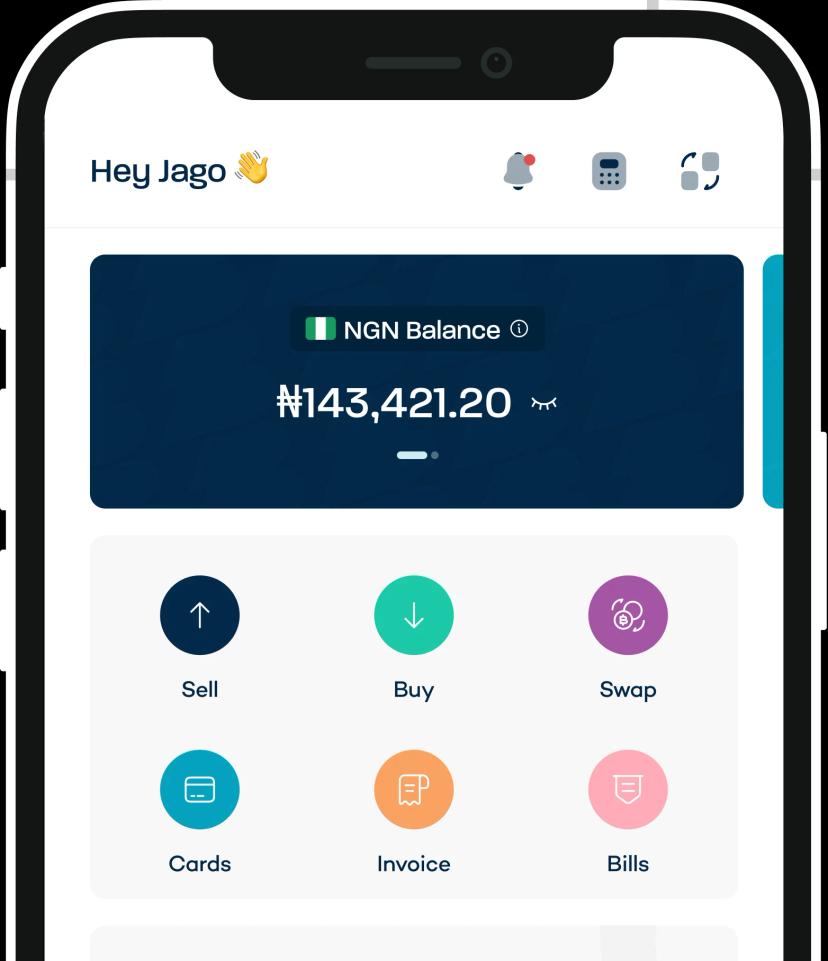
Like Monica, Breet is a fully automated over-the-counter (OTC) platform. This means there is no P2P stress or waiting for a buyer to confirm payment. You send crypto to your Breet wallet address, the platform converts it at the best available rate and the cash arrives in your local bank account in minutes.
The experience is just as clean and automatic as Monica’s. What is different is everything sitting on top of that foundation.
- Breet’s rates are competitive, the settlement is automatic and your full conversion value reaches your bank account swiftly.
- Beyond the fee advantage, Breet is a two-way platform. You can buy crypto on Breet, not just sell it.
- You can hold your proceeds in a USD wallet and choose when to convert to Naira, a feature that gives you real control when the exchange rate is moving against you.
- You can swap between coins without leaving the platform. These are things Monica simply does not offer, and for Nigerian traders who want a single app that handles their full crypto workflow, they matter.
- Breet offers free multi-currency crypto invoicing; you create a professional invoice, share it with your client, and when they pay in crypto, the funds land in your Breet wallet and convert automatically.
It is best for Nigerian and Ghanaian traders who want zero fees including on Bitcoin, a platform they can both buy and sell on, USD wallet flexibility, free invoicing and a genuinely rewarding experience every time they trade.
2. Roqqu
Roqqu is one of Nigeria’s biggest homegrown crypto exchanges in Nigeria, founded in Lagos in 2018 and now operating in Nigeria, Ghana, and Kenya after acquiring Kenyan exchange Flitaa. It has grown to over 1.5 million registered users with reportedly more than 600,000 daily active users
Monica covers 16 coins; Roqqu supports over 141 crypto assets including mainstream altcoins and newer tokens. The platform also supports crypto savings where holdings earn yield, crypto-backed loans, bill payments, and airtime top-ups, all from one app. It even supports Yoruba, Igbo, and Hausa, a detail that reflects genuine local market thinking.
The tradeoff is complexity. Roqqu has more features than most casual users need and lacks the simplicity of Breet or Monica. For active traders who want one platform covering buying, selling, earning, and borrowing against their holdings, it is hard to beat locally.
It is best for active traders holding a variety of coins who want yield on idle crypto and a full-featured Nigerian exchange.
Related:
- Roqqu vs Luno: Which is Better?
3. Quidax
Quidax holds a significant distinction: it was the first Nigerian crypto exchange to receive a provisional Digital Assets Exchange licence from the SEC under the Accelerated Regulatory Incubation Programme in August 2024.
In a market where the 2025 Investment and Securities Act mandates SEC registration for all platforms, that licence is not a minor detail.
Founded in Lagos in 2018, Quidax serves over 600,000 active users and supports a wide range of cryptocurrencies including altcoins and meme coins Monica does not carry. It has a built-in OTC desk for high-volume trades and a B2B crypto payment API for businesses and fintechs. Quidax Academy provides educational content that Monica lacks entirely.
The downsides are notable though. Some users report unpredictable buying fees, customer support is email and ticket only with no live chat and there is no USD wallet or invoicing feature.
4. Busha
Busha launched in Nigeria in 2019 and has earned a reputation as the cleanest, most approachable local exchange. Users consistently describe the interface as feeling like a digital bank; familiar, uncluttered, and easy to use without a deep crypto background.
Like Quidax, it holds a provisional SEC licence, making it one of only two Nigerian exchanges to have cleared that bar.
For someone stepping away from Monica’s simple sell interface, Busha offers a natural next step, a buy and sell experience, Naira deposits and withdrawals via bank transfer, and support for the major coins without overwhelming features. Busha has also pushed into B2B payments with an API that lets fintechs embed crypto-rails under a licensed counterparty. With 500,000+ users and a genuinely polished product, it is a credible platform.
The limitations are a thin coin selection, no advanced trading features and no invoicing tools.
5. Luno
Luno is one of the oldest crypto exchanges operating in Nigeria, founded in 2013 and backed by Digital Currency Group. With 14 million global users and over a decade without major security incidents, it carries institutional credibility that younger local platforms cannot match.
For long-term holders, Luno makes sense. It offers crypto savings products, competitive 0% maker and 0.1% taker trading fees, and a clean interface with direct Naira support.
6. KuCoin
KuCoin is a global exchange and one of the most expansive platforms available to Nigerian traders who want access to altcoins, newer tokens and early-stage projects that local exchanges do not carry.
For Nigerian traders, KuCoin’s main appeal is its depth. If you trade beyond BTC, USDT, and ETH, things like meme coins, micro-cap tokens, or Solana ecosystem projects, KuCoin is often where you find them first. Trading fees start at 0.1% and drop further if you hold KuCoin’s native KCS token.
The platform also offers trading bots, futures trading, staking, and lending products for users who want to put their idle crypto to work.
The limitations for everyday Nigerian users are also worth knowing. There is no direct Naira deposit on the main exchange and the interface can be overwhelming for beginners.
Customer support is also not tailored to the Nigerian market, which matters when something goes wrong. Most Nigerian traders use KuCoin for trading and discovering new coins. You can go on to withdraw to a homegrown platform like Breet when it is time to convert to Naira. That way, you get the coin variety of a global exchange with the settlement speed and zero fees of a local OTC platform.
7. Remitano
Remitano has served West African crypto users since 2014 as a peer-to-peer marketplace with escrow protection. Unlike raw P2P platforms where the risk of fraud is entirely on you, Remitano holds the seller’s crypto in escrow until both parties confirm reducing though not eliminating the vulnerability.
It supports both NGN and GHS trades and offers a Swap feature for instant buy/sell at fixed rates, as well as crypto earn products.
The platform charges a 1% escrow fee, trades can take up to an hour on a slow day, and the experience ultimately depends on which vendor you match with. It is a more structured P2P option than Binance, but still carries the fundamental unpredictability of trading with strangers.
Best for: Users who need P2P flexibility with more structure and protection than a raw marketplace provides.
Frequently Asked Questions (FAQs) on Monica Crypto
Can I Move my Crypto from Monica to Breet?
Yes. Withdraw from Monica to your Breet deposit address on the same network, and the conversion runs automatically once the deposit confirms on-chain.
Does Breet Support more Coins than Monica?
Breet supports over 40 assets including BTC, USDT, ETH, USDC, SOL, BNB, TRX, LTC, DOGE, BCH, AVAX, XRP, and TON. Monica supports 16 coins.
Which Platform is Best for Someone who is New to Crypto?
Breet is the easiest starting point for anyone new to crypto. The process is straightforward: you create an account, get your wallet address, send your crypto and the money enters your bank account automatically in minutes.