You’re probably here because one of these already happened:
- Binance removed the naira services you depended on, so the exchange you learned crypto on no longer pays your bank.
- The app only works properly with a VPN now, since access remains restricted by Nigerian internet providers.
- P2P burned you or someone you know. A fake payment alert, a chargeback after you released your crypto, a buyer who vanished, or a friend’s bank account restricted after a trade that wasn’t even theirs to answer for.
The obvious move is jumping to another P2P marketplace. That’s the trap. Bybit, KuCoin, or MEXC P2P inherit the exact problems that made Binance stressful: anonymous buyers, payment disputes, merchant vetting, and the fear that one bad trade puts your bank account under a Post No Debit order.
To be fair to Binance, it still does its core job well: crypto-to-crypto trading and liquidity remain excellent.
What broke is the naira leg. So this guide compares 6 alternatives by the job you actually need done, whether that’s a fast crypto-to-naira cash-out, a regulated local exchange, or a direct bank withdrawal route.
We start with our own platform, Breet, and we’ll show the reasoning: more than 400,000 users across Nigeria and Ghana use it to convert crypto to naira, cedis, or USD in under five minutes, with no buyer to find and no P2P counterparty at any step.
Ready to cash out without the P2P headache? Download the Breet app.
The 6 top Binance alternatives in Nigeria
Here’s the full list at a glance, grouped by the job each platform does best:
| Platform | Type | Best for | Naira payout | Standout |
| Breet | Automated crypto-to-cash conversion | Fast, safe crypto-to-naira cash-out | Direct to bank, no P2P | Settles in under 5 minutes, no counterparty risk |
| Quidax | SEC-licensed local exchange | A regulated Nigerian platform | Direct naira withdrawals | One of Nigeria’s first provisional SEC licences |
| Luno | Direct naira exchange | Beginners wanting a simple bank rail | Direct bank transfer | Clean interface, straightforward onboarding |
| Monica | Crypto payment and withdrawal platform | Freelancers receiving crypto payments | Direct to bank | Withdrawals built around African users |
| Busha | Nigerian crypto exchange | A local exchange with direct naira support | Direct naira withdrawal | Among Nigeria’s first provisionally licensed exchanges |
| Roqqu | Nigerian crypto exchange | Wider asset selection with local support | Direct naira withdrawal | Nigerian-built, with international transfers |
1. Breet
Best for: Nigerians and Ghanaians who want crypto turned into naira or cedis quickly and safely, with no P2P buyers involved.
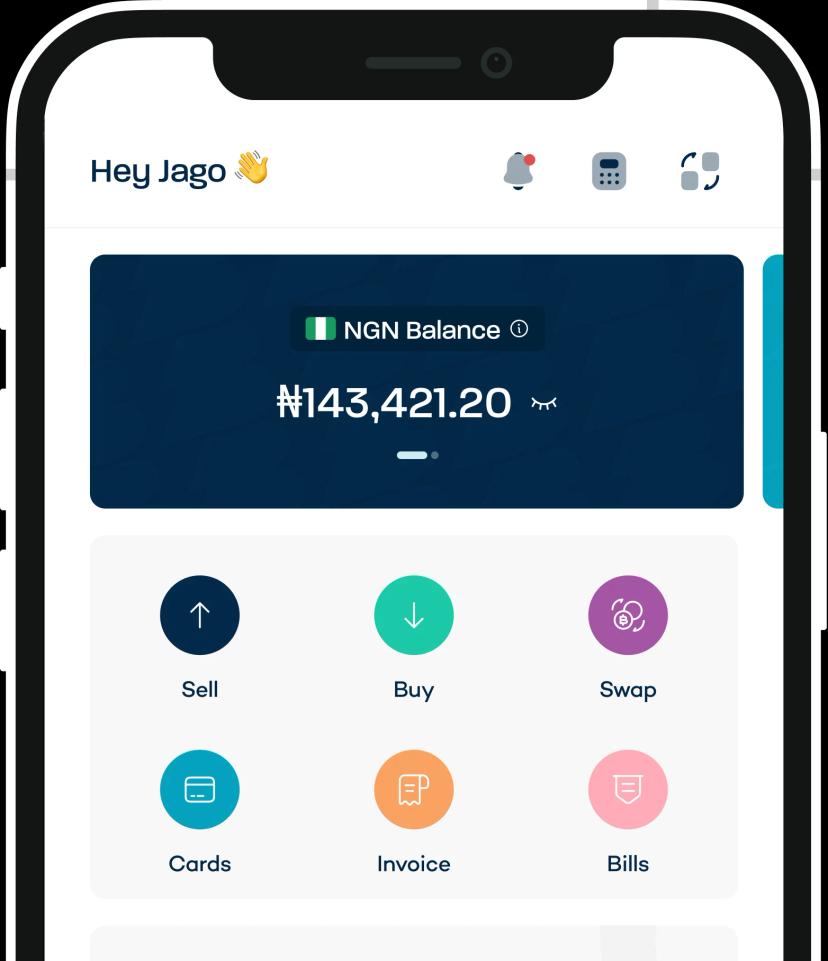
Breet is a crypto conversion platform, not a P2P marketplace and not a futures exchange. You send your crypto, Breet’s automated system converts it at the best available rate, and the money lands directly in your bank account.
It’s operated by Inbreetic Technologies Limited, is PCI DSS compliant, and has processed more than 5 million transactions for over 400,000 users across Nigeria and Ghana.
Breet is built for cashing out, not for leveraged trading or chasing new tokens. For that specific job, the one Binance’s naira exit left undone, here’s why it leads this list.
No stranger on the other side, so no P2P risk
The problem with replacing Binance P2P with another P2P platform is that you’re still relying on an unknown buyer, and that’s where fake payment alerts, chargebacks, and frozen-account stories begin.
Breet removes the counterparty entirely: its automated OTC system buys your crypto directly, so no third party ever sends money into your account, and no buyer’s transaction history can later create problems for you.
Unlike Bybit, KuCoin, or MEXC P2P, there’s no merchant to vet, no payment screenshots to inspect, and no pressure to release crypto before you’re comfortable.
The chargeback nightmare can’t happen because there is no P2P counterparty for it to happen with. If safely converting crypto to naira is your main concern, start selling crypto with Breet.
Naira in your bank in minutes, no VPN required
Transactions settle in under five minutes, paid directly to your Nigerian bank account. There’s no scrolling merchant offers for the best rate, no waiting for a buyer to come online, and no “have you paid?” messages. You initiate the transaction, and the system handles the rest.
Breet also works normally in Nigeria without a VPN and supports both naira and cedi payouts, whether you’re selling Bitcoin, USDT, or any other supported asset.
Automated rates with zero transaction fees
P2P trading turns every cash-out into a negotiation: comparing offers, calculating spreads, and deciding whether a few extra naira justifies the wait.
Breet’s pricing engine removes that work by scanning the market and setting the best available rate automatically, with no transaction fees on conversions. The rate you see before confirming is the rate you receive.
Key features:
- Automated crypto-to-cash conversion
- Direct bank settlement in NGN and GHS
- Buy/sell/swap for supported assets
- Crypto bill payments
- Crypto invoicing
- API payment infrastructure for businesses
- Price alerts
Pros:
- No P2P buyer or seller risk; direct bank settlement in under 287 seconds;
- Built specifically for Nigeria and Ghana
- Breet doesn’t hold customer funds.
Cons:
- Not designed for futures or leveraged trading
- Supports selected assets rather than thousands of altcoins.
- If active trading is your job, pair Breet with an exchange (more on that setup below).
Pricing: Rates are generated automatically, so there’s no manual negotiation.
Reviews: 4.8 on Trustpilot, 4.6 on Google Play, and 4.3 on the App Store, across 5M+ processed transactions.
If your priority is converting crypto to naira quickly and safely, create a Breet account.
2. Quidax
Best for: users who specifically want an SEC-licensed, Nigeria-built exchange with direct naira support.
Quidax is one of the few Nigerian crypto companies operating with a provisional licence from the Securities and Exchange Commission, which makes it attractive if local regulation and a clearer complaints process matter to you.
It supports direct naira deposits and withdrawals, so you can move between crypto and your bank without relying on P2P merchants, and it offers local customer support familiar with the Nigerian banking system.
Key features
- Direct naira deposits and withdrawals
- Buy/sell/swap, staking products
- API access for businesses
Pros:
- Among Nigeria’s first provisionally licensed exchanges
- Direct naira support without P2P
- Local support and a clearer regulatory framework.
Cons:
- Fewer coins and trading products than global exchanges
- Liquidity depends more heavily on local trading activity.
Pricing: Trading and withdrawal fees vary by transaction type and asset.
Reviews: Widely regarded as one of the most established Nigerian exchanges, popular with users who prioritize regulation and naira access over asset variety.
3. Luno
Best for: beginners who want a simple, direct naira bank rail without P2P.
Luno has been in Nigeria’s crypto market for years and remains one of the easiest platforms for a first-timer to understand.
Backed by Digital Currency Group and serving more than 10 million users globally, it offers direct naira deposits and withdrawals through banking partners, so there’s no merchant to find before money reaches your bank.
Key features:
- Direct naira deposits and withdrawals
- Instant buy and sell, recurring purchases, savings wallets, exchange trading with lower fees
- Plus 2FA and cold storage security.
Pros:
- No P2P counterparty
- Beginner-friendly interface
- Established global brand
- Direct bank transfers.
Cons:
- Relatively few supported cryptocurrencies
- A 2% naira withdrawal fee capped at ₦2,000
- Instant buy/sell prices are less competitive than exchange trading
- Occasional banking-partner delays on withdrawals.
Pricing: Spread on instant purchases and sales; exchange trading runs cheaper, including 0% maker and 0.1% taker fees on some pairs.
Reviews: 4.5/5 in reviews compiled by Datawallet, and one of the most trusted beginner platforms in Nigeria. Users often compare it against Breet when choosing between a trading platform and a dedicated cash-out service.
4. Monica
Best for: freelancers, remote workers, and businesses that receive crypto payments and want direct withdrawals to a local bank.
Monica is built around one problem: getting money from crypto into your bank account without a trading exchange or P2P marketplace in the way.
That focus makes it particularly useful for freelancers paid by international clients. Withdrawals are processed directly through the platform, so there’s no rate negotiation and no waiting on a buyer.
Key features:
- Crypto-to-naira withdrawals
- Support for international crypto payments
- Direct bank settlement
- Business payment tools
- Multi-currency support.
Pros:
- No P2P counterparty
- Built for African users receiving crypto payments
- Direct naira withdrawal to the bank.
Cons:
- Smaller product ecosystem than major exchanges
- Not designed for active trading or futures
- Fewer supported assets than global platforms.
Pricing: Fees vary by asset and transaction type.
Reviews: 4.7 on Google Play from more than 10,000 reviews, and increasingly popular among Nigerian freelancers and remote workers.
5. Busha
Best for: users who want a regulated Nigerian exchange with direct naira support and local customer service.
Busha, alongside Quidax, was among the first platforms to receive a provisional SEC licence, and it focuses on making crypto accessible to everyday Nigerians through direct naira deposits and withdrawals.
For users who want a local platform with a clear regulatory path and support that understands Nigerian banking, it’s a strong option.
Key features:
- Direct naira deposits and withdrawals
- Buy/sell/swap, recurring purchases
- Business accounts
Pros:
- Among Nigeria’s first provisionally licensed exchanges
- Direct bank transfers without P2P
- Built specifically for Nigerian users.
Cons:
- Smaller asset selection and lower liquidity than large international platforms.
Pricing: Trading fees and spreads vary by transaction type and asset.
Reviews: 4.4 on Google Play from more than 11,000 reviews.
6. Roqqu
Best for: users who want a wider asset selection while keeping direct naira deposits and withdrawals.
Roqqu combines the simplicity of local Nigerian exchanges with a broader coin range than platforms like Luno, plus direct naira funding and withdrawals.
For users who’ve outgrown beginner platforms but still want a Nigerian exchange with local support, it sits in a useful middle ground.
Key features:
- Direct naira deposits and withdrawals
- A wider range of cryptocurrencies, crypto remittance services, and mobile plus web platforms.
Pros:
- More assets than many local exchanges
- Direct bank transfers
Cons:
- Smaller trading volumes than global exchanges
- Fewer advanced trading tools.
Pricing: Trading fees vary by asset and transaction type.
Reviews: 4.2 on Google Play from more than 5,000 reviews.
How to choose without repeating the Binance mistake
The biggest mistake Nigerians make after leaving Binance is replacing it with a platform that recreates the same problems. If your issue was waiting on buyers, chargeback anxiety, or bank-account risk, moving from Binance P2P to another P2P marketplace changes the logo while the risk stays identical.
Ask three questions before signing up:
Do I need to trade, or do I just need to cash out? If the goal is to sell crypto for naira quickly, a conversion platform like Breet removes every unnecessary step. If you need futures, margin, or hundreds of altcoins, a global exchange still makes sense for that half of the job.
Am I comfortable with a stranger on the other side of the trade? P2P means vetting merchant ratings, verifying payments, and absorbing counterparty risk. Automated OTC platforms remove the counterparty entirely.
Does the platform pay naira directly into my bank, or do I sell to a merchant first? Some platforms settle straight to Nigerian bank accounts; others route you through a merchant before you touch naira. That distinction matters more than any feature list.
The pattern behind rising searches for how to withdraw from Binance to a Nigerian bank account and how to convert crypto to dollars in Nigeria is the same reality: the old all-in-one Binance workflow no longer exists in Nigeria.
Keep the exchange, fix the cash-out
The smartest setup for most Nigerians in 2026 isn’t replacing Binance with another all-in-one app. It’s two tools: a global exchange for trading, and a clean off-ramp for cashing out, so a bad P2P trade never gets the chance to touch your main bank account.
For the cash-out half, Breet sells your crypto for naira in minutes, with no buyer to wait for, no merchant to vet, and no P2P counterparty between your crypto and your bank.
Ready to fix the cash-out side? Download the Breet app.
Frequently asked questions
Does Binance still work in Nigeria in 2026?
Partially. Crypto-to-crypto trading and external withdrawals still work, but Binance no longer supports naira services, and access remains restricted by Nigerian internet providers, which is why many users need a VPN.
What’s the safest way to sell crypto for naira now?
Automated OTC platforms such as Breet remove the P2P counterparty entirely, which eliminates the main sources of chargeback fraud, fake payment proofs, and frozen-account risk found on open P2P markets.
Can my bank account be frozen because of crypto transactions?
Yes. Nigerian authorities have frozen more than 1,100 accounts linked to suspicious crypto activity, and Post No Debit restrictions can stay in place for months during investigations. The risk is highest when receiving funds from unknown P2P buyers.
Is crypto legal and taxable in Nigeria?
Ownership and trading are legal and now fall under SEC oversight. Crypto gains may be taxable from January 2026, depending on your circumstances and applicable exemptions. This is not tax advice; speak with a qualified tax professional.
Which is faster, P2P or Breet?
Breet settles directly to your bank in under 287 seconds, with no waiting for a buyer, payment confirmation, or merchant approval. That makes it significantly faster than most P2P transactions.