Bitcoin vs Bitcoin Cash, which is better? What are the differences? Which has a higher fee?
After this read, you’ll understand what Bitcoin Cash is, how it was created, the differences and similarities between Bitcoin and Bitcoin Cash, what a blockchain fork is, and which cryptocurrency might be better for you, including where to trade them.
Let’s get into the full Bitcoin vs Bitcoin cash analogy.
Related:
- How to Create a Bitcoin Wallet Address in Nigeria in Seconds
What Is Bitcoin?
Bitcoin introduced both a digital currency, BTC, and a blockchain, a decentralized ledger that records transactions in blocks validated by miners through Proof of Work.
To protect the network from spam and abuse, Bitcoin launched with a fixed 1 MB block size limit, meaning only a limited number of transactions could be processed every time a new block was added to the chain.
In Bitcoin’s early years, this worked well as adoption was small and usage was limited to niche communities, but as Bitcoin gained traction following early price rallies between 2011 and 2017, transaction volume increased significantly.
More users competing for limited block space led to slower confirmations and rising fees, at times making Bitcoin transactions expensive and impractical for everyday payments.
As congestion worsened, it became clear that Bitcoin needed to scale, but the community disagreed on how this should be done. One camp supported keeping small blocks and scaling gradually through upgrades like SegWit and second layer solutions such as the Lightning Network, which over time shifted Bitcoin toward a store of value narrative.
The other camp believed this approach moved Bitcoin away from Satoshi’s original vision of peer to peer cash and argued that scaling should happen directly on chain by increasing the block size, a disagreement that ultimately led to the creation of Bitcoin Cash.
The Birth of Bitcoin Cash
On August 1, 2017, the disagreement resulted in a hard fork. The Bitcoin network split into two separate blockchains:
- Bitcoin (BTC), which kept the smaller block size and later adopted Segregated Witness
- Bitcoin Cash (BCH), which increased the block size to support faster and cheaper transactions
Related:
- How to Trade Bitcoin in Nigeria: Complete Guide
What is Bitcoin Cash (BCH)?
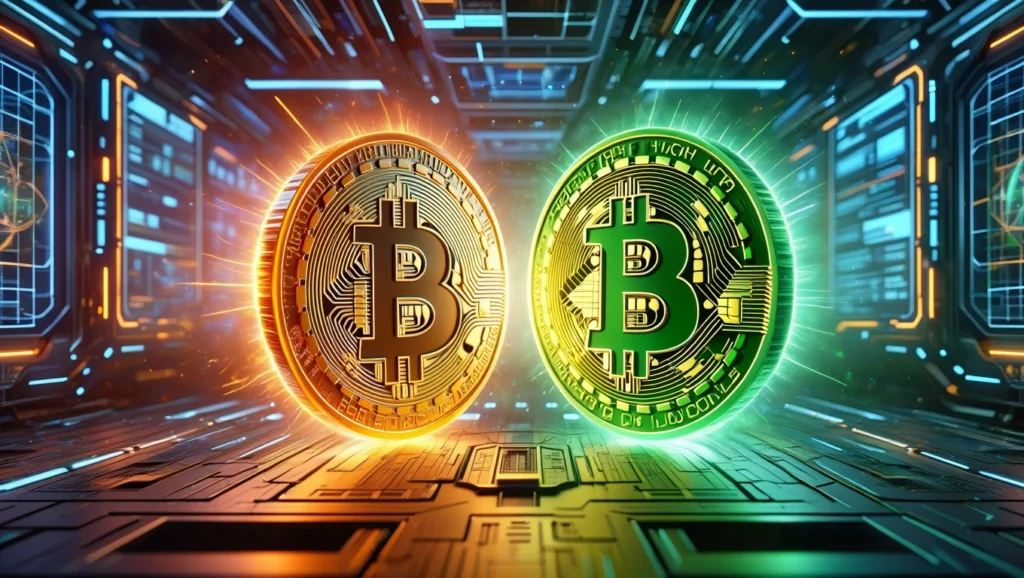
Bitcoin Cash (BCH) is a cryptocurrency and a peer-to-peer electronic cash system designed for fast payments, low fees, and larger block sizes. Its goal is to function as usable digital money rather than just a long-term store of value.
Like Bitcoin, Bitcoin Cash is decentralized and permissionless. It does not require banks, governments, or any trusted third parties to operate.
Bitcoin Cash (BCH) split from Bitcoin after parts of the early Bitcoin community and developers disagreed on how Bitcoin should scale as more people started using it.
In simple terms, if Bitcoin was created as an alternative to traditional fiat money, Bitcoin Cash was created in August 2017 as an alternative version of Bitcoin itself. It came into existence through a hard fork of the Bitcoin blockchain, driven by disagreements over scaling and the SegWit upgrade.
Bitcoin vs Bitcoin Cash: Key Differences
Although Bitcoin (BTC) and Bitcoin Cash (BCH) share the same origin. Over time, their approach to solving the scalability problem has led to clear differences in how they work and how people use them.
| Features | Bitcoin | Bitcoin Cash |
| Block Size | Up to 4MB in theory | 32 MB |
| Transaction Fees | Typically higher depending on traffic | lower |
| Transaction Speed | Depends on congestion | More predictable |
| Wallet Addresses | starts with ‘1’,’ 3′, or “bc1” | Starts with “bitcoincash:” or ‘q’ |
| Use Case/ideological direction | Typically: store of value and Long-term investment | Originally a medium of exchange |
1. Wallet Addresses
Since Bitcoin Cash (BCH) was created through a hard fork from Bitcoin, they now exist on separate blockchains, and each has its own wallet addresses.
- Bitcoin (BTC) addresses usually start with 1, 3, or bc1.
- Bitcoin Cash (BCH) wallet addresses often use the CashAddr format, starting with ‘q’ or ‘bitcoincash:’, to clearly distinguish them from Bitcoin addresses.
You should never send Bitcoin to a Bitcoin Cash wallet address, or Bitcoin Cash to a Bitcoin wallet address. Doing so may result in permanent loss of funds.
2. Block Size
Bitcoin originally had a maximum block size of 1 MB. With the Segregated Witness (SegWit) upgrade, Bitcoin now uses a concept called block weight, which allows a theoretical block capacity of up to about 4 MB, depending on the types of transactions included.
Bitcoin Cash increased the block size limit at launch to 8 MB. This limit was later expanded, and today Bitcoin Cash supports block sizes of up to 32 MB.
The larger block size on Bitcoin Cash allows more transactions to fit into each block, which helps keep transaction fees low and reduces congestion on the network.
3. Transaction Speed
Bitcoin processes transactions roughly every 10 minutes per block. During periods of high network activity, transactions can take longer to confirm unless higher fees are paid.
Bitcoin Cash also targets 10-minute blocks, but because it supports larger blocks and usually has less congestion, transactions are often confirmed slightly faster and more consistently.
4. Transaction Fees
Bitcoin fees are market-driven. When many people are competing to get into the next block, fees increase. During busy periods, fees can rise significantly, making small payments impractical.
Bitcoin Cash was designed to keep fees very low. Because more transactions can fit into each block, fees are typically just a fraction of a dollar, even when the network is active.
Read Also:
5. Adoption and Ecosystem
Bitcoin has the largest user base, the highest market value, and the strongest brand recognition in the crypto space. It is widely viewed as digital gold and a long-term store of value.
Bitcoin Cash has a smaller but active community focused on payments. It is used more often for everyday transactions, tipping, and peer-to-peer payments where low fees matter.
6. Use Cases
Bitcoin is commonly used as a store of value, long-term investment, and held in institutional treasuries.
Bitcoin Cash is positioned as a medium of exchange designed for fast, low-cost payments and everyday spending.
It is hard for a token to be an effective medium of payment when the price could go up. It becomes more attractive as an investment. Despite Bitcoin Cash’s positioning, it has not really caught on in payments.
Similarities: Bitcoin vs Bitcoin Cash
Despite their differences, Bitcoin (BTC) and Bitcoin Cash (BCH) still share a lot in common because they come from the same original codebase.
| Similarities | Bitcoin | Bitcoin Cash |
| Consensus Mechanism | Proof-of-Work | Proof-of-Work |
| Maximum Supply | 21 million | 21 million |
| Halvings | Roughly every 4 years | Roughly every 4 years |
| Source Code Origin | Same initial codebase | Same initial codebase |
Both Use Proof of Work
Both Bitcoin and Bitcoin Cash are Proof of Work blockchains. This means they rely on miners who use computing power to secure the network, validate transactions, and add new blocks to the blockchain.
Miners on both networks compete to solve cryptographic puzzles. The first miner to solve it gets to add the next block and earns rewards in the form of newly created coins and transaction fees.
Same Origin and Technology
Bitcoin Cash was created from Bitcoin’s code, so both networks share the same foundational technology, including:
- A public, transparent blockchain
- Fixed supply rules written into the protocol
- A decentralized, permissionless network with no central authority
The Same Capped Maximum Supply
Both Bitcoin and Bitcoin Cash have a capped maximum supply of 21 million coins. No more than this amount can ever be created, which is why both are often described as inflation-resistant assets.
Both Have Halving Events
Halving reduces the rate at which new coins are created, helping control supply and reinforce scarcity over time. This mechanism plays a major role in the long-term economics of both Bitcoin and Bitcoin Cash.
Both networks have halving events. Roughly every four years, the block reward given to miners is cut in half.
For You:
- The Best Crypto to Fiat API in Nigeria for Developers
Which Is Better: Bitcoin or Bitcoin Cash?
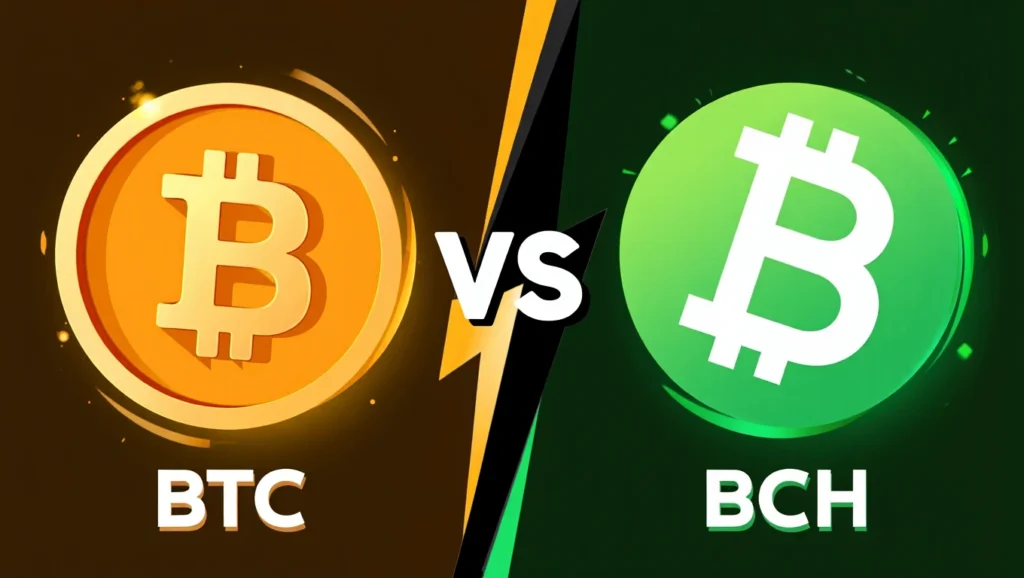
There isn’t a single “better” option; it depends on what you want to use it for.
1. For Long-Term Investment or Digital Gold: Bitcoin (BTC)
- Bitcoin is often called digital gold because of its scarcity, strong brand, and wide adoption.
- It’s the preferred choice for investors looking for a hedge against inflation or a store of value.
- BTC’s large user base, high liquidity, and market dominance make it easier to buy, sell, or hold as part of an investment portfolio.
2. For Payments and Lower Fees: Bitcoin Cash (BCH)
- Bitcoin Cash was designed to be peer-to-peer electronic cash.
- Larger block sizes allow faster transactions and very low fees, making it more practical for everyday payments, tipping, or microtransactions.
- BCH is better suited for online commerce or small peer-to-peer payments, especially when low cost and speed matter.
- Some projects are exploring BCH for smart contracts and simple DeFi applications, though it is less widely used in this space than Ethereum or BTC-based layers.
Where to Trade Bitcoin and Bitcoin Cash for Cash?
Crypto Exchanges & Apps
Bitcoin is the most widely adopted cryptocurrency in the world. Almost every centralized exchange supports BTC trading, making it the most accessible and liquid crypto asset.
Most exchanges also support Bitcoin Cash. To see the full list of exchanges that support BTC and BCH, see here, respectively pages on sites like Coingecko or Coinmarketcap.
Selling Bitcoin or Bitcoin Cash in Nigeria?
If you’re in Nigeria or Ghana, converting your Bitcoin or Selling your Bitcoin Cash to Naira or Cedi is easier than ever, thanks to Breet.
On Breet, you can:
- Sell Bitcoin easily
- Convert BTC to Naira or Cedi
- Withdraw directly to your bank account in your local currency
- Enjoy fast payouts without the stress of P2P
Don’t Miss:
Frequently Asked Questions on Bitcoin vs Bitcoin Cash
Does Bitcoin Cash have its own Blockchain?
Yes. Bitcoin Cash is a separate blockchain that split from Bitcoin in 2017. While it shares Bitcoin’s history up until the split, BCH transactions are recorded on its own independent chain and follow slightly different rules, including larger block sizes for faster, lower-fee transactions.
What Is The Downside To Bitcoin Cash?
One major downside of Bitcoin Cash is its lower adoption compared to Bitcoin. Fewer merchants, exchanges, and institutions support BCH, which limits its real-world usage. Bitcoin Cash also has less network security and developer activity than Bitcoin, making it less resilient in the long term.
Why Is BCH Cheaper Than Bitcoin?
Bitcoin Cash is cheaper than Bitcoin mainly because of lower demand and adoption. Bitcoin is widely seen as digital gold and a long-term store of value, while Bitcoin Cash is primarily focused on payments. Lower demand, fewer investors, and less institutional interest keep BCH’s price significantly lower than BTC.
Is Bitcoin Cash the real Bitcoin?
No. Bitcoin Cash is a fork of Bitcoin, meaning it was created from Bitcoin’s original code but now exists as a completely separate cryptocurrency.
Is Bitcoin Cash A Good Investment?
Bitcoin Cash has utility as a fast and low-fee payment network, but it also carries higher risk. Its price history has been more volatile, and it has not gained the same level of trust or adoption as Bitcoin. Whether it is a good investment depends on your risk tolerance and belief in BCH’s long-term use case.
What’s the difference between BTC and BCH?
The main differences are:
- Block size: BTC has smaller blocks (up 4 MB), BCH has larger blocks (up to 32 MB)
- Transaction speed and fees: BCH is generally faster and cheaper for payments
- Wallet addresses: BTC and BCH use different addresses. Sending BTC to a BCH wallet or vice versa can result in lost funds
- Adoption and ecosystem: BTC has the largest user base and global recognition, while BCH has a smaller, payment-focused community
What is better, Bitcoin or Bitcoin Cash?
It depends on your purpose:
- Bitcoin (BTC) is better for long-term investment, digital gold, or hedging against inflation
- Bitcoin Cash (BCH) is better for fast, low-fee payments, tipping, or everyday transactions
Both are decentralized and secure, but the “best” one depends on your goals.
When did Bitcoin Cash come out?
Bitcoin Cash was launched on August 1, 2017 through a hard fork of the Bitcoin blockchain. This split happened because the community disagreed on how Bitcoin should scale to handle more transactions and reduce fees.
Can I Convert BCH To BTC?
Yes, you can easily convert Bitcoin Cash to Bitcoin. Most crypto exchanges and swap platforms allow you to trade BCH for BTC directly. You can also sell BCH and use the proceeds to buy BTC, depending on the platform you use.