If someone told you five years ago that Nigerian businesses would be receiving payments through stablecoins, settling invoices with digital assets, and using stablecoins to protect against currency volatility, you might have laughed.
Today, that’s simply business.
I recently had a conversation with Tolu, a digital agency founder in Lagos, and I was left shocked and impressed at how much adoption has happened in the digital assets space in the last couple of years and even right now.
Every time a client in Canada needed to pay him $5,000 for a completed project, he chose to collect that payment using stablecoins, and his reason was that the traditional route meant waiting hours to days for an international transfer, paying multiple banking fees, and hoping the exchange rate doesn’t move against him before the money arrives.
But when the client paid with USDT instead, he’d get his money within minutes and convert it to naira when he needed local liquidity.
For thousands of Nigerian businesses, this is no longer an experiment or a speculation; it’s becoming standard operating procedure, and the numbers tell a fascinating story.
Nigeria Is One of the World’s Biggest Crypto Markets
Nigeria continues to rank among the world’s leading countries for grassroots crypto adoption.
According to Chainalysis’ 2025 Global Crypto Adoption Index, Nigeria remains one of the top crypto-adopting countries globally, driven largely by practical use cases such as payments, savings, remittances, and cross-border commerce.
But adoption within this space isn’t just about investors buying Bitcoin; it’s increasingly about businesses moving money, about the infrastructure that powers these bulk movements.
More Than 22 Million Nigerians Own Cryptocurrency
According to Triple-A’s cryptocurrency ownership data, more than 22 million Nigerians own cryptocurrency, representing approximately 10.3% of the country’s population.
That’s a larger user base than many banks serve, and for business owners, this means crypto is no longer a niche payment method.
A growing percentage of your customers, suppliers, freelancers, and partners already understand how digital assets work.
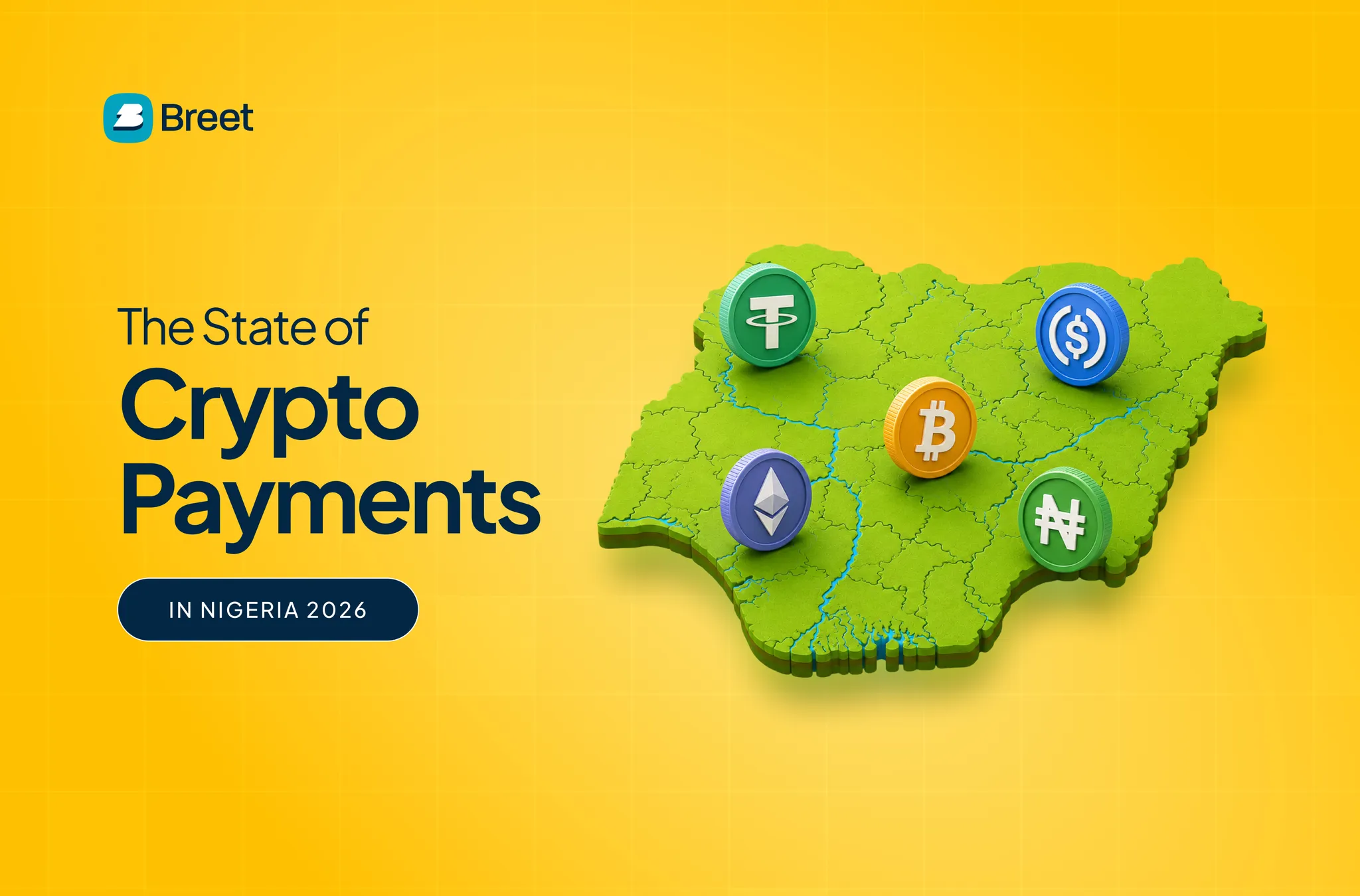
Now, a lot of times, when most people hear “crypto,” they think of Bitcoin, but what we see is an increasing number of Nigerian businesses using stablecoins. Stablecoins are cryptocurrencies designed to maintain a stable value. For example:
- USDT aims to stay equal to $1
- USDC aims to stay equal to $1
Unlike Bitcoin, whose price can move significantly, stablecoins are designed for spending, saving, investing, and payments.
And Nigerians are embracing them at scale.
According to the 2025 Report on the State of Digital Assets Regulation in Africa, Nigeria leads the world in stablecoin adoption and has approximately 25.9 million digital asset users.
For businesses, this matters because stablecoins solve a real problem: moving dollar value quickly without relying entirely on traditional banking rails.
Why Businesses Are Choosing Crypto Payments
Most founders are not adopting crypto because it’s trendy; they’re adopting it because it solves expensive problems.
-
Faster International Payments
- Traditional international transfers can take several days.
- Stablecoin transactions often settle within minutes.
-
Reduced FX Friction
Many Nigerian businesses lose money through:
- Exchange rate spreads
- Conversion costs
- Delayed settlements
Stablecoins provide access to dollar-denominated value without some of those layers of friction.
Regulation Is No Longer the Question
One reason businesses hesitated in the past was uncertainty.
That changed with the Investments and Securities Act (ISA) 2025.
The law formally recognizes digital assets within Nigeria’s regulatory framework and places oversight under the Securities and Exchange Commission (SEC).
For serious businesses, this creates something that was previously missing:
Clarity.
The conversation is shifting from:
“Is crypto legal?”
To:
“How do we use it responsibly and compliantly?”
The most important takeaway from 2026 isn’t that crypto adoption is growing.
It’s why it’s growing.
Businesses are choosing crypto because it helps them:
- Move money faster
- Reduce payment friction
- Access dollar liquidity
- Reach global customers
- Operate beyond traditional banking limitations
The businesses gaining the most value aren’t necessarily crypto companies. They’re exporters.
- Agencies.
- Freelancers.
- Importers.
- Remote teams.
- E-commerce brands.
- And any company that sends or receives money internationally.
Crypto payments in Nigeria have moved beyond speculation. The data shows a market that is rapidly becoming part of everyday business operations.
With more than 22 million crypto owners, roughly 25.9 million digital asset users, and nearly $22 billion in stablecoin transaction activity, Nigeria has become one of the most important digital asset markets in the world.
For business owners, the question is no longer whether crypto payments matter.
The question is whether your business is prepared for a future where customers, suppliers, and partners increasingly expect them.
Businesses that understand this shift early will have more payment options, greater flexibility, and better access to the global economy than those that wait for everyone else to move first.