- What "Stablecoin For Business Payments" Actually Means
- Use Case 1: Pay Overseas Suppliers (And Access Dollars To Do It)
- Use Case 2: Get Paid By Foreign Customers And Clients
- Use Case 3: Hold Value Against Local FX (Lightweight Treasury)
- Use Case 4: Pay Contractors And Teams Across Borders
- Which Use Cases Are Realistic For Your Business?
- Four Steps to Start Accepting Stablecoins
- Are Stablecoin Business Payments Legal In Africa?
- Conclusion
- Frequently Asked Questions
“Stablecoin for business payments” isn’t one thing. It’s a handful of specific jobs: paying overseas suppliers, getting paid by foreign customers, holding value against a falling local currency, and paying people across borders. Your cue to support stablecoin payments depends on which of these jobs you actually have and which cost your business the most money.
Supplier payments are already the number one corporate use case, with 62% to 77% of adopters naming it their top reason. Visa hit a roughly $4.5 billion annualized stablecoin settlement run rate by January 2026. Mainstream infrastructure, not an experiment. In Africa, stablecoins make up about 43% of crypto transaction volume, and Nigeria alone moved roughly $22 billion in stablecoins between July 2023 and June 2024.
This guide maps stablecoin payments to the jobs an African business actually has, says which ones are realistic for your size, and shows how to start.
What “Stablecoin For Business Payments” Actually Means
A stablecoin is a digital dollar (or other fiat currency) that holds its value. You get blockchain speed and cost without crypto’s volatility.
USDT and USDC are the most popular for payments. Why? Because they are pegged roughly 1:1 to the US dollar, available 24/7, and have free correspondent banks. That’s why businesses use them wherever traditional rails are slow or costly.
Hold this thought through every use case below: a stablecoin payment only works for your business if local money can get onto the rail and back off it as spendable currency.
Use Case 1: Pay Overseas Suppliers (And Access Dollars To Do It)
Paying suppliers is the top reason businesses adopt stablecoins. In Africa, it solves a second problem global guides rarely center: getting dollars at all.
Importers and distributors increasingly prefer stablecoins for settling invoices because they’re easier to access than bank dollars. A typical SWIFT payment routes through two to four correspondent banks, each adding fees and delays. A single USD-to-NGN transfer can cost $45 to $120 in fees alone before the exchange rate markup. The bottleneck isn’t only cost. It’s accessing dollars when banks ration foreign exchange.
What you want as a business owner is to:
- Hold or convert into USDT or USDC from your local currency
- Send to the supplier the same day
- Get a settlement in minutes for cents. No domiciliary account, no FX queue
Using Breet, you simply fund from naira or cedis and convert to USDT/USDC to pay, or hold dollars for recurring suppliers. For large payments, the VIP OTC Desk handles volume without slippage. However, for paying many suppliers in many local currencies, Breet is the dollar and stablecoin settlement plus NG/GH off-ramp layer, paired with local rails elsewhere.
Use Case 2: Get Paid By Foreign Customers And Clients
If foreign customers or clients pay you, stablecoins cut the roughly 6.5% average cross-border cost by up to 90%. A week-long wait becomes minutes. Sub-Saharan Africa has it worse: the average cost there is 7.73% according to the World Bank, making it the most expensive region in the world for cross-border payments.
Who’s this for?
- Exporters and importers receiving payments from abroad
- Agencies and freelancers with international clients
- SaaS platforms and marketplaces with diaspora or overseas customers
- Any business losing margin to bank fees and delays on inbound payments
Accept USDT or USDC inbound. The payment settles automatically to naira or cedis, or you hold it as dollars.
Breet provides wallet addresses plus webhooks for product checkouts or a crypto invoice for client-based work. Payment auto-converts and lands in a bank account, mobile money, or a stablecoin balance. No code is needed for invoice-based payments.
Use Case 3: Hold Value Against Local FX (Lightweight Treasury)
A business earning local currency but carrying dollar costs can hold value in stablecoins instead of losing it to depreciation. Or queuing for rationed foreign exchange.
The naira lost 40.9% against the dollar in 2024 alone. For a business paying for overseas tools or raw materials in dollars, that erosion compounds monthly.
- Keep part of the revenue in USDT or USDC as a dollar hedge
- Convert to naira or cedis on demand for local payables
- No nostro accounts in multiple currencies. Less capital locked up
This is a lightweight treasury, not a corporate treasury suite. Right for an SME, not a multinational running DvP commodity settlement.
With Breet, you can settle inbound payments to USDT/USDC to hold dollars. Convert to local fiat when you need to. One provider, both directions.
Use Case 4: Pay Contractors And Teams Across Borders
Stablecoins are increasingly how businesses pay offshore contractors and dollar-preferring staff. But the practical crux is the recipient’s cash-out.
- Pay in USDT or USDC
- The recipient converts to local currency
The catch in Africa is doing that cash-out cleanly, not through risky P2P trades. Breet can be the cash-out layer. USDT or USDC to naira or cedis, instantly to bank or mobile money.
You can also use its capabilities for payroll by pairing it with a payroll platform or use it directly for a few contractors.
Which Use Cases Are Realistic For Your Business?
Not every use case fits every business. Match them to your size and type.
- SME importer or exporter: Supplier payments plus FX hold. Start there.
- Agency, freelancer, or SaaS: Getting paid by clients is the primary use case.
- Marketplace or fintech: Accept payments and build on infrastructure. Wallets, webhooks, conversion at scale.
- Large enterprise: Full treasury is mostly beyond an SME’s needs today.
| Business Type | Top Use Case | What You Need | Realistic Today? |
| SME importer | Supplier payments + FX hold | On-ramp from NGN/GHS, USDT/USDC, OTC for volume | Yes |
| Exporter / agency | Get paid by clients | Inbound stablecoin addresses, auto-settle to bank | Yes |
| SaaS / marketplace | Accept payments + infrastructure | API with wallets, webhooks, and per-customer addresses | Yes |
| Fintech / builder | Embed stablecoin rails | Full API, sandbox, settlement options | Yes |
| Large enterprise | Full treasury | Multi-currency disbursement, DvP settlement | Partially |
Pick the one or two jobs you actually have today and ignore the ones that don’t apply to you.
Four Steps to Start Accepting Stablecoins
Getting started is four simple decisions, not a project.
1. Pick your use case: Supplier payments, getting paid, FX hold, or contractor pay.
2. Pick your stablecoin: USDT for deepest African liquidity and off-ramp availability. USDC when compliance, reputation, and institutional trust matter most. Choose a low-fee chain. Tron (TRC-20) is most common for cross-border USDT because transfers cost roughly 1 USDT flat.
3. Choose infrastructure that handles the on- and off-ramp: Wallets, conversion, settlement, local cash-out, without you building or custodying anything. This is the step that makes or breaks the setup.
4. Confirm compliance: Use a KYC and AML provider so the crypto leg of your payments is auditable. Under Nigeria’s ISA 2025, all VASPs must register with the SEC. Use a licensed provider, and their compliance covers your business.
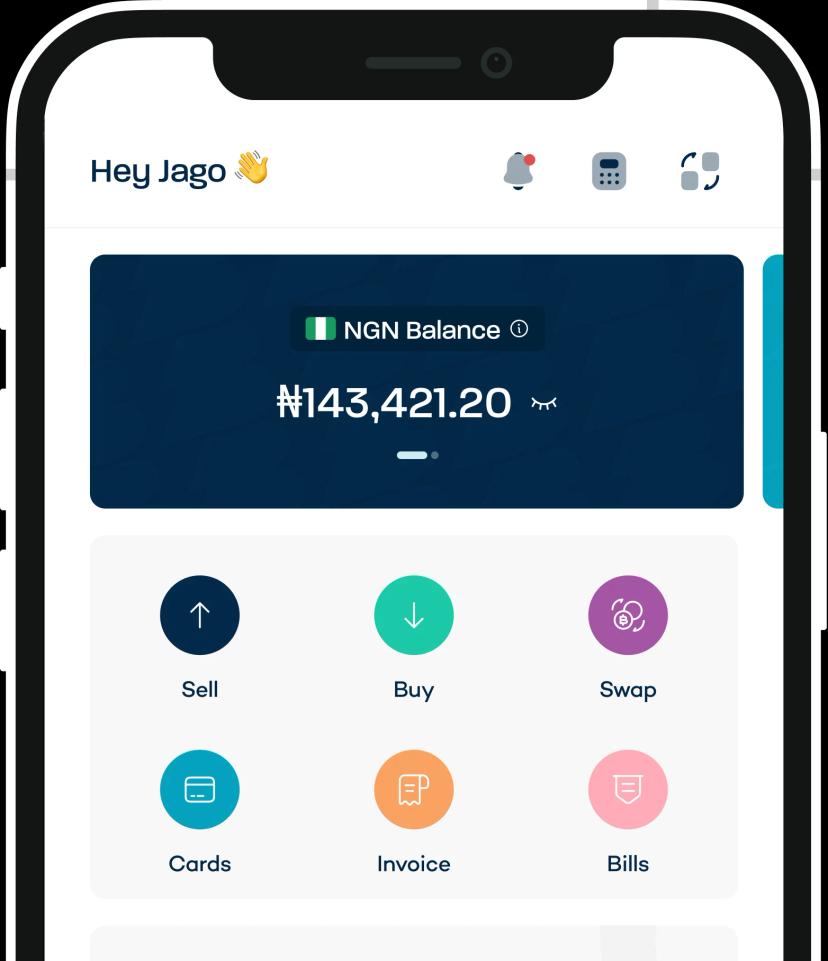
Breet’s Crypto and Stablecoin API gives you wallet addresses, webhooks, and automatic conversion to USDT, USDC, naira, or cedis. Settlement to bank, mobile money, or stablecoin wallet. Flat from 0.5%. No setup fees, no monthly fees, full KYC and AML compliance. You never custody crypto or run blockchain infrastructure.
Every use case comes down to one question: how does local money get onto the stablecoin rail, and how does it come back off as money you can spend?
Cardtonic integrated Breet’s API to enable USDT and USDC top-ups for virtual dollar cards. Integration took two days from sandbox to production. Zero downtime since. Their CEO: “Breet actually wants startups in the ecosystem to succeed. You can tell the difference between a company that says that and a company that means it.”
Breet’s local rails are naira and cedis, plus USD-stablecoin settlement everywhere. It’s the receive, convert, and settle layer, not a treasury suite or payroll platform. Pair with local rails for ZAR or KES disbursement.
Book a demo and see how stablecoin payments fit your business
Check the API documentation
Are Stablecoin Business Payments Legal In Africa?
Yes, in the major markets, under frameworks that are being formalized. Use a compliant provider and mind the legal-tender line. Information as of June 2026.
Nigeria: The Investments and Securities Act 2025 treats stablecoins as securities under SEC regulation. Crypto is legal, but the naira remains the only legal tender. All VASPs must register with the SEC. Nigeria was removed from the FATF grey list in October 2025.
Kenya: The Virtual Asset Service Provider Act 2025 places oversight with the Central Bank of Kenya and the Capital Markets Authority. Crypto is classified as an asset, not legal tender.
South Africa: Crypto is a financial product under the Financial Sector Conduct Authority. Regulation is progressing toward formal licensing.
Ghana: The Bank of Ghana is progressing virtual-asset rules, with frameworks under development.
What this means for your business:
- Paying and getting paid in stablecoins is workable. Use a licensed provider.
- Crypto isn’t legal tender in any of these markets. Keep tax and salary or PAYE obligations in local currency, and maintain clean conversion records.
- Use a provider with full KYC and AML processes.
However, this is general information and not legal or tax advice. Confirm with a local professional and primary regulator sources.
Conclusion
Stablecoins for business payments aren’t a single move. It’s a set of jobs: pay suppliers, get paid, hold dollars, pay people. The businesses that win pick the one or two they actually have and execute them on compliant rails.
Judge any stablecoin setup by its on- and off-ramp. Can you get local money on and naira, cedis, or dollars off, cleanly and compliantly? That test, not the technology, decides whether it works.
As adoption matures and African regulation formalizes, the use cases that are enterprise-only today will open up to SMEs next.
Book a demo and get started
Frequently Asked Questions
What does “stablecoin for business payments” mean?
A stablecoin is a digital currency pegged to a stable asset, usually the US dollar. For business payments, it means using coins like USDT or USDC to send and receive money globally with fiat stability and blockchain speed.
Can businesses use stablecoins to pay overseas suppliers?
Yes. Supplier payments are the number one corporate use case. Hold or convert into USDT/USDC, send to the supplier same-day, settlement in minutes for a fraction of SWIFT costs.
How do I accept stablecoin payments as a business?
Connect to a licensed crypto payment provider that generates wallet addresses, detects incoming payments, and settles to your bank or stablecoin wallet. With Breet, you can go live within days through a single API integration or payment links.
Are stablecoin business payments legal in Africa?
Yes, in the major markets. Nigeria’s ISA 2025 regulates stablecoins as securities. Kenya’s VASP Act 2025 and South Africa’s FSCA framework classify crypto as an asset or financial product. Crypto isn’t legal tender in any of these markets, so local currency obligations still apply. Use a licensed, KYC-compliant provider.
Which stablecoin should my business use?
USDT for deepest liquidity and off-ramp availability in Africa, especially on Tron, where transfers cost roughly 1 USDT. USDC when compliance reputation matters most. Many businesses use both.