- The Raise Was the Easy Part: Why Rails Decide Runway
- Leak 1: Settlement Speed is Tying Up Your Working Capital
- Leak 2: Cross-border Corridors are Skimming Every Transaction
- Leak 3: Accepting Crypto is Costing You More Than it Should
- How Breet Closes all Three Leaks
- A Quick Gut-check Before Your Next Board Meeting
- Final Thoughts
Raising the round was the hard part. Keeping the money is the part nobody warned you about, and your payment rails are quietly deciding how much of it survives your first year of scale. You’ve seen the payments line on the board deck creep uncomfortably high, and the only answer anyone offers is “that’s just how African payments work.”
This isn’t another “African payments are broken” think-piece. It names the three leaks draining funded startups, puts numbers on them, and shows how to fix the rails. If your startup payment infrastructure is an afterthought, it’s the most expensive afterthought on your P&L.
The Raise Was the Easy Part: Why Rails Decide Runway
Payment infrastructure isn’t a back-office detail. In a capital-efficient way, it’s a board-level lever that quietly sets how far your raise actually goes.
The SERP is full of pieces about how “African payments are fragmented.” True, but useless to an operator, because fragmentation isn’t an abstract continent problem. It’s a line item leaking from your specific company, month after month, in money you already raised. Reframe it that way, and it stops being macro commentary and starts being a number you can fix.
Three leaks do most of the damage: settlement speed, cross-border and FX cost, and crypto-acceptance friction. The rest of this article quantifies each one. And the timing matters, because funding is tighter and more scrutinized than it was; every point of margin lost to rails is runway you don’t get back, and there’s no easy bridge round waiting to replace it.
Leak 1: Settlement Speed is Tying Up Your Working Capital
When settlement takes days, your money sits in transit instead of working. That lag is a hidden tax on every cross-border transaction you run.
Correspondent-bank transfers take two to five business days, and when they miss a cut-off, they roll into the next week. Picture paying a supplier or a contractor across an African border: the money leaves your account, disappears for four days, and your finance lead rebuilds the reconciliation by hand when it lands. Now multiply that by the hundreds of transactions you run a month.
The damage compounds beyond the cash itself. Slow settlement caps how fast you can pay, restock, or expand into a new market, because you’re always waiting on money you’ve technically already sent. It gates growth, not just cash flow. Moving to faster rails, like the ones that let you convert and settle crypto to fiat in minutes, closes the gap.
Leak 2: Cross-border Corridors are Skimming Every Transaction
African corridor and FX costs are among the highest in the world, and they apply to every transaction, so the leak scales exactly as you do.
The numbers are stark. Every Sub-Saharan corridor averages above 3% in cost, remittances to the region average around 8%, and FX spreads plus intermediary fees stack on top of that. Now look at the alternative: USDC and other stablecoin corridors with a local off-ramp cut total settlement cost from the 6 to 10% range down to under 2%. That’s a structural difference in how the money moves, not a promotional discount that expires.
Operators miss this because the cost is distributed across thousands of small transactions, so it never lands on a report as one alarming number. It just suppresses margin quietly, every month, forever.
| Rail | Settlement time | Typical cost | Working-capital impact |
| Correspondent banking | 2–5+ days | high, opaque FX spread | money locked in transit for days |
| Traditional PSP | 1–3 days | ~3%+ per corridor | faster, still margin-heavy |
| Crypto / stablecoin + local off-ramp | minutes to the same hour | under 2% | capital freed almost immediately |
Leak 3: Accepting Crypto is Costing You More Than it Should
Crypto and stablecoins are cheaper, faster rails. But accepted the wrong way, through raw wallets and manual conversion, they add volatility, reconciliation, custody, and compliance costs that cancel the savings.
You’re exposed to price volatility between the moment you receive crypto and the moment you convert it. Your finance team burns hours matching wallet inflows to specific invoices. Someone has to manage wallets and private keys, which is a custody risk you didn’t sign up for. And you carry AML obligations on every single inflow.
The demand behind this is real and growing; stablecoins are roughly 43% of Sub-Saharan crypto volume, and more of your clients want to pay that way. The fix isn’t to refuse crypto. It’s to accept crypto, auto-convert to fiat on receipt, settle to your bank, and apply AML inline: one flow, not four separate systems bolted together.
How Breet Closes all Three Leaks
Every leak above is fixable, but not by patching the old rails. It’s fixed by changing what your money moves on. Here’s where Breet fits.
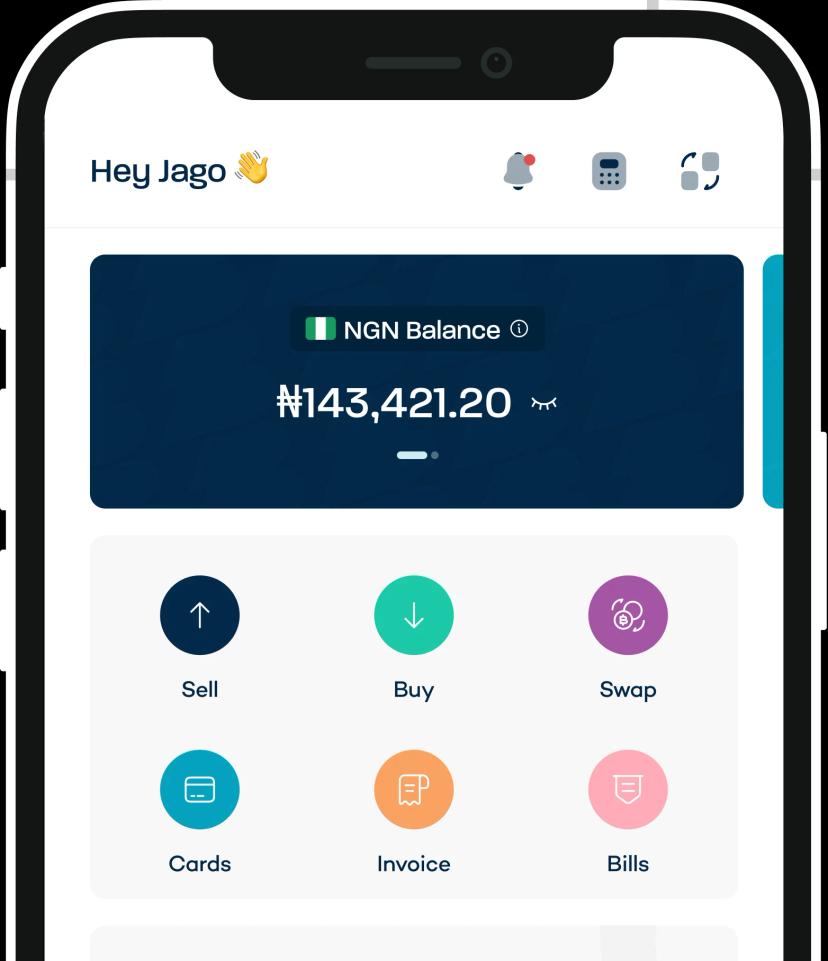
Breet is a crypto payment infrastructure for African businesses. You accept crypto and stablecoins, settle in Naira, Cedis, or USD, and move large volumes over an API, a Business Dashboard, and an OTC Desk. It’s not a feature you bolt on; it’s the rail your payments run on, with the three leaks engineered out. The track record behind it: 100+ verified businesses across Africa, more than 3M transactions settled programmatically, a 99.9% uptime SLA, and under a day from sign-up to first live transaction. Here’s how each leak closes.
Same-hour Settlement That Frees Working Capital (Fixes Leak 1)
Settlement lands in your bank account, mobile-money wallet, or stablecoin address in minutes, not two to five days.
The mechanism is the swap itself: a crypto and stablecoin settlement layer replaces the correspondent-bank hop, and conversion plus payout happen in the same hour. The money stops sitting in transit, which is the entire source of Leak 1. The Crypto & Stablecoin Payment API is where this runs in production.
See settlement speed on your own volume. Book a walkthrough.
Stablecoin Rails That Cut the Corridor Cost (Fixes Leak 2)
Moving value over stablecoin rails with automatic fiat conversion structurally lowers the per-transaction cost that the old corridors charge.
The flow is direct: crypto in, NGN, GHS, or USD out, automatically. For treasury-scale flows, the OTC Desk locks the rate before execution, with same-hour bank settlement and no counterparty risk, so you’re not exposed while a large trade clears.
Crypto Acceptance Without the Volatility or Reconciliation (Fixes Leak 3)
Accept crypto and stablecoins and receive the fiat equivalent, with no volatility on your books, no manual reconciliation, and compliance built in.
Breet handles wallet generation, on-chain confirmation, automatic conversion, AML screening, and webhooks, so the four systems from Leak 3 collapse into one. Crypto Invoicing lets your clients pay in crypto while your accounts receivable process stays exactly as it is. On compliance, you inherit it instead of building it: KYC and AML on every transaction, PCI DSS, and NDPC alignment.
Check the API docs. docs.breet.io
A Quick Gut-check Before Your Next Board Meeting
Use this to find out, in five questions, whether your rails are leaking margin you don’t need to lose.
Rail leak check
- How long does a cross-border payment take to settle, hours or days?
- What percentage does each cross-border or FX transaction actually cost you, all-in?
- When you accept crypto, who eats the volatility between receipt and conversion?
- How many finance hours go to reconciling crypto inflows each month?
- Is AML screening applied automatically, or is it on you?
Two or more uncomfortable answers mean your startup payment infrastructure is a margin leak, not a fixed cost, and the difference is a recoverable runway.
Final Thoughts
The raise buys you a runway. Your rails decide how far it stretches. Settlement speed, corridor cost, and crypto-acceptance friction are the three leaks, and all three are fixable by changing what your money moves on rather than patching what’s already failing. Payment infrastructure is the rare line item where the fix improves speed and cost at the same time; most trade-offs make you pick one.
Put your payments on a rail built for this. Book a walkthrough.