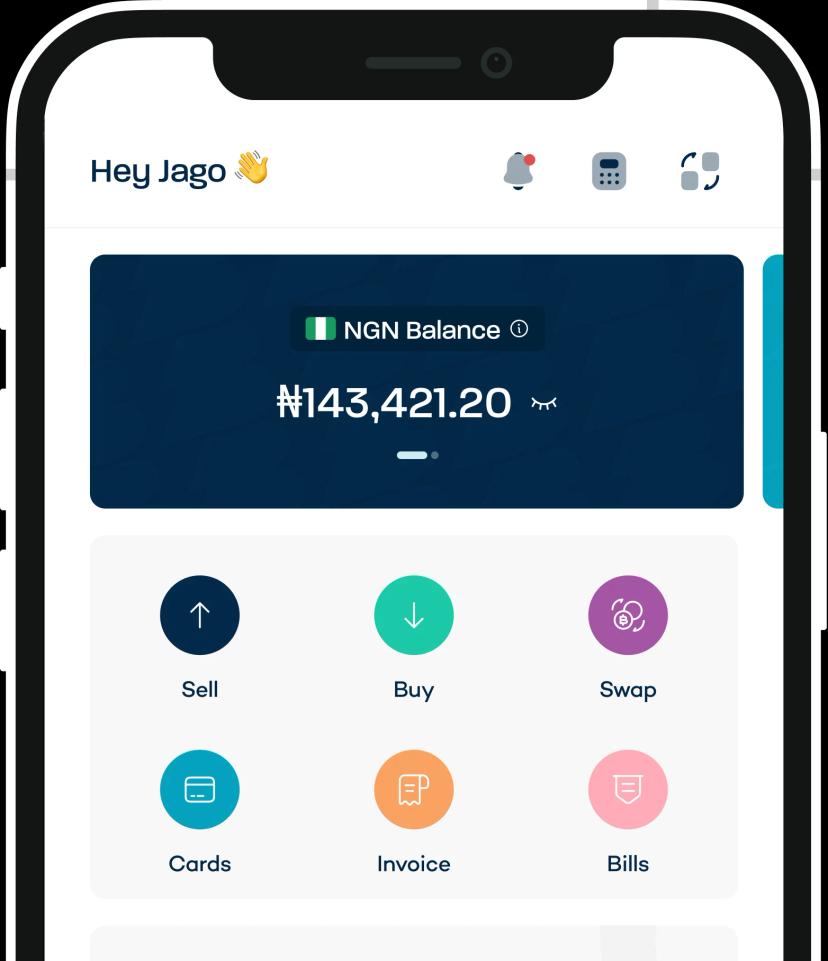

The best crypto wallet in Nigeria isn’t the one with the most coins. It’s the one you can actually get your money out of. You want somewhere safe to store crypto, a way to turn it into naira without a scam, and no frozen bank account.
Here’s the reality global lists skip: you often “cannot withdraw funds directly from your crypto wallet to your local bank account, as your bank account will be frozen”. So people fall back on P2P, where nearly half meet a fake payment proof, and some lose millions.
So judge a wallet on four things: security, supported coins, custodial versus non-custodial, and above all a safe, direct path to naira. We rank the 11 best below, split into cash-out apps and storage wallets.
The 11 best crypto wallets in Nigeria
Two honest groups, so you pick the right type first. Group A is apps you sell crypto on to cash out to naira. Group B is wallets you store and self-custody on. Every entry is labelled, with a straight verdict on naira.
| Wallet | Type | Naira cash-out? | Assets | Best for |
| Breet | Sell-to-cash-out app | Yes, direct to bank | 40+ | Cashing out to naira instantly |
| Quidax | Exchange (custodial) | Yes, via the platform | Major coins | Nigerian exchange users |
| Busha | Exchange (custodial) | Yes, via the platform | Major coins | Beginner-friendly local trading |
| Trust Wallet | Hot, non-custodial | No direct naira | Thousands | Everyday mobile self-custody |
| MetaMask | Hot, non-custodial | No direct naira | ERC20 / EVM | Web3 and DeFi |
| Exodus | Hot, non-custodial | No direct naira | Multi-chain | Beginner multi-coin holders |
| Ledger Nano S Plus / X | Cold, non-custodial | No direct naira | Multi-chain | Long-term security |
| Trezor Model T | Cold, non-custodial | No direct naira | Multi-chain | Advanced cold storage |
| Coinbase Wallet | Hot, non-custodial | No direct naira | Multi-chain | Self-custody with a familiar name |
| SafePal | Hybrid (hot + hardware) | No direct naira | Multi-chain | Affordable hardware option |
| Electrum | Hot, non-custodial | No direct naira | Bitcoin only | Bitcoin purists |
The top crypto wallets to cash out in Nigeria
1. Breet: best for selling crypto and cashing out to naira instantly
Every wallet further down this list can store your crypto. The next question is how you get it into your bank, and that’s where most of them leave you on your own. Breet is the app that closes that gap.
It’s rated the number-one app to sell crypto in Nigeria, with 400,000+ verified users and a 4.9-star rating.
Sell 40+ coins and get naira in minutes, with no P2P
You sell BTC, USDT, ETH, TRON, and 40+ other coins on Breet, and the naira (or cedis) lands in your bank account, usually within about 5 to 15 minutes. Because Breet buys the crypto from you directly, there’s no P2P counterparty to send a fake screenshot, ghost after your coins are in escrow, or vanish with your money. That removes the single biggest source of cash-out scams in Nigeria.
One thing to be clear about: Breet does not hold or store your crypto. You sell on Breet to cash out. Think of it as the off-ramp, and pair it with a storage wallet from Group B for anything you’re holding long-term.
Safe, simple, and backed by real support
There are no P2P strangers to deal with, your account is protected by 2FA and encrypted transactions, and support is available 24/7 through in-app chat. Because you’re not self-custodying on Breet, there’s also no seed phrase to lose. You sell, and the money leaves.
That matters for beginners, who lose more crypto to mismanaged seed phrases and cloned apps than to anything else.
Honest cons: Breet is a sell-to-cash-out app, not long-term storage, so pair it with a wallet in Group B for holding. It’s available in Nigeria and Ghana only. And your return depends on the live rate at conversion, which you confirm before you sell.
2. Quidax: Nigerian exchange with naira withdrawals
Quidax is a Nigerian-built exchange that has run since 2018, supporting major coins with direct naira deposits and withdrawals and a clean, locally familiar interface. It offers spot trading, recurring buys, staking, and an API, and it’s one of the more established home-grown platforms, which reassures users who want a Nigerian company with local support.
Key features:
- Direct naira funding and withdrawal to Nigerian banks.
- Spot trading, recurring buys, and staking on major coins.
- Local support and a developer API.
Pros: established Nigerian platform, direct naira rails, familiar interface, local support.
Cons: it’s custodial, so you’re trusting the platform with your funds, and Nigerian exchanges have faced regulatory pressure and occasional withdrawal delays. Its coin selection is narrower than the global giants, and like any exchange it’s built for trading rather than instant, no-fuss cash-out. Naira verdict: yes, via the platform.
3. Busha: beginner-friendly local trading and cash-out
Busha is a clean, beginner-oriented Nigerian exchange launched in 2019, built to make buying, selling, and holding crypto simple for newcomers. It supports naira funding and withdrawal, a curated set of popular coins, recurring buys, and interest-earning products, all in a friendly interface that doesn’t overwhelm first-timers. It has positioned itself as a trustworthy, compliance-minded local on-ramp.
Key features:
- Naira deposits and withdrawals to local banks.
- A curated set of popular coins with recurring buys.
- Earn and interest products in a simple mobile app.
Pros: genuinely beginner-friendly, direct naira rails, local support, clean design.
Cons: it’s custodial, its coin range is narrower than the global players, and Nigerian exchanges broadly face regulatory uncertainty that can affect deposits or withdrawals. Like any exchange, it’s a place to trade and hold, not a dedicated fast cash-out rail. Naira verdict: yes, via the platform.
The top crypto wallets to hold crypto in Nigeria
4. Trust Wallet: everyday mobile self-custody
Trust Wallet is a free, non-custodial mobile wallet (owned by Binance) supporting millions of assets across 100+ blockchains, which makes it one of the most versatile places to store crypto and interact with Web3.
You hold your own keys, and a built-in swap, dApp browser, and staking round it out. For everyday holding across many coins, it’s a strong default.
Key features:
- Free and non-custodial, on iOS, Android, and browser.
- 100+ blockchains and millions of tokens, with staking.
- Built-in swap, dApp browser, and NFT support.
Pros: free, huge coverage, full self-custody, easy to start.
Cons: self-custody means no recourse if you lose your seed phrase or get phished, and support is limited. Crucially for Nigerians, there’s no direct naira path. As guides note, “Trust Wallet itself doesn’t directly support Naira withdrawals,” so you’d pair it with a cash-out app. Naira verdict: no direct naira; pair with an off-ramp.
5. MetaMask: the Web3 and DeFi standard
MetaMask is the default wallet for Ethereum and EVM-compatible chains, used by tens of millions as a browser extension and mobile app.
It’s essential if you use DeFi, mint NFTs, or connect to dApps, and you can add networks like Polygon and BNB Chain, swap in-app, and stake. It’s fully non-custodial, so the keys and seed phrase are yours.
Key features:
- Browser extension plus iOS and Android apps.
- Native support for Ethereum and EVM chains.
- Built-in swaps, staking, and dApp connections.
Pros: the Web3 standard, unmatched dApp compatibility, full self-custody.
Cons: it doesn’t hold Bitcoin or non-EVM assets, Ethereum gas fees can sting, and the interface assumes some familiarity, so it’s not ideal for a total beginner. There’s no naira path. Naira verdict: no direct naira; pair with an off-ramp.
6. Exodus: beginner-friendly multi-chain wallet
Exodus is a non-custodial wallet on desktop, mobile, and browser, known for a polished, design-led interface that makes self-custody approachable.
It supports hundreds of assets across many chains, with built-in swaps, staking, and an optional Trezor hardware integration for added security.
For newcomers who want self-custody without a steep learning curve, it’s one of the friendliest options.
Key features:
- Desktop, mobile, and browser apps that sync.
- Hundreds of assets across many chains.
- Built-in exchange, staking, and Trezor integration.
Pros: beautiful and beginner-friendly, wide asset support, strong self-custody experience.
Cons: it’s still self-custody, so seed-phrase responsibility is yours, the built-in swap rates can be less competitive than a dedicated exchange, and parts of it are closed-source. There’s no direct naira withdrawal. Naira verdict: no direct naira; pair with an off-ramp.
7. Ledger Nano S Plus / Nano X: hardware security for the long haul
Ledger is the best-known hardware wallet brand, and its Nano S Plus and Nano X keep your private keys offline on a certified secure-element chip.
Even if your phone or computer is compromised, funds can’t move without the device and your PIN, and every transaction is confirmed on the device screen.
You manage thousands of assets through Ledger Live, which makes it the go-to for serious, long-term storage.
Key features:
- Offline keys on a secure-element chip.
- Physical confirmation for every transaction.
- Ledger Live for 5,000+ assets; the Nano X adds Bluetooth.
Pros: the strongest protection against remote hacks, wide asset support, a trusted track record.
Cons: it costs money upfront (roughly $79 for the Nano S Plus, more for the Nano X), it’s less convenient for frequent moves, and it offers no cash-out route. Naira verdict: no direct naira; pair with an off-ramp.
8. Trezor Model T: advanced cold storage
Trezor, made by SatoshiLabs, was the original hardware wallet, and the Model T is its premium device, with a color touchscreen and fully open-source firmware that security-minded users value for its auditability.
It stores keys offline, confirms transactions on the device, and supports a broad range of assets through Trezor Suite, with strong passphrase and Shamir backup options.
Key features:
- Offline key storage with an on-device touchscreen.
- Fully open-source firmware and the Trezor Suite app.
- Advanced backup options (passphrase, Shamir).
Pros: excellent security, open-source transparency, advanced backup features.
Cons: it carries a premium price (typically well above the entry-level hardware wallets), it’s aimed at more advanced users, and, like any cold wallet, it’s inconvenient for everyday moves and offers no naira cash-out. Naira verdict: no direct naira; pair with an off-ramp.
9. Coinbase Wallet: self-custody with a familiar name
Coinbase Wallet is a non-custodial wallet, separate from the Coinbase exchange account, that lets you hold your own keys while backed by one of the most recognized names in crypto.
It supports Bitcoin, Ethereum and EVM chains, Solana, and thousands of tokens, plus dApp connections and in-app swaps, with an optional encrypted cloud backup of your recovery phrase for people nervous about losing it.
Key features:
- Non-custodial, on mobile and as a browser extension.
- Support for many chains and thousands of tokens.
- dApp browser, swaps, and optional cloud backup of the recovery phrase.
Pros: a trusted name, broad asset and dApp support, self-custody with a safety-net backup option.
Cons: it’s still self-custody, so the recovery-phrase responsibility is ultimately yours, some find it tied closely to the Coinbase ecosystem, and there’s no direct naira exit. Naira verdict: no direct naira; pair with an off-ramp.
10. SafePal: an affordable hardware option
SafePal is a hybrid wallet that pairs a free mobile app with an optional low-cost hardware device (the S1), backed by Binance Labs.
The hardware wallet is fully air-gapped, using QR codes rather than USB or Bluetooth, and the app supports a very wide range of chains with swaps, staking, and dApp access.
It’s one of the most affordable routes into cold storage, and a credible first cold wallet on a budget.
Key features:
- Free app plus an optional air-gapped hardware wallet.
- Very broad multi-chain support with swaps and staking.
- QR-based signing, with no USB or Bluetooth.
Pros: an affordable hardware option, huge chain coverage, air-gapped security.
Cons: it has a smaller ecosystem and shorter track record than Ledger or Trezor, the app can feel busy, and there’s no direct naira path. Naira verdict: no direct naira; pair with an off-ramp.
11. Electrum: for Bitcoin purists
Electrum is one of the oldest Bitcoin wallets, running since 2011, and it remains a favorite among Bitcoin purists for its speed, low resource use, and deep control features.
It’s a desktop-first, non-custodial, Bitcoin-only wallet with support for hardware wallets, multisignature setups, custom fees, and cold-storage workflows, so advanced users get precise control over their BTC.
Key features:
- Bitcoin-only, non-custodial, desktop-first (with mobile).
- Hardware wallet and multisignature support.
- Custom fees, coin control, and cold-storage options.
Pros: fast and lightweight, battle-tested since 2011, powerful control for advanced users.
Cons: it’s Bitcoin only, the interface is dated and more technical than most, and there’s no naira cash-out, so beginners will find it unfriendly. Naira verdict: no direct naira; pair with an off-ramp.
Which crypto wallet is right for you?
Match the wallet to the job, not the hype.
- Beginner who just wants naira? A sell-and-cash-out app like Breet.
- Long-term holder? A hardware wallet like Ledger or Trezor
- Web3 or DeFi user? MetaMask or Trust Wallet.
Need naira today? Cash out on Breet.
Pick a Wallet You Can Actually Get Paid From
A wallet that only stores crypto is half a wallet in Nigeria. The full setup is a storage wallet for holding, plus a sell-and-cash-out app for the naira, so you’re never stuck holding value you can’t safely spend.
That second half is what Breet does:
- Sell 40+ coins and get naira in your bank in minutes.
- No P2P, so no fake screenshots and no ghosting.
- Protected by 2FA and encryption, with 24/7 support.
Ready to hold safely and cash out without the stress? Register on Breet.