
Ask Google for the best crypto exchanges in Nigeria, and Google’s AI Overview still suggests Binance for P2P. Binance has not handled naira since March 2024.
BitDegree, Newhedge, and Bitcoin.com still list Binance with naira. Webopedia, Newhedge, and Subpadi rank global platforms by trading fees, as if placing a trade were the hard step
We compared each platform’s naira deposit route, naira withdrawal route, and published fees. Sources were each platform’s own pages and user reviews.
Pick the job you need done:
- Cash out to your bank: Breet, Monica
- Buy and hold on an exchange: Quidax, Busha, Blockchain.com, Luno
- Trade actively: Bybit, Bitget, OKX
Start with Breet if your crypto needs to become naira because there’s no P2P buyer to short-pay you. You can:
- Sell crypto to naira and see it in your bank in 5 to 15 minutes, with no P2P buyer
- See the exact naira amount before you send
- Buy USDT or USDC with naira from $10 and send it to any wallet or exchange
How we picked the best crypto exchanges in Nigeria
Every platform was checked on the naira leg, not on maker and taker fees. Each one gets a verdict on five points:
- Naira in: direct bank or card, P2P only, or none.
- Naira out: direct to bank, P2P only, or none.
- Stranger in the middle: P2P brings short payments and disputes. Breet’s P2P study ran 100+ live trades: 31% paid short, and payouts took between 1 and 86 minutes.
- Published fees in naira: Shown wherever the platform states one.
- Serving Nigerian individuals: The exchange is operating in Nigeria
1. Breet: best for turning crypto into naira, or naira into USDT, without P2P
Breet is a crypto conversion platform with no order book, no charts, and no futures. It simply handles crypto-to-naira and vice versa with no stranger on either side.
It converts crypto to naira, and naira to USDT or USDC, with no stranger on either side.
Who this is for: freelancers and remote workers paid in crypto who want naira in a bank account. Active traders keep their exchange and use Breet for the naira leg.
Get naira in your bank within 5 minutes by sending crypto to your Breet address
Send BTC to your Breet address, and it converts as soon as the network confirms it. Naira then lands in your bank in 5 minutes. That window starts after network confirmation, not when you press send.
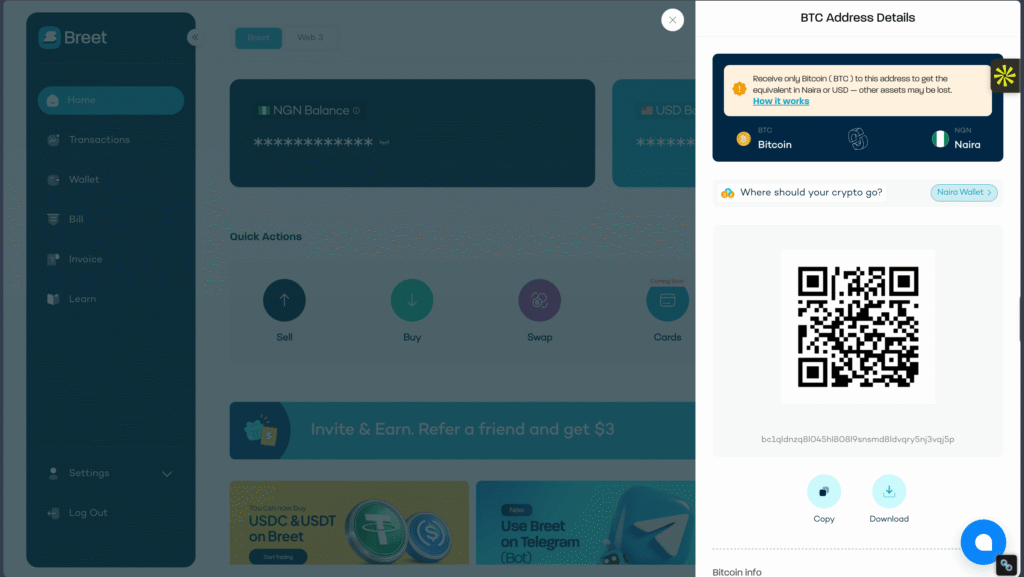
Breet supports BTC, USDT, ETH, SOL, TRX, LTC, DOGE, BCH, USDC, BNB, AVAX, TON, and XRP, so you can sell whatever you were paid in.
Fund any exchange with USDT by buying with naira and sending it to the exchange’s address
You can buy USDT or USDC directly from Breet and send it to an external wallet address on TRON, ETH, BSC, Arbitrum, Base, or Polygon.
Want to fund Bybit or OKX without buying from a P2P stranger? Buy USDT on Breet and send it straight to the exchange.
Breet’s own warning is to “choose the network that platform supports”. Network mismatches cost money.
Keep your coins out of a platform balance by converting them the moment they arrive
Your BTC converts to naira the moment it arrives. After Paxful and NoOnes left, users were left chasing balances. A sale that converts on arrival leaves no balance behind.
That covers sales only. Stablecoins you buy on Breet can sit in a Breet wallet until you send them out.
Know your exact naira payout before you send, with one published size-based fee
Breet’s sell fee is 1.5% up to $999, 1% from $1,000 to $4,999, and 0.5% from $5,000 up. A $500 sale pays a $7.50 fee. A $2,000 sale pays $20. A network fee also applies and goes to the network, not Breet.
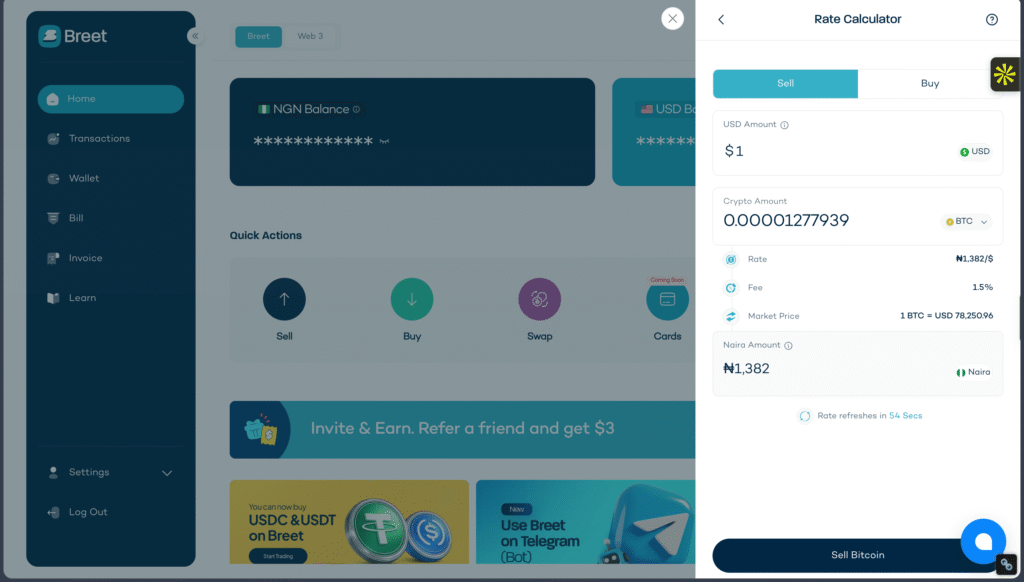
The BTC to naira calculator shows your payout before you send. The USDT to naira page does the same for USDT.
On P2P, the fee is hidden inside the seller’s rate. On Breet, it is one line you can read. Check today’s rate before you send
Skip Breet if you want charts or futures. Use Bybit, Bitget, or OKX for those, then sell crypto to naira on Breet when you cash out.
2. Luno
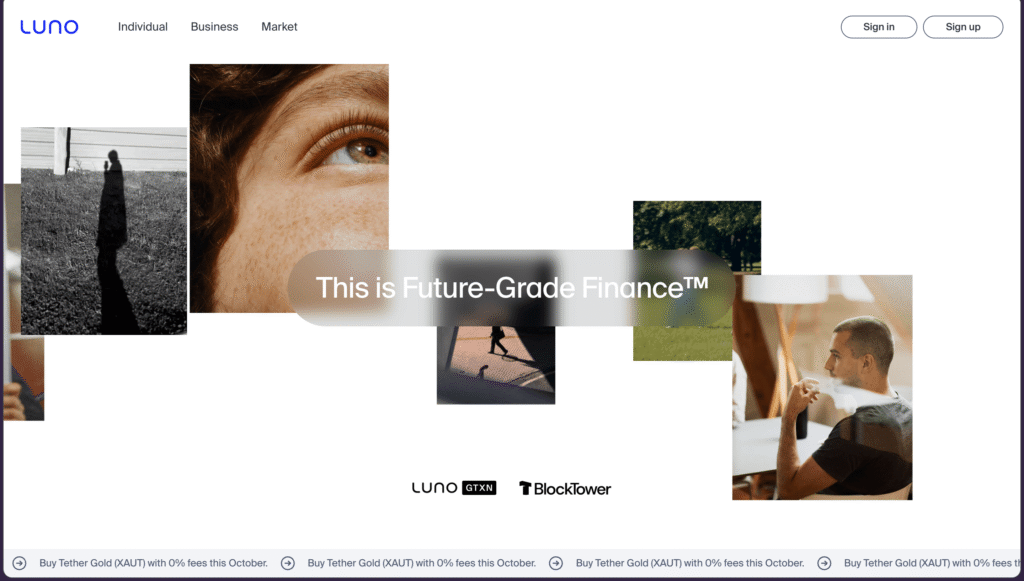
Luno has served Nigerians since 2016 and moves naira by direct bank transfer. For beginners who are just stepping into the world of Bitcoin, Luno is one of the friendliest apps you can start with in Nigeria.
The design is clean, simple, and straightforward, so you won’t feel overwhelmed when buying your first Bitcoin. Everything from sign-up to making your first trade is smooth and beginner-focused.
On top of that, you can set price alerts, schedule recurring buys, and store your Bitcoin safely in the built-in wallet. It’s widely used across Nigeria and trusted for its ease of use, which is why it’s a go-to for many first-time Bitcoin buyers.
Pros
- Naira in and out by bank transfer, with no P2P step.
Cons
- Luno’s fee is 2% on instant buy and sell.
- Stuck naira can take days. One reviewer reported a failed deposit waiting for a reversal, meaning the money was due to be sent back: “I made a deposit of ₦14,600, and for the past three days, I’ve been waiting for a reversal”.
- Limited number of cryptocurrencies compared to bigger exchanges
- Advanced features are quite basic
3. Busha
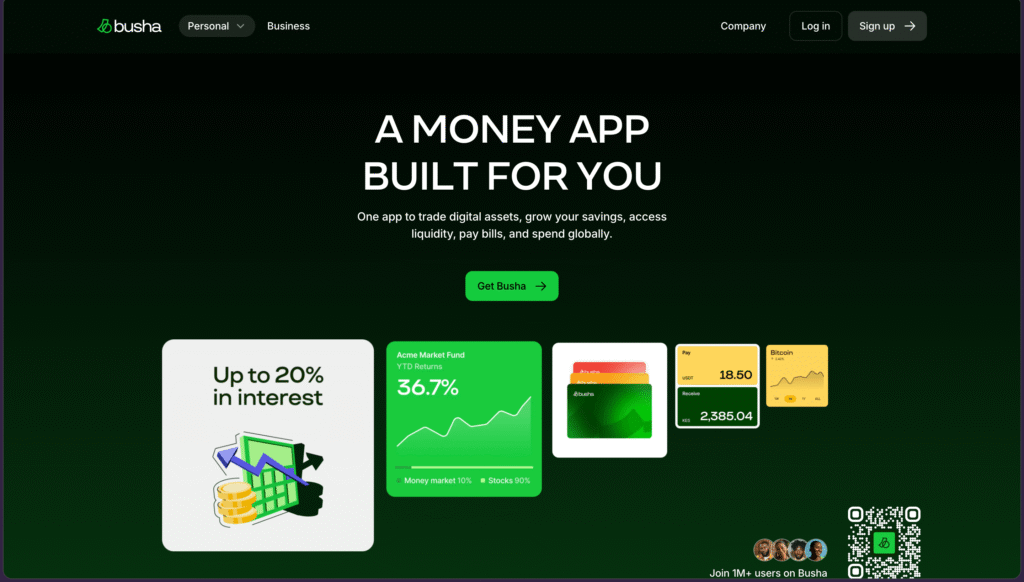
Busha is another solid Bitcoin exchange in Nigeria. It’s known for being beginner-friendly while still offering enough features for people who want to do more than just buy and sell.
The app makes it easy to purchase Bitcoin using local payment methods, and transactions are quick and smooth. One of Busha’s standout features is its recurring buy option, which allows you to automatically invest in Bitcoin over time.
This makes it a great choice if you’re interested in dollar-cost averaging rather than trying to time the market. The interface is clean, modern, and very easy to navigate, even if you’re new to crypto.
Busha also puts effort into customer support, which is something many Nigerian users appreciate when issues come up.
Pros
- ₦150 fee to put money in, so a ₦20,000 first buy costs 0.75% to fund.
- Small first purchases do not require learning a P2P desk first.
Cons:
- Busha does not publish a trading or conversion fee. You see the fee only inside the rate it quotes.
- Limited range of cryptocurrencies compared to global exchanges
- Advanced traders may find the features too basic
- Verification process can sometimes feel a bit slow
4. Quidax
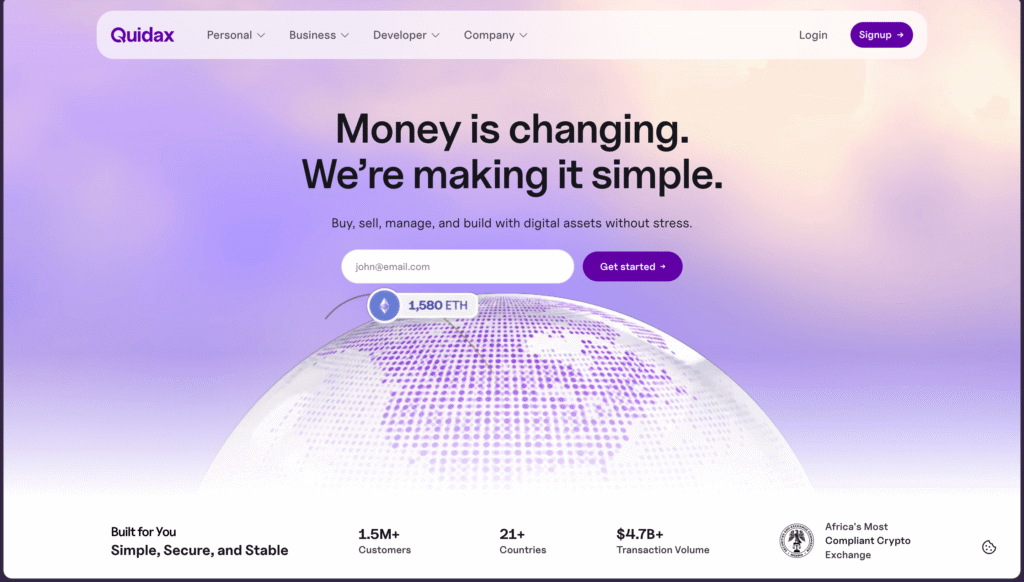
Quidax has grown into one of the most popular homegrown crypto exchanges in Nigeria, and for good reason. The app is designed for quick and easy local transactions, making it simple to buy, sell, and trade Bitcoin directly with naira.
It also supports a good number of other cryptocurrencies, so you’re not limited if you want to diversify.
Many users like the fact that they can move money in and out without unnecessary delays. The app also has a straightforward interface, so you don’t need to be an expert to use it.
Pros
- Naira deposits are free. Naira withdrawals are ₦200 flat, so a ₦500,000 withdrawal costs 0.04% before the ₦50 stamp duty.
- Spot trades carry 0.1% for makers and takers, per Quidax’s fee page.
Cons:
- Fees can be a bit higher for smaller transactions
- Customer support can be slow during peak times
- Advanced trading tools are limited compared to big global platforms
5. Monica
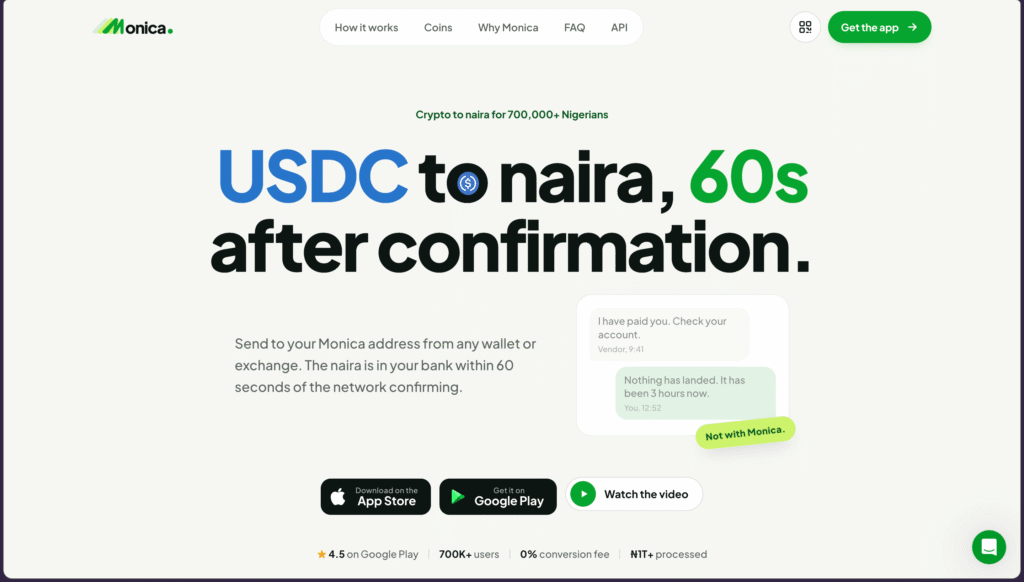
Monica pays crypto out to a bank in naira, with no P2P step. It lists BTC, ETH, USDT, USDC, SOL, and TRX, and says most payouts land within minutes of deposit confirmation. Monica describes itself as “SEC VASP-framework aligned” on monica.cash.
Pros
- It shows the exact naira payout before you confirm.
- Monica claims a 0% conversion fee.
Cons
- Monica is sell-only. You cannot buy crypto with naira there.
- Monica is not in the SEC sandbox.
6. Roqqu
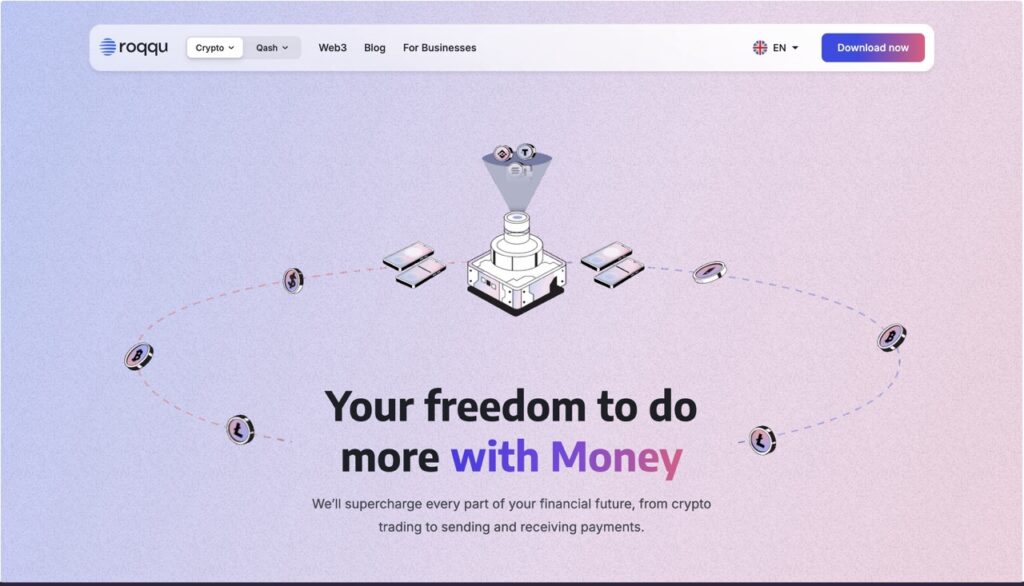
Roqqu is a Nigerian crypto app with a naira wallet. It offers trading, crypto cards, and tokenised stocks (crypto tokens that track a company’s share price).
Pros
- Crypto, cards, and tokenised stocks sit in one app.
- A naira wallet is available for Nigerian users.
Cons
- Roqqu charges 2% to buy, sell, or swap, matching Luno’s 2% instant buy and sell.
- Roqqu is not in the SEC sandbox.
7. Bybit
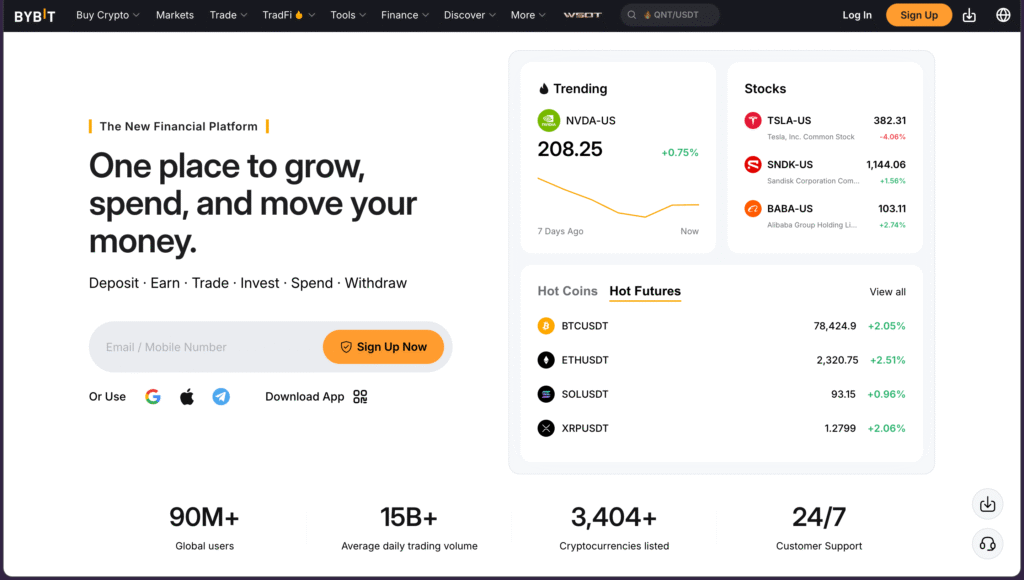
Bybit is a global exchange that has become popular in Nigeria, especially among traders who want to do more than just buy and sell Bitcoin.
The app is known for its advanced trading features, including leverage trading, futures, and options. This makes it a top choice for users who want to maximize their strategies and take advantage of price movements.
The platform also has a sleek design, quick order execution, and plenty of tools for charting and analysis. For Nigerians who are comfortable with more advanced trading, Bybit offers opportunities you won’t find on most local apps.
Another plus is Bybit’s strong liquidity, which ensures you can trade large volumes without major price slippage.
Pros
- Takers pay 0%, and makers pay 0.1%.
Cons
- You still trade with a stranger who might pay short. Bitget has no SEC status in Nigeria.
- Can be overwhelming for beginners
- Leverage trading carries higher risks and can lead to big losses
- Not as beginner-friendly as homegrown Nigerian apps
8. Remitano
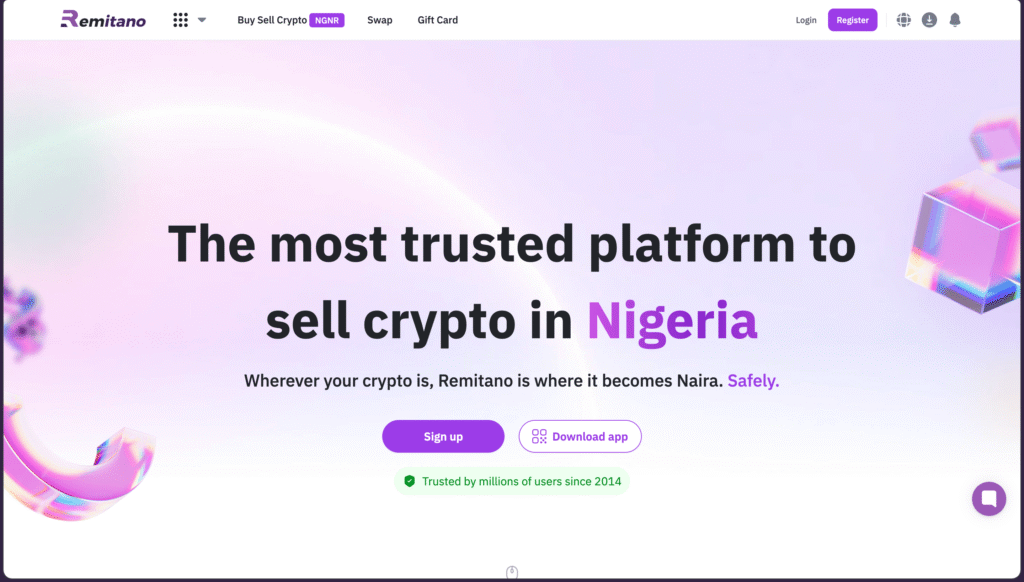
Remitano is another well-known peer-to-peer Bitcoin exchange in Nigeria used for flexible transactions. The platform connects buyers and sellers directly, which means you have a variety of payment options, from bank transfers to wallets and other local methods.
It’s designed to be straightforward, so even beginners can navigate it without too much stress. One of Remitano’s strong points is its escrow system, which holds funds safely until both parties confirm the trade.
This reduces the risk of scams and makes the process more secure compared to direct person-to-person deals. The app also supports multiple cryptocurrencies, giving users more room to explore beyond just Bitcoin.
For Nigerians who want flexibility and extra security in their trades, Remitano is a reliable choice.
Cons:
- Transaction fees are higher than some other platforms
- Trade speed depends on the other party, so it’s not always instant
- Customer support response can sometimes be slow