Toncoin (TON) is the native cryptocurrency of The Open Network (TON), a decentralized, open-source layer-1 blockchain designed to support fast, low-cost transactions and scalable applications.
The TON blockchain originated as a Telegram project created by Telegram co-founding brothers Pavel Durov and Nikolai Durov. Initially named Telegram Open Network.
However, the project was later abandoned by Telegram following regulatory action by the U.S. Securities and Exchange Commission (SEC).
After Telegram stepped away, the project was continued independently and rebranded to The Open Network by a global open-source community led by the TON Foundation.
Although TON now operates independently, it still maintains strong ties with Telegram through integrations like Telegram’s in-app TON wallet, Telegram mini apps, and in-app payment features. This close integration significantly played a part in boosting TON’s visibility and adoption.
Related:
- 9 Best Crypto OTC Trading Platforms
How Does TON Work? (Blockchain & Transactions)
The TON blockchain was designed to be secure while processing large volumes of transactions at scale.
It achieves this through Proof-of-Stake consensus and dynamic sharding, which together make the TON blockchain fast and scalable. Let’s dive deeper:
1. Proof-of-Stake (PoS) Consensus
TON uses a system called Proof-of-Stake (PoS) to keep its blockchain running smoothly and securely. Instead of relying on miners like Bitcoin, TON relies on validators.
Think of Validators Like Bank Cashiers
Imagine a physical bank:
- Customers come to make deposits, withdrawals, and transfers
- Cashiers verify their slips and details for each request, then stamp, record, and process the request.
On Proof-of-Stake blockchains like TON, validators play a similar role.
Who are Validators on TON?
Validators are participants who help run the TON network by:
- Checking transactions from users and smart contracts
- Grouping them into blocks
- Adding those blocks to the blockchain
To become a validator, you must lock up (stake) Toncoin as a form of trust deposit. This shows you have something to lose if you act dishonestly.
How Validators Are Chosen
The network does not pick validators at random. Instead:
- Validators who stake more Toncoin have a higher chance of being selected to process the next block
- Once selected, they confirm transactions and update the blockchain
This process keeps the network fast and efficient, since validators don’t need heavy computational power as miners do on blockchains like Bitcoin.
How Validators Earn Rewards
Validators are paid for their work in two ways:
- Block rewards: newly issued Toncoin
- Transaction fees: small fees users pay when making transactions
This reward system encourages validators to act honestly and keep the network running properly.
Why Proof-of-Stake Works Well for TON
This system makes TON:
- More energy-efficient than Proof-of-Work blockchains like Bitcoin and Litecoin
- Faster at confirming transactions, often within seconds
- Secure, because attacking the network would require controlling a majority of the staked Toncoin
What If You Don’t Have Enough TON?
Running a validator node on TON requires a minimum stake of 700,000 TON, which is out of reach for most users.
However, you don’t need to be a validator to participate. Toncoin holders can:
- Delegate (stake) their TON to existing validators
- Earn a share of the rewards
- Help secure the network without running the technical infrastructure
Think of it like investing in a trusted operator instead of running the business yourself.
Proof-of-Stake allows TON to stay fast, scalable, and environmentally friendly, while giving everyday users a way to participate and earn rewards, without needing massive computing power.
2. Dynamic Sharding for Scalability
TON scales by using a technique called sharding, which means splitting the network’s workload into smaller parts.
Instead of every computer on the network processing every transaction, TON divides transactions across multiple shards, with each shard handling only a share of the activity. This allows many transactions to be processed at the same time, rather than one after another.
When activity on the network increases, TON automatically creates more shards to handle the extra load. When activity slows down, those shards merge back together.
Think of it like a bank opening more cashier counters and bringing in more cashiers on a busy day and closing them when customer traffic slows.
As a result of this, TON can process large numbers of transactions quickly while keeping fees low and avoiding network congestion.
3. Smart Contracts and the TON Virtual Machine (TVM)
Smart contracts on TON run on the TON Virtual Machine (TVM). Similar to Ethereum’s EVM, the TVM executes instructions from smart contracts and updates the network’s state accordingly.
Using the TVM, developers can build decentralized applications that automate actions such as:
- Asset transfers
- Token minting
- Payments and message signing
- Build DeFi, NFT, and gaming applications
Workchains send smart contract requests to shardchains, where they are processed in parallel. Validators then confirm these state changes through the PoS consensus process, coordinated by the masterchain.
Read Also:
Use Cases of Toncoin (TON)

Toncoin powers all core activities on The Open Network, serving as the primary utility token that enables transactions, applications, and network security. Its design supports a wide range of real-world and on-chain use cases.
1. Payments and Transfers
One of Toncoin’s most common use cases is fast, low-cost payments. The TON blockchain is optimized for quick transaction processing, making TON suitable for everyday transfers.
Users can send Toncoin to others globally, pay for goods and services, and make peer-to-peer payments with minimal fees. Through Telegram integration, users can also send TON directly within chats, making crypto payments feel as simple as messaging.
Also, you can decide to sell your Toncoin and convert it to cash easily.
2. Powering Decentralized Applications (dApps)
Toncoin is used to power decentralized applications (dApps) built on the TON blockchain. Developers rely on TON for:
- Transaction fees
- In-app payments
- User rewards and incentives
These dApps span areas such as gaming, NFT marketplaces, and more, all benefiting from TON’s speed and scalability.
3. Decentralized Finance (DeFi)
Toncoin plays an important role in DeFi applications on the TON network. Users can participate in activities such as:
- Lending and borrowing
- Token swapping and trading
- Liquidity provision
Since TON offers low fees and fast confirmations, DeFi interactions on the network are often more cost-effective compared to traditional blockchain platforms.
4. Staking and Network Security
Toncoin is central to securing the TON blockchain through staking. Validators stake TON to verify transactions and create new blocks, helping maintain the network’s integrity.
Other Toncoin holders can also stake their tokens through validators, contributing to network security while earning staking rewards in return.
5. Governance Participation
Toncoin holders can take part in the governance of the TON ecosystem.
By staking and participating in governance mechanisms, users can help influence decisions related to network upgrades, protocol changes, and ecosystem development.
6. Telegram-Based Web3 Interactions
Thanks to TON’s close integration with Telegram, Toncoin is increasingly used within Telegram-powered Web3 features.
Users can interact with blockchain services, make payments, and use TON-enabled mini apps without leaving the Telegram app.
This seamless experience lowers the barrier to crypto adoption and expands Toncoin’s everyday use.
For You:
- 11 Best Free Crypto Mining Sites
Toncoin (TON) Tokenomics
Toncoin’s tokenomics form the economic backbone of The Open Network, defining how the token supply grows, how coins are allocated, and what that means for the network’s valuation.
Ton Coin Supply
- Total Supply: Toncoin started with an initial supply of 5.00 billion TON at launch. Ongoing issuance for validator rewards has slightly increased that number, with recent data showing around 5.15 billion TON in total supply.
- Circulating Supply: At the time of writing, the current circulating supply of Toncoin is reported to be around 2.41 billion TON
- Maximum Supply: Unlike some cryptocurrencies, TON does not currently have a fixed hard cap on supply. Total supply grows over time through block rewards.
Ton Coin Market Metrics
Here is a snapshot of Toncoin market metrics as of 6th January 2026 from major data aggregators:
- Price: $1.86
- Market Cap: $4.51 billion
- Fully Diluted Valuation (FDV): $9.62 billion, this is the theoretical market cap if the total supply were in circulation at current prices.
How to Start with TON (Toncoin)
To start investing in or interacting with Toncoin (TON) and the TON blockchain, you first need a crypto wallet that supports TON.
Set Up a TON Wallet
If you’re a Telegram user, getting started is especially easy. Telegram offers built-in TON wallet features that allow users to activate a wallet directly from the app. Once activated, you can send, receive, and store Toncoin without leaving Telegram.
Beyond Telegram, there are also dedicated TON wallets, including:
- Tonkeeper
- MyTonWallet
These wallets are designed specifically for the TON ecosystem and allow users to manage their Toncoin securely and interact with TON-based applications.
Some multichain wallets, such as Trust Wallet, also support Toncoin, enabling users to store TON alongside other cryptocurrencies and connect to decentralized applications (dApps) on the TON blockchain.
How to Get Toncoin
There are several ways to obtain Toncoin, depending on your location and preferences:
- Buy TON using a debit or credit card through supported wallets or crypto exchanges where Toncoin is listed
- Receive TON from friends or family
- Earn TON through airdrops, rewards, or participation in TON-based projects
Once you have Toncoin in your wallet, you can start making payments, staking, or interacting with applications built on the TON network.
Top Pick:
- How to Generate a Free Bitcoin Invoice
How to Sell Toncoin (TON)
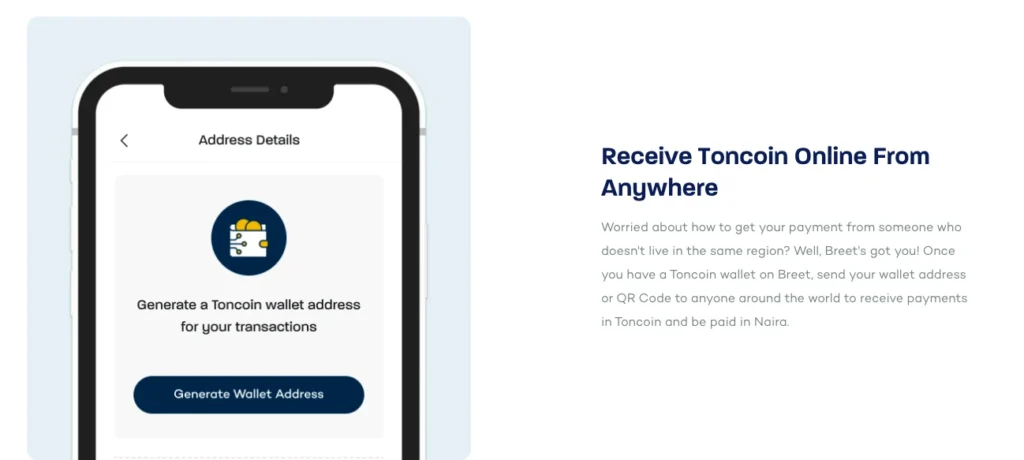
Sell Toncoin Easily on Breet (Nigeria & Ghana)
If you’re in Nigeria or Ghana, one of the simplest and most reliable ways to sell Toncoin is through Breet.
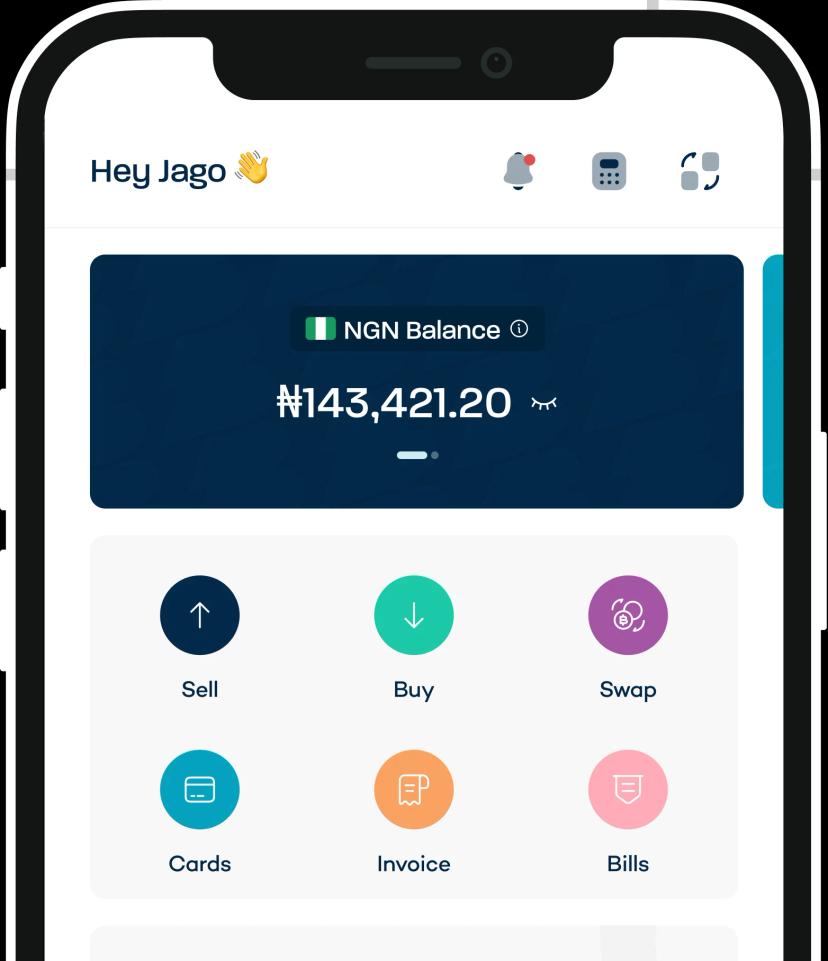
Breet allows you to sell TON directly for local currency, such as Naira (NGN) or Ghanaian Cedi (GHS), without the need for P2P merchants or intermediaries. The process is fast, transparent, and designed for everyday users.
How to Sell TON (Toncoin) on Breet
- Create or log in to your Breet account
- Select Toncoin (TON) from the list of supported assets
- Generate a TON wallet address on Breet
- Send your TON(Toncoin) to the generated address
- Once confirmed, it is automatically converted to your local currency.
You can withdraw when you wish, and your funds will be credited directly to your bank account in minutes with no escrow risks and no waiting for P2P merchants.
Benefits and Risks of Toncoin (TON)
Like any cryptocurrency, Toncoin comes with both advantages and risks. Understanding these pros and cons can help users and investors make more informed decisions when interacting with the TON ecosystem.
Benefits of Toncoin
- Fast and Scalable Network
Toncoin runs on The Open Network, which uses a multi-blockchain architecture and dynamic sharding. This allows the network to process transactions in parallel and scale efficiently as demand increases. As a result, TON can handle very high transaction volumes without slowing down.
- Low Transaction Fees
Compared to networks like Bitcoin and Ethereum, where fees can rise sharply during congestion, TON offers consistently low transaction costs. This makes Toncoin suitable for microtransactions, everyday payments, and frequent dApp interactions.
- Telegram Integration
One of Toncoin’s biggest advantages is its deep integration with Telegram. Users can store, send, and use TON directly within the Telegram app through built-in wallets, bots, and mini apps. This lowers the barrier to entry and exposes TON to a massive global user base.
- Energy Efficiency
TON uses a Proof-of-Stake (PoS) consensus mechanism, making it far more energy-efficient than Proof-of-Work networks like Bitcoin. This reduces environmental impact while maintaining network security.
Risks and Limitations of Toncoin
- Regulatory Uncertainty
Like most cryptocurrencies, Toncoin operates in an evolving regulatory environment. Its historical connection to Telegram has previously attracted regulatory scrutiny, and future regulations could impact adoption or usage in certain regions.
- Market Volatility
Toncoin is subject to price fluctuations, which can result in rapid gains or losses. This volatility poses risks for short-term traders and investors unfamiliar with crypto market dynamics.
- Reliance on Telegram Ecosystem
While Telegram integration is a major advantage, it also introduces risk. TON’s growth and adoption are closely tied to Telegram’s ecosystem. Any major changes to Telegram’s policies, features, or user engagement could affect Toncoin’s trajectory.
- Relatively New Ecosystem
Despite rapid growth, TON is still younger than blockchains like Bitcoin and Ethereum. Some aspects of its ecosystem, such as developer adoption and long-term resilience, are still evolving.
- Strong Competition
Toncoin competes with established blockchains like Ethereum and newer high-speed networks like Solana. Continued innovation and ecosystem growth are necessary for TON to maintain and expand its market position.
Don’t Miss:
- USDT TRC20 Contract Address: What is it & How to Get it?
Frequently Asked Questions on TON (Toncoin)
Does Toncoin have a Future?
Like all cryptocurrencies, Toncoin’s future depends on market conditions, investor sentiment, innovation in the TON blockchain, competition, and regulatory developments.
How can I Sell Toncoin in Nigeria?
In Nigeria, one of the easiest ways to sell Toncoin is through crypto-to-cash platforms like Breet. Instead of trading on P2P markets or dealing with third-party merchants, users can sell TON directly and receive Naira in their bank accounts.
What is the full meaning of TON?
TON stands for The Open Network. It is the name of the blockchain that powers Toncoin and supports decentralized applications, smart contracts, and digital payments.
Are Toncoin and TON the same?
They are closely related but not exactly the same.
- TON (The Open Network) refers to the blockchain itself.
- Toncoin (TON) is the native cryptocurrency used on the TON blockchain.
In practice, people often use “TON” to refer to both the network and the coin, depending on the context.
How Can I Convert TON into Money?
To convert TON into money, you need to sell it on a supported platform. Depending on your location, this can be done through exchanges or crypto-to-cash services.
For users in Nigeria and Ghana, platforms like Breet allow you to convert Toncoin directly into local currency without using P2P merchants. Once your TON is sent to Breet, the equivalent amount is paid straight into your bank account.