For years, building anything with crypto in Nigeria meant operating in a grey zone, reading regulatory tea leaves, and hoping the rules would land somewhere survivable. That uncertainty was the single biggest tax on innovation in payments. On June 2, 2026, that tax got a lot smaller.
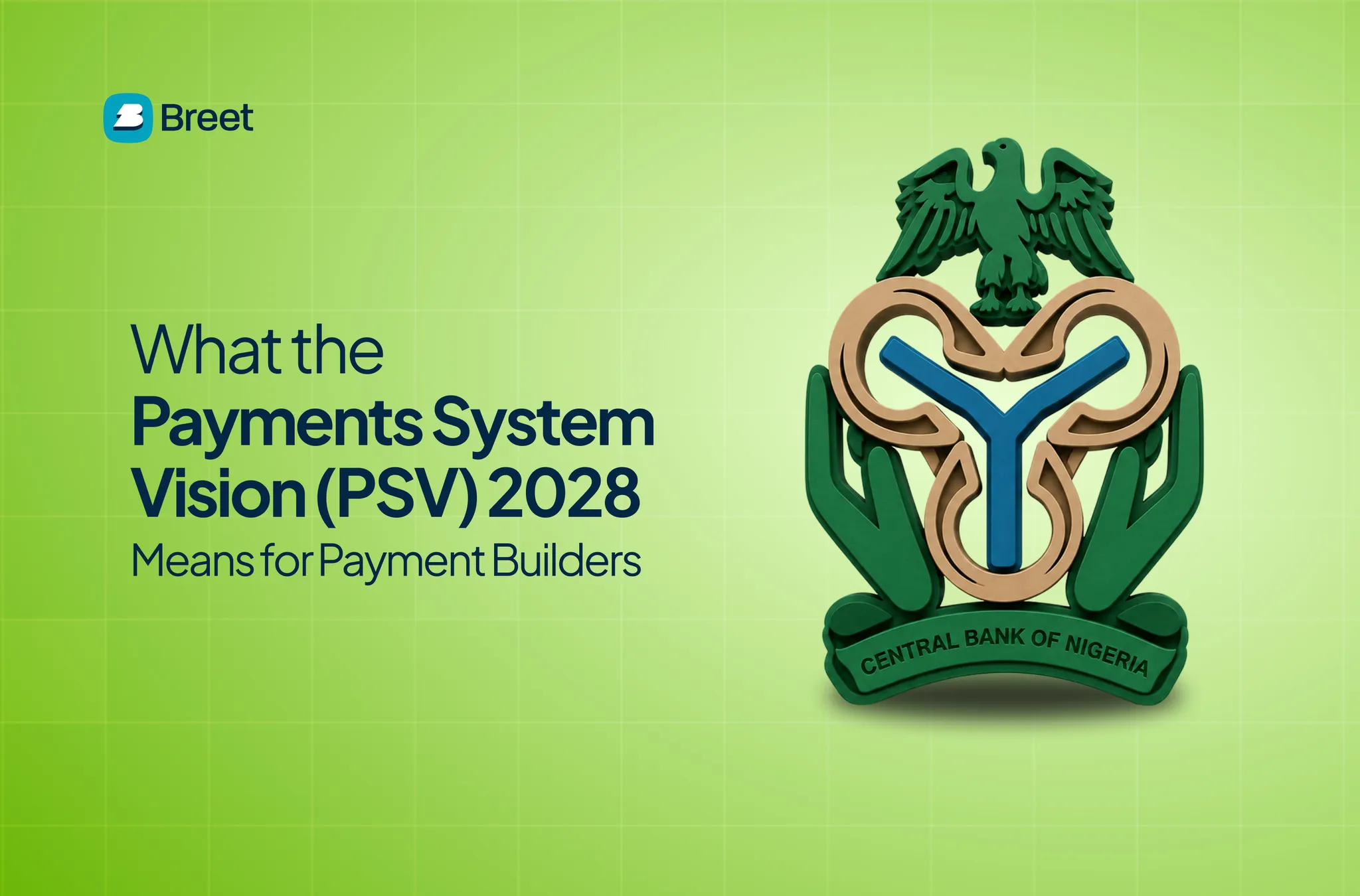
The Central Bank of Nigeria unveiled its Payments System Vision 2028, and for the first time, stablecoins, tokenization, and digital assets appear inside the country’s official payments roadmap.
That single move reframes digital-asset infrastructure from “tolerated at the edges” to “named in the plan.” If you run a bank, a fintech, an exchange, or a business that touches payments, PSV 2028 changes how you should plan.
PSV 2028 is the CBN’s New Map for Digital Payments
PSV 2028 is the CBN’s strategic blueprint for Nigeria’s payment system through 2028. Think of it less as a single rule and more as a map: it tells you where the regulator wants the terrain to go, so you can build roads that won’t get torn up later.
It is the latest in a line of Payment System Vision documents that the CBN has used to steer the sector for over a decade. The headline ambitions are large.
The CBN is targeting 95% financial inclusion and roughly 50 million new accounts under the plan, a reach that only works if digital rails carry most of the load. Governor Olayemi Cardoso framed it as the backbone for Nigeria’s broader economic transformation, not a side project.
Five Pillars Define the Next Three Years
PSV 2028 is organized around five strategic pillars. Read them together, and you can see the shape of where regulation is heading.
- Infrastructure and interoperability. Building resilient, scalable payment rails that talk to each other, so money moves cleanly across institutions instead of getting stuck in silos.
- Digital financial inclusion, consumer protection, and financial literacy. Bringing excluded Nigerians into the formal system while making sure they understand and trust the tools, the difference between handing someone a smartphone and teaching them to use it safely.
- Innovation, digital identity, and emerging technologies. This pillar explicitly covers artificial intelligence, open banking, tokenization, stablecoins, and digital assets.
- Cross-border payments and CBDC integration. Making payments across borders smoother and folding the central bank digital currency into the wider system.
- Regulation, risk management, and cybersecurity. Keeping the ecosystem secure and trusted as volumes grow, because trust is the thing that collapses fastest and rebuilds slowest.
Digital Assets Just Entered the Official Roadmap
The most consequential change sits inside pillars three and four. Naming stablecoins and digital assets in an official CBN document is the regulatory equivalent of a road finally appearing on the map after years of being an unmarked dirt track everyone used anyway.
The practical shift is in the question operators get to ask. For years, the question was “is this allowed?” That question freezes investment because you cannot build a serious product on a maybe. PSV 2028 moves the live question to “how do we do this compliantly?” That is a question you can actually answer, budget for, and build against.
The stablecoins your customers already use to hedge against naira volatility now have a place in the regulator’s own picture of the future, and cross-border use, where stablecoins are most useful, sits in its own pillar.
Every Player Feels PSV 2028 Differently
A map looks different depending on where you are standing. PSV 2028 lands differently for each part of the ecosystem.
For banks, it is permission to explore digital-asset products without feeling like they are coloring outside the lines. For fintechs and PSPs, it is a signal to design for interoperability and stablecoins now, while the rules are still being written and there is room to shape them. For exchanges, it is a sign that the compliance expectations are firming up, which rewards anyone who already screens transactions properly.
For merchants and marketplaces, it points toward a future where alternative payment methods, including crypto, are a normal part of accepting payments and widening reach.
The Time to Build on Compliant Rails is Now
A roadmap is most valuable to the people who read it early. The institutions that act while the rules are still forming get to build for where the system is going, not where it has been.
There is a short, practical to-do list coming out of PSV 2028. Take inventory of where you already touch digital assets, even informally. Choose infrastructure that is built to be compliant rather than retrofitted, with KYC and AML screening on every transaction.
Design for the two pillars that name digital assets, which means planning for cross-border flows and stablecoins rather than treating them as afterthoughts. And treat compliance as something built into the rails you stand on, not a department you staff up later.
Building on infrastructure that already operates under recognized frameworks means the regulator’s direction of travel is a tailwind for you, not a fire drill.
A Vision is Not Yet a Rulebook
It is worth being honest about what PSV 2028 is not. A vision document sets direction; it is not the same as an implemented, enforceable regulation, and treating it as if every line is already law would be a mistake.
There is real sequencing risk. The specific rules, licensing regimes, and supervisory details that turn these five pillars into day-to-day obligations are still to come, and the order and timing of those details matter for anyone planning a launch. Some of what is implied, particularly around how stablecoins and cross-border flows will be supervised in practice, remains unwritten.
The reasonable posture is neither to ignore PSV 2028 nor to over-read it. Build toward where the map points, stay close to the detail as it lands, and keep your infrastructure flexible enough to adapt as the dirt track becomes a paved road.
Final Thoughts
PSV 2028 did not legalize anything overnight, and it did not need to. By naming stablecoins and digital assets in the official roadmap, it moved the whole conversation from “if” to “how,” and that is the shift that unlocks serious building.
The operators who win the next three years will be the ones who read the map early and lay their rails accordingly. If you want to build on infrastructure designed to stay on the right side of where Nigerian regulation is heading, talk to our team.