Bitcoin is all over your timeline again; someone you follow just posted their gains, and part of you wants to buy everything right now. The other part remembers the friend who aped in at the 2021 top and spent two years underwater.
So you do nothing.
Here is the honest answer before you scroll further: no one can reliably pick the exact bottom, so the best time to buy Bitcoin isn’t a date on the calendar; it’s a habit.
This guide gives you that habit, then the timing data you actually searched for (best day, best time of day, the halving cycle), and what “best time” really means when the naira in your account keeps losing value.
What’s the best time to buy Bitcoin?
The best time to buy Bitcoin is a process, not a moment, because nobody can time the market consistently. Not analysts with Bloomberg terminals, not the influencer with the laser eyes, and not you.
The people who called the 2021 top correctly mostly got lucky, and plenty of them called it four other times when it kept climbing.
So the useful question isn’t “when is the bottom?” It’s “how do I buy in a way that doesn’t need me to be right about timing?” That reframe kills the two traps that sent you searching.
The first is buying the top out of FOMO, throwing in a lump sum the week everyone else does. The second is waiting for a dip that never comes, staying frozen while the price runs away from you.
Both come from treating “when” as a prediction problem, and prediction is the one thing that doesn’t work here.
There is a way to buy that sidesteps prediction entirely. It’s boring, it’s proven, and it’s covered next.
Dollar-cost averaging: the closest thing to a “best time”
Dollar-cost averaging (DCA) is buying a fixed amount on a fixed schedule regardless of price, and it is the closest thing to a best time because it makes timing irrelevant. You buy, say, ₦20,000 of Bitcoin every Monday.
When the price is low, that ₦20,000 buys more BTC. When it’s high, it buys less. Over months, your average entry price smooths out, and you never have to be right about any single day.
This beats guessing for a reason that has nothing to do with charts and everything to do with your own psychology. DCA removes the emotion that makes people buy high and freeze low.
You’re not deciding anything in the moment, so FOMO and dread stop running the show. A fixed schedule is a decision you make once, not a battle you fight every week.
What about buying all at once instead? A lump sum can beat DCA if you have a large amount ready and a long time horizon, because, on average, the market rises and money in earlier compounds more.
But that’s the version on a spreadsheet. The version you’ll actually stick to, without gambling your peace of mind on a single entry, is DCA. And you’ll never hit the perfect lump-sum moment anyway, because it only exists in hindsight.
DCA assumes a steady paycheck, and plenty of Nigerians earn variable freelance or business income. The fix is simple. Scale the amount, not the schedule.
Pick a small amount you can commit to even in a lean month, buy it every payday, and add more only when a good month lets you. Consistency at a low amount beats ambition you abandon by week three.
Some timing data you can actually use
Timing specifics do exist, and they’re worth knowing, as a small edge on top of DCA rather than a replacement for it. Here’s the honest ranking.
| Timing signal | What the data suggests | How much it matters |
| Best day of week | Monday has historically been the strongest buy day, about 0.51% average daily return since 2014 | Minor edge |
| Best time of day | Afternoons and evenings (US trading hours) tend to be slightly cheaper intraday | Minor edge |
| The dip | “Extreme Fear” on the Fear and Greed Index has often marked discount zones | Situational |
| Halving cycle | Four-year pattern; the next halving is around April 2028 | Bigger-picture context |
Best day of the week and time of day to buy
If you’re buying anyway, small patterns exist. A QuantifiedStrategies backtest of Bitcoin returns since 2014 found Monday to be the statistically best day, with an average daily return of about 0.51%, and the early week outperforming the back half.
Intraday, US afternoons and evenings have tended to run marginally cheaper.
The heavy caveat: these are tiny historical edges, not guarantees, and a single volatile week swamps all of them.
Don’t build a strategy around them. But if you already DCA weekly, setting your recurring buy for Monday is a free, harmless optimization. Take the edge, don’t worship it.
Should you buy the dip or before the halving?
Dips and the halving cycle are the timing signals worth actually understanding, because they reward patience rather than precise prediction.
When the Fear and Greed Index hits “Extreme Fear,” it has often lined up with local bottoms, which is why experienced buyers treat fear as a discount signal.
But calling the exact dip is the same losing game as calling the top. So use fear as a reason to keep buying, not as a reason to wait.
The halving is Bitcoin’s four-year supply event, when the reward for mining new coins is cut in half, tightening new supply. The next Bitcoin halving is expected around April 2028, and historically accumulation windows have opened roughly 12 to 18 months before one.
Treat that as context, not a countdown, because there have only been a handful of cycles and the pattern may be stretching.
Is now a good time to buy Bitcoin?
Here’s where the market actually sits as of July 2026, so you’re deciding with today’s map instead of a timeless explainer. Bitcoin hit an all-time high of $126,198 on October 6, 2025, then pulled back, and as of July 20, 2026, it was trading around $64,200. The next halving is still expected around April 2028.
For a DCA buyer, a pullback from all-time highs is exactly the stretch the strategy is built for. You keep buying at lower prices, your average cost drops, and you let the schedule work while everyone else waits for a signal.
None of this is a prediction that the price goes up from here, and none of it is financial advice.
Breet doesn’t provide investment advice; prices can move sharply in either direction, and the only honest statement anyone can make is that the discipline outlasts the volatility.
What “best time” means when your currency is falling
For many Nigerians, “best time to buy Bitcoin” is really “when do I move money out of a naira that keeps losing value,” and that changes the whole question.
Inflation averaged around 23% across 2025 and, even after easing to roughly 16% by mid-2026 on the official measures, it is still quietly shrinking idle cash.
The naira went from about ₦460 to the dollar before mid-2023 to the ₦1,500 range through 2024 and 2026. That’s most of its value against the dollar gone in three years.
This is why Nigerians increasingly dollarize their savings digitally. Nigeria ranks second in the world for grassroots crypto adoption, receiving an estimated $92 billion in the year to mid-2025, and stablecoins make up roughly 40% of that activity. When your home currency is guaranteed to lose value, holding cash and “waiting for the perfect entry” is itself a losing position. Doing nothing has a cost, and it’s charged monthly.
There’s a nuance worth getting right. Bitcoin is volatile, so it suits growth and a long horizon. A dollar-pegged stablecoin like USDT is for stability, holding its value against the dollar without the swings.
Many readers actually want dollar savings, not a 100x gamble, so pairing the two makes sense: DCA a portion into BTC for the upside, and hold USDT to protect purchasing power, both on a schedule so the naira’s slide stops dictating your moves.
The part that actually makes DCA work
None of this matters if acting on your plan is a hassle. Most people quit DCA not because the strategy fails but because buying every single week is a chore. Ten steps, a P2P merchant to haggle with, a rate you’re not sure about, and by week four the habit is dead. That friction is the part Breet removes.
Breet is a cryptocurrency conversion platform for Nigeria and Ghana, and it is deliberately not a way to time the market, because nothing is. What it does is make the buying and cashing out easy enough that your schedule survives contact with real life.
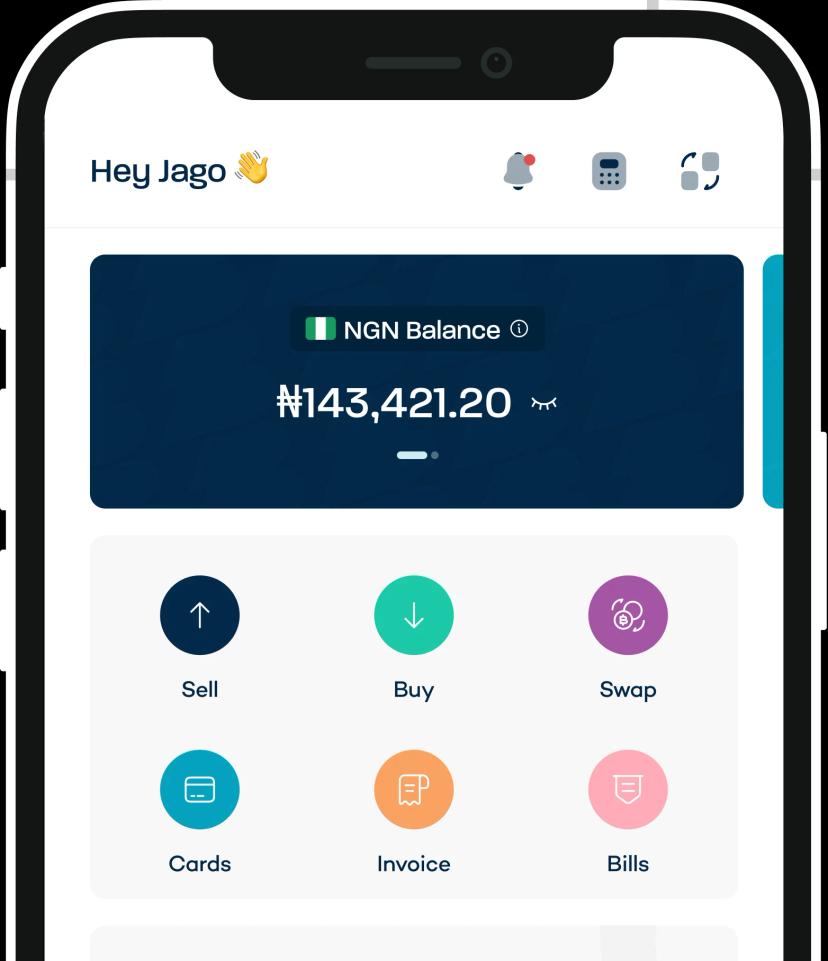
You can buy crypto and stablecoins in the app in a couple of taps, so your weekly buy is a 30-second job instead of a chore you skip.
Breet scans the market and gives you an automated rate with no peer-to-peer counterparty, so you’re not losing part of every scheduled buy to a spread or a merchant negotiation.
And when your “best time” arrives on the other side, the moment you want to take some profit and move it to naira, conversions settle directly to your Nigerian bank account fast, 24/7, no VPN.
Breet doesn’t hold your crypto (it converts, it doesn’t custody); it’s operated by Inbreetic Technologies Limited, it’s PCI DSS compliant, and it’s used by more than 400,000 people across 5 million-plus transactions at a 4.9-star rating. The plan is yours; the rail just makes it effortless.
Ready to run your plan? Buy or convert crypto with Breet, or download the app.
Start the habit, stop watching the clock
The best time to buy Bitcoin was never a date, and chasing one is how people end up buying tops and selling bottoms. DCA turns an impossible timing question into a simple weekly one, and the timing specifics (Monday, dips, the halving cycle) are nice edges on top, not the main event.
The person who quietly buys a fixed amount every week almost always beats the person still waiting for the perfect entry.
And when your currency is losing value every month, the cost of waiting is real money, not a hypothetical. So pick an amount, pick a day, and start.
The anxiety that sent you searching disappears the moment the schedule takes over.
Buy or convert crypto in seconds with Breet.
Conclusion
The best time to buy bitcoin is whenever you’re ready. There’s never a ‘perfect’ time in this cryptocurrency world, but the right strategy will go a long way. Whether considering dollar-cost averaging (DCA) or lump-sum investing, exploring the benefits of DCA, or understanding the impact of regulatory changes, one constant remains the importance of a strategic and informed approach.