- Why Build a Crypto Wallet or Exchange in Africa? (A Developer/Founder's View)
- How Crypto Wallet Infrastructure APIs Work
- Building a Crypto Wallet with Breet Crypto API
- How to Build a Crypto Wallet Using APIs
- How to Build a Crypto Exchange Using APIs
- Wallet APIs vs Exchange APIs vs Settlement APIs
- Startup Use Cases for Crypto Wallet APIs
- Enterprise Use Cases for Crypto Exchange APIs
- Security, Compliance, and Scaling Across Africa
- Common Mistakes When Building a Crypto Wallet/Exchange Using APIs
- Conclusion on Building a Crypto Wallet or Exchange
- Frequently Asked Questions (FAQs) on Building Crypto Wallets or Exchanges
Here is how to build a Crypto Wallet or Exchange Using APIs
Across Africa, the demand for crypto-powered products is growing at an unprecedented pace. Startups are building wallets, payment apps, remittance platforms, gaming marketplaces, and financial services that rely on digital assets behind the scenes.
Yet, many teams quickly discover that building blockchain infrastructure from scratch is expensive, time-consuming, and technically complex.
Running blockchain nodes, managing private keys, monitoring transactions, handling price volatility, and converting crypto to local currency are not trivial engineering tasks. For most companies, these challenges slow product development and increase operational risk.
This is why modern teams no longer start by building everything themselves. Instead, they rely on crypto infrastructure APIs that abstract blockchain complexity and provide ready-made building blocks.
With the right APIs, you can launch a functional crypto wallet or exchange without becoming a deep blockchain engineering company.
This guide explains how crypto infrastructure APIs work, how developers use them to build wallets and exchanges, and why API-driven infrastructure is becoming the preferred approach for African startups and enterprises.
Why Build a Crypto Wallet or Exchange in Africa? (A Developer/Founder’s View)
Africa has become one of the most active crypto markets globally, driven by real economic needs rather than speculation alone. Millions of people rely on crypto for cross-border payments, stablecoin savings, freelance payouts, and protection against currency instability.
This organic demand creates strong opportunities for developers to build products that solve everyday financial problems.
However, building native blockchain infrastructure in African markets introduces unique challenges. Internet reliability varies, technical talent is scarce in some regions, and regulatory expectations differ across countries.
Maintaining high-availability nodes and secure wallet systems is costly even for well-funded startups.
APIs solve this problem by allowing developers to focus on product logic and user experience instead of low-level blockchain operations.
Rather than writing custom code to interact with multiple blockchains, manage mempools, and track confirmations, teams integrate with an API that already handles these complexities.
For African startups, this approach dramatically reduces time to market. A small team can launch a crypto wallet, payment platform, or exchange-like product in weeks rather than years. Costs are lower, maintenance overhead is reduced, and scalability becomes much easier.
Most African crypto startups are solving practical problems such as accepting stablecoin payments, converting crypto to local currency, enabling cross-border settlements, and paying users instantly into bank accounts. These use cases align perfectly with API-driven infrastructure.
Related:
- The Best Crypto to Fiat API in Nigeria for Developers
- Top 7 Crypto & Stablecoin APIs in Ghana
How Crypto Wallet Infrastructure APIs Work
Crypto APIs act as an intermediary layer between your application and the blockchain. Instead of directly communicating with blockchain networks, your app communicates with an API provider that already runs the necessary infrastructure.
When a user initiates a transaction in your product, your backend sends a request to the API. The API handles address generation, transaction detection, blockchain confirmations, pricing, and settlement logic. Your system simply receives structured data and status updates.
This abstraction transforms blockchain into a service. Developers work with familiar HTTP requests, JSON responses, and webhooks rather than low-level cryptographic operations.
Crypto infrastructure APIs generally fall into three major categories: wallet APIs, exchange APIs, and settlement or OTC-style APIs. Each serves a different purpose and is suited to different product models.
Wallet APIs focus on creating and managing crypto addresses and balances. Exchange APIs support trading between assets. Settlement APIs emphasize receiving crypto, converting it, and paying out fiat or stablecoins. Understanding these distinctions is critical when designing your architecture.
Building a Crypto Wallet with Breet Crypto API
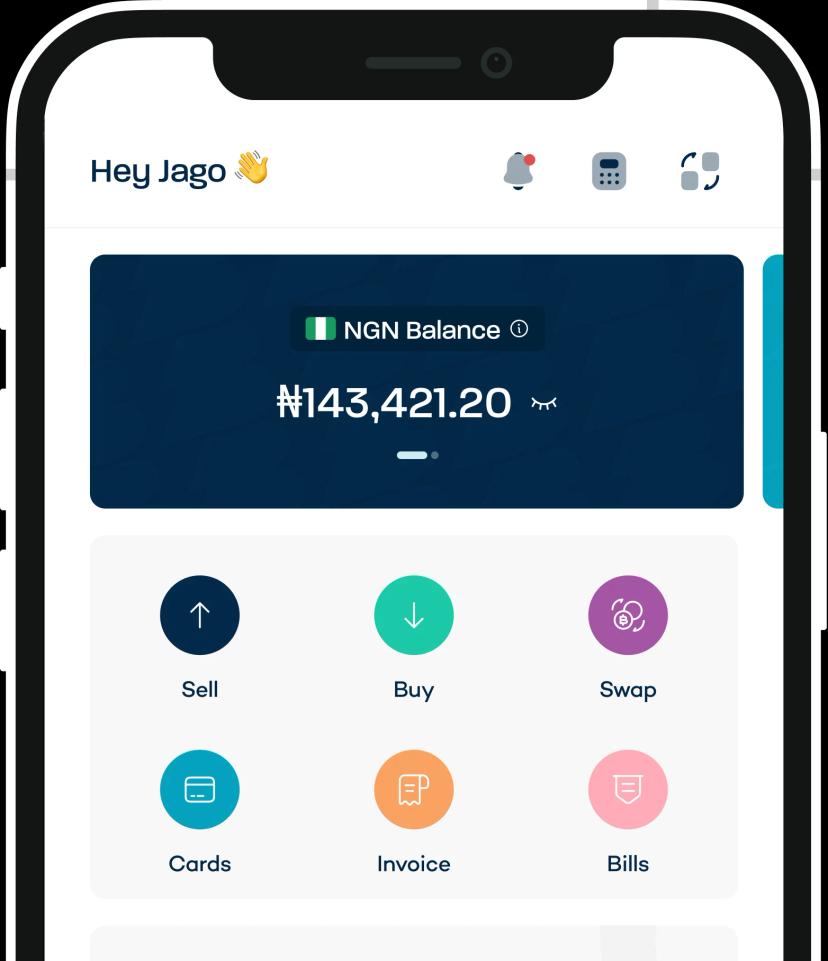
The Breet crypto API is designed to remove crypto operational complexity entirely. From the business perspective, there is no wallet management, no trading logic, and no exposure to volatile assets.
When integrated, your system requests a deposit address for a user. The user sends crypto to that address. The API detects the transaction, converts the crypto automatically, and settles fiat to your business wallet or bank account.
This flow dramatically simplifies product architecture Your system does not track crypto balances. It does not store private keys. It does not manage order books.
Instead, your system tracks fiat balances and transaction records. This model is particularly effective in African markets where businesses prefer stable local currency while still supporting crypto payments.
It also reduces regulatory and accounting complexity. Businesses deal primarily with fiat, while the API provider handles crypto custody and conversion.
Main Benefits of Breet’s Crypto API
- Setup is free and happens in 2 hours
- No overhead costs
- Get Crypto infrastructure without any of the technical stress
- You pay 0.5% fee on transactions- we charge only when you use
Typical Integration Flow
- The integration flow usually begins with API authentication. Your backend stores an API key and signs requests.
- When a user wants to fund their account, your system calls an endpoint to generate a deposit address..
- The API returns an address and network.
- The user sends crypto.
- The API monitors the blockchain.
- Once confirmed, the API triggers a webhook
- Your system receives the webhook and credits the user or initiates fiat settlement.
- If fiat payout is enabled, the API automatically converts the crypto and settles to your designated account.
This entire flow can happen without a single blockchain operation performed by your servers.
Top Pick:
How to Build a Crypto Wallet Using APIs
Building a crypto wallet traditionally requires deep knowledge of key generation, encryption, blockchain synchronization, and transaction broadcasting. APIs dramatically simplify this process and here’s a guide on how to build a crypto wallet using APIs:
1. Choose your Wallet Model
Choosing the wallet model is the foundation of building a crypto wallet with APIs. You must decide whether the wallet will be custodial, non-custodial, or hybrid.
2. Select API Provider
Selecting an API provider is a critical step, and this is where the Breet crypto API comes into play. The API supports multiple major cryptocurrencies and stablecoins, and lets you create wallet addresses for users and receive incoming payments via webhook notifications.
It also automates conversion and settlement into local currencies (like Naira or Cedis) or stable values such as USDT or USDC, all without requiring your team to manage blockchain infrastructure or private keys directly.
3. Design User Flows
Designing user flows becomes cleaner when using an API that covers common blockchain challenges for you. With Breet, workflows like “receive crypto” and “display deposit status” can be backed by real-time webhook notifications and automated settlement logic.
This means your wallet UI can offer smooth experiences, showing users their deposit confirmations, balances, and transaction status while the API ensures reliable backend operations.
4. Integrate Endpoints
When you integrate API endpoints, quality and documentation matter a lot. Breet’s API is built to be developer-friendly and aims to reduce the complexity of dealing with multiple blockchains, confirmations, and conversions.
Instead of writing raw node interactions, you call endpoints for address creation, payment detection, and settlement that return structured responses your app can handle easily.
5. Test extensively
Testing extensively is critical before launching any crypto wallet. You should perform unit tests, integration tests, security audits, and user testing.
Using blockchain testnets allows you to simulate real transactions without risking funds. Thorough testing helps uncover bugs, security gaps, and usability issues that could otherwise lead to financial losses. Even during testing, having a robust API like Breet’s helps you simulate real wallet conditions without deploying full blockchain nodes.
You can test address creation, webhook flows, and settlement logic on supported testnets or sandbox environments provided by your API partner.
This approach significantly lowers security risk. Instead of building a fragile in-house custody system, you rely on specialized infrastructure like the Breet crypto and stablecoin API built for that purpose.
Related:
How to Build a Crypto Exchange Using APIs

Building a full centralized exchange from scratch is one of the most complex undertakings in fintech. It requires order books, matching engines, custody systems, liquidity management, pricing oracles, and compliance frameworks.
APIs allow startups to create exchange-like experiences without implementing all these components internally.
1. Decide between Full Exchange or Broker Model
This is the first major architectural choice when building a crypto exchange with APIs.
A full exchange operates an order book where buyers and sellers trade directly, giving more control over market structure but requiring deeper liquidity management and technical complexity.
On the other hand, a broker model, allows users to buy and sell crypto at quoted prices sourced from liquidity providers, making it faster to launch and easier to operate. This decision affects compliance requirements, infrastructure depth, and overall product design.
2. Integrate Pricing Source
Integrating a reliable pricing source is essential for accurate and competitive rates. Pricing APIs aggregate data from multiple exchanges or liquidity providers and return real-time market prices.
These prices are used to display live quotes, calculate conversion rates, and execute trades.
As a developer, you should prioritize pricing sources with low latency, high uptime, and transparent data aggregation methods, since incorrect pricing can lead to losses and user distrust.
3. Connect Settlement Layer
Connecting a settlement layer enables the actual movement and storage of funds. This layer handles wallet creation, balance tracking, transaction broadcasting, and confirmations on supported blockchains.
Many projects rely on third-party APIs to manage these processes instead of running their own nodes.
A strong settlement integration ensures that deposits are detected quickly, withdrawals are processed securely, and balances remain accurate.
4. Build Order or Conversion Flow
This defines how users execute trades on the platform. In a full exchange, this involves placing buy and sell orders, matching them in an order book, and updating balances after execution.
In a broker model, the flow centers on showing a quoted price, confirming the trade, and instantly converting one asset to another. Clear confirmations, transparent fees, and real-time status updates are critical to delivering a trustworthy trading experience.
Together, these components form the core of a crypto exchange built with APIs.
Wallet APIs vs Exchange APIs vs Settlement APIs
Wallet APIs specialize in address generation, balance tracking, and transaction management. They are ideal for wallet apps, custodial platforms, and any product that needs to hold user funds.
Exchange APIs focus on asset conversion and trading. They expose endpoints for price quotes, swaps, and sometimes advanced order types.
Settlement or OTC-style APIs emphasize converting crypto into fiat or stablecoins and settling value outside the blockchain. These APIs are designed for payments, remittances, and business treasury operations.
The Breet crypto API fits into this third category. It abstracts wallet creation, deposit monitoring, price conversion, and fiat settlement into a single workflow. Instead of building separate wallet and exchange systems, your business can integrate this API to manage the entire process.
Top Pick:
- 9 Best Crypto OTC Trading Platforms
Startup Use Cases for Crypto Wallet APIs
For startups, speed and simplicity matter more than architecture. API-driven crypto infrastructure allows founders to test ideas quickly.
A startup can launch a wallet app without managing private keys or nodes. Another can accept stablecoin payments and instantly convert them into local currency. A freelancer platform can pay workers using crypto without holding volatile assets.
In each case, the startup’s backend communicates with the API. The API handles addresses, confirmations, pricing, and settlement. The startup focuses on onboarding users, designing interfaces, and building distribution.
Enterprise Use Cases for Crypto Exchange APIs
Enterprises typically care about scale, predictability, and compliance. They may process large crypto volumes daily. They need guaranteed settlement, reliable pricing, and reporting tools. They also want to minimize exposure to price volatility.
API-driven settlement infrastructure allows enterprises to receive crypto and instantly convert it to fiat or stablecoins. This ensures predictable cash flow and simplifies accounting.
Enterprises can embed crypto payments inside existing apps without becoming crypto companies. Their customers pay in crypto. The enterprise receives fiat. The API handles everything in between.
Security, Compliance, and Scaling Across Africa
Security begins with proper API key management. Keys must be stored securely, rotated regularly, and never exposed in frontend code. Webhooks should be verified using signatures. Requests should be rate-limited and logged.
From a compliance perspective, businesses must understand local KYC and AML requirements. Many infrastructure providers offer built-in compliance tooling or guidance.
Scaling across African countries becomes easier with APIs because you do not need to integrate new banks or liquidity sources manually. The API provider handles local rails. Your application remains largely unchanged while expanding into new markets.
Common Mistakes When Building a Crypto Wallet/Exchange Using APIs
- Choosing the wrong business model: A common mistake is choosing the wrong business model. Trying to launch a full exchange without the required resources often leads to delays and unstable systems. You should match your model to your technical and financial capacity.
- Using a single pricing source: Relying on a single pricing source is another issue. If that feed fails or lags, trades may execute at incorrect prices. Therefore, using multiple or backup pricing feeds improves reliability.
- Poor security practices: Weak security implementations remain a major problem. Exposed API keys, poor encryption, and weak authentication can quickly lead to breaches and loss of funds.
- Underestimating settlement complexity: Deposits, withdrawals, confirmations, and network congestion must all be handled gracefully. Without a robust settlement layer, users experience stuck transactions and incorrect balances, which quickly erodes trust.
- Insufficient testing: Skipping stress tests and edge-case scenarios increases the risk of failures when real users start using your platform or product.
Don’t Miss:
- 7 Best Apps to Receive BTC in Nigeria
Conclusion on Building a Crypto Wallet or Exchange
Building a crypto wallet or exchange no longer requires building blockchain infrastructure from the ground up.
APIs have transformed crypto into a programmable service. Developers can create powerful financial products using familiar web technologies while relying on specialized infrastructure providers to handle custody, settlement, and conversion.
For African startups and enterprises, this approach offers speed, reliability, and cost efficiency.
Frequently Asked Questions (FAQs) on Building Crypto Wallets or Exchanges
Do I Need To Run My Own Blockchain Nodes To Build An Exchange?
No, running your own blockchain nodes is not mandatory. Many modern exchanges rely on third-party blockchain infrastructure APIs to access on-chain data, broadcast transactions, generate wallet addresses, and monitor confirmations. This approach significantly reduces engineering overhead, maintenance costs, and operational complexity. However, running your own nodes can provide greater control, privacy, and reliability, especially for large-scale or compliance-focused platforms.
Is A Broker Model Better Than A Full Exchange?
It depends on your business objectives, budget, and technical capacity. A broker model is generally easier and faster to launch because it connects to liquidity providers and handles pricing without managing an order book. In contrast, a full exchange offers its own order book, matching engine, and deeper trading features, but requires stronger infrastructure, liquidity management, regulatory compliance, and security architecture. Broker models are ideal for startups, while full exchanges suit larger, long-term platforms.
How Long Does It Take To Build An API-Driven Crypto Exchange?
The timeline varies depending on complexity. A basic broker-style platform using existing APIs can often be developed within two to four months, assuming a focused development team. A full exchange with a custom matching engine, advanced trading features, wallet systems, and compliance integrations can take six months to over a year. Regulatory approval and security audits may also extend the timeline.
What Security Features Are Absolutely Necessary?
At a minimum, a crypto exchange must implement strong encryption, secure API key management, two-factor authentication (2FA), withdrawal whitelisting, transaction monitoring, and regular security audits. Additional best practices include cold storage for user funds, role-based access controls, DDoS protection, real-time fraud detection, and periodic penetration testing. Security should be treated as a core infrastructure layer, not an afterthought.
Can APIs Handle High Trading Volumes?
Yes, enterprise-grade infrastructure APIs are designed to handle high trading volumes. Leading providers offer high rate limits, scalable cloud infrastructure, strong uptime guarantees, and load balancing capabilities. However, performance ultimately depends on proper system architecture, caching strategies, and backend optimization. Selecting a reliable provider and designing for scale from the start is critical.